What Parameters Actually Matter When Sourcing Diodes for Medical Devices?
Leave a message
Why Diode Procurement for Medical Devices Isn't Like Ordering for Consumer Products
Consumer electronics prioritize cost, availability, and "good enough" performance. Medical devices demand a complete documentation chain that supports:
Regulatory audits (FDA, IEC 60601, ISO 13485)
Production traceability
Post-market surveillance and failure root-cause analysis
Key document categories include environmental reliability data (e.g., JEDEC tests), electrical safety parameters, thermal characteristics, and detailed test reports. Missing or incomplete documentation at procurement often leads to delays later.
Parameter CategoryBasic Electrical Characteristics
Start with the fundamentals, but scrutinize beyond headline typical values:
Forward Voltage (VF): Check both typical and maximum across current levels (e.g., 1 mA, 10 mA, 50 mA, 150 mA). For BAV70-family diodes, expect max VF around 0.715–1.25 V depending on current.
Reverse Breakdown Voltage (VR / VBR): Typically 70–85 V or higher.
Forward Current (IF): Continuous and peak ratings.
Always request full datasheet sections with test conditions and temperature derating. Relying solely on "typical" values risks surprises in worst-case scenarios.
Parameter Category Reverse Leakage Current
Reverse leakage current (IR) is critical in patient-contact circuits due to IEC 60601 leakage current limits (often <10 µA for CF-type applied parts).
Review IR at rated VR and across temperatures (25°C and 150°C common).
For BAV70 examples, max IR might be 2.5 µA at 75 V / 25°C, rising significantly at elevated temperatures.
Demand leakage current curves, not single-point data. High leakage can compromise isolation and safety.
Parameter Category Thermal Characteristics
Thermal performance affects reliability under load or in enclosed devices:
Junction-to-Ambient Thermal Resistance (RθJA): Often 400–550 °C/W for SOT-23 packages.
Maximum Junction Temperature (TJ): Typically 150°C.
Power Dissipation (PD).
Combine these with your device's ambient temperature and apply derating (e.g., 50–70% of max ratings) for medical-grade margins. This ties directly to heat-related failure risks.
Comparison Table Diode Datasheet Parameter Checklist by Category
|
Category |
Key Parameters |
Documents to Request |
|
Basic Electrical |
VF, VR, IF, trr, CT |
Full electrical characteristics table with min/typ/max and conditions |
|
Leakage & Safety |
IR (vs. temp/voltage) |
Leakage curves, IEC 60601 compliance references |
|
Thermal |
RθJA, TJ max, PD |
Thermal derating curves, junction temperature data |
|
Environmental/Reliability |
MSL, JEDEC tests, qualification data |
Reliability reports, HTOL, temp cycling, MSL level |
|
Package/Mechanical |
Dimensions, creepage/clearance, isolation (dual diodes) |
Mechanical drawing, isolation test reports |
Parameter Category Environmental and Reliability Data
Request JEDEC-standard test reports (e.g., temperature cycling, humidity, shock) and MSL (Moisture Sensitivity Level) rating early. For medical devices, "industrial grade" is rarely sufficient-look for evidence of extended qualification.
Parameter Category Package and Mechanical Specifications
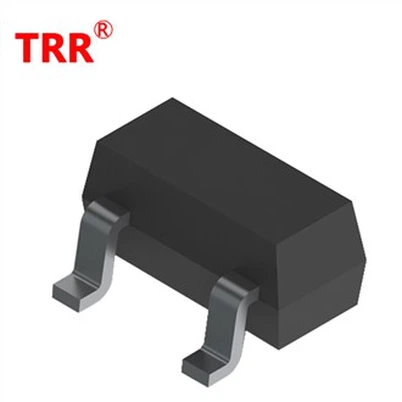
Package type (SOT-23 common for these parts): Verify dimensions, lead finish (RoHS), and solderability.
For patient isolation circuits: Check creepage and clearance distances.
Dual-diode packages (e.g., BAW56 common anode): Confirm internal isolation between diodes if relevant to circuit safety.
BAV70 Diode A Procurement Walkthrough Using a Real Part Family
The BAV70 (dual switching diode, common cathode) is widely used in signal switching and protection.
Procurement checklist example:
Verify VR ≥ 70–85 V, IF up to 200–300 mA.
Confirm low trr (≤6 ns) and capacitance.
Review IR across temperature.
Request full reliability package: MSL 1, RoHS, traceability to wafer lot.
Compare multiple suppliers' maximum ratings and test conditions.
A complete datasheet from reputable manufacturers includes all curves and notes on medical/high-reliability use.
BAW56 Diode - Extra Procurement Questions for Dual-Diode Packages
For BAW56 (common anode dual diode), standard parameters apply plus:
Confirmation that both diodes share consistent batch testing.
Any independent isolation or crosstalk data if the circuit treats them separately.
Matching electrical characteristics between the two elements.
BAV99 Diode Datasheet - Red Flags That Signal an Incomplete Document
When reviewing a BAV99 Diode Datasheet (series-connected dual diode):
Red flag: Only typical values provided, no maximum limits or test conditions.
Red flag: Vague statements like "meets industrial standards" without specific reports.
Red flag: Missing temperature-dependent curves for IR or VF.
Incomplete datasheets often lead to audit failures. Demand supporting test reports.
Industry Trends Component Traceability Is Becoming a Baseline Expectation
FDA Unique Device Identification (UDI) and supply chain transparency rules are raising the bar. Lot-level traceability from wafer to finished device is increasingly mandatory, not optional.
Regulatory Context Worth Knowing Before You Source
Core frameworks include:
IEC 60601-1: Electrical safety and leakage.
ISO 13485: Quality management and supplier controls.
JEDEC standards for reliability.
Requirements vary by market (FDA, EU MDR, etc.). Consult your regulatory team early.
Real Example - Streamlining Diode Procurement
Medical device clients often start with fragmented sourcing-requesting electrical data from one supplier, reliability from another. Implementing a unified checklist at the selection stage allows one-time collection of complete documentation, cutting downstream rework significantly.
A Note on Industry Standards and Recognition
Reputable suppliers maintain certifications aligned with medical quality systems. Look for evidence of robust quality processes (e.g., ISO 13485 scope covering components) and traceability programs. Avoid unverified "medical grade" claims without documentation.
Common Mistakes When Sourcing Diodes for Medical Devices
Comparing only price and basic specs.
Accepting "industrial" parts as substitutes without full medical documentation.
Multiple ad-hoc requests instead of a single comprehensive RFQ.
Ignoring dual-diode specific isolation needs.
Skipping temperature derating analysis.
A Complete Pre-Sourcing Parameter Checklist
Full electrical characteristics (VF, IR, VR, IF, trr, CT) with min/typ/max.
Thermal data and derating guidance.
Leakage current vs. temperature/voltage curves.
Environmental reliability reports (JEDEC, MSL).
Package mechanical drawings and isolation data (if dual).
Traceability documentation (CoC, lot codes).
Supplier quality certifications (ISO 13485, etc.).
Change notification policy (PCN process).
FAQ
Q: What's the minimum documentation I should request?
A: Full datasheet + reliability report + CoC with lot traceability.
Q: Is a standard commercial diode datasheet enough?
A: Usually not for medical devices-supplement with medical-specific qualification data.
Q: What's the difference between typical and maximum values?
A: Typical is average performance; maximum defines worst-case limits critical for safety margins.
Q: Do I need separate documentation for each diode in a dual-diode package?
A: Not always separate, but confirm matched characteristics and any isolation testing.
Q: How do I know if environmental reliability data is complete?
A: Look for specific JEDEC test references, conditions, and pass/fail criteria with sample sizes.
Q: What package-level specifications should I check?
A: Dimensions, creepage/clearance, MSL, lead finish, and soldering profiles.
Q: Are traceability requirements the same across markets?
A: No-FDA UDI and EU MDR have specific expectations; verify per target market.
Final Thoughts Procurement Is Where Compliance Problems Get Prevented or Created
Sourcing diodes (or any component) for medical devices is the first line of defense in the compliance chain. A thorough parameter checklist at the procurement stage prevents expensive surprises in testing, certification, and field use.
Use this article and checklist as your starting point. Share it with your procurement and engineering teams, and link back to the other articles in the series for deeper dives into specific testing areas.
Ready to review your current diode suppliers against this checklist? Start with the BAV70, BAW56, or BAV99 parts in your BOM today. For tailored guidance on your specific application or supplier evaluation, reach out-preventing issues upstream is far more efficient than fixing them downstream