How Do You Choose the Right Diode for Higher-Voltage Circuits in Medical Devices?
Leave a message
The Selection Mistake That Only Shows Up After the Device Ships
In medical device development, component selection for internal logic control, signal conditioning, or protection circuits often happens under tight deadlines. An engineer might see a diode like the BAV70 with parameters that "look close enough" on paper and approve it without fully accounting for real-world transients. Months later, during field use or accelerated life testing, diodes fail under specific load conditions. The root cause is almost always insufficient voltage margin in the initial selection.
This is especially critical in medical applications where reliability directly impacts patient safety and regulatory compliance. A single field failure can trigger costly recalls, delays in certification, or worse.
Let's Be Precise About What "High Voltage" Means Here
BAV70, BAW56, and BAV99 are small-signal switching diodes, not power or high-voltage devices. Their nominal reverse voltage ratings typically fall in the 70–85 V range (check specific datasheets for exact values, as they vary slightly by manufacturer).
"Higher-voltage" here refers to internal circuits in medical devices-such as signal conditioning, level shifting, protection clamping, or moderate-voltage nodes-where voltages are elevated compared to standard 5 V or 12 V logic but far below true high-voltage sections like defibrillator discharge circuits or X-ray generators (which require specialized high-voltage diodes rated in hundreds or thousands of volts).
Using these small-signal diodes in actual kV-level power stages would be a severe mismatch.
The Core Parameters That Actually Matter for Voltage-Related Selection
VR (Maximum Reverse Voltage) - The Starting Point, Not the Whole Story
VR (or VRRM, peak repetitive reverse voltage) is the maximum reverse bias the diode is rated to withstand. For the BAV70, it is commonly 70–85 V depending on the source. Similar ratings apply to the BAW56 (around 70–85 V) and BAV99 (often 70–100 V).
Always verify the exact datasheet for your chosen manufacturer and lot.
Why You Should Never Select Right at the VR Limit - Derating Explained
Derating means operating the component below its maximum rated values to account for temperature, aging, transients, and manufacturing variations. In medical devices, a common industry practice is to design for 50–70% of the rated VR as the maximum continuous operating voltage.
This provides safety margin for reliability over the device's expected service life. Operating near the limit increases the risk of avalanche breakdown or gradual degradation.
Transient Voltage Spikes - The Hidden Risk Static Ratings Don't Show
Circuit inductances, switching events, ESD, or load changes can produce short spikes well above steady-state voltages. Datasheet VR ratings assume controlled conditions; real spikes require additional protection (e.g., TVS diodes, snubbers) or higher-margin selection.
BAV70 Diode - Reading the Datasheet for Voltage Margin
When reviewing the BAV70 datasheet:
Focus on VR or VBR (breakdown voltage, typically tested at low current like 100 µA).
Check reverse leakage current (IR) specifications at voltages close to VR.
Calculate your safety margin: If your circuit sees up to 40 V peaks, aim for a diode with VR ≥ 70–80 V and apply derating.
Manufacturers often provide typical vs. maximum values-design to the worst-case.
BAW56 DiodeDual-Diode Considerations for Higher-Voltage Nodes
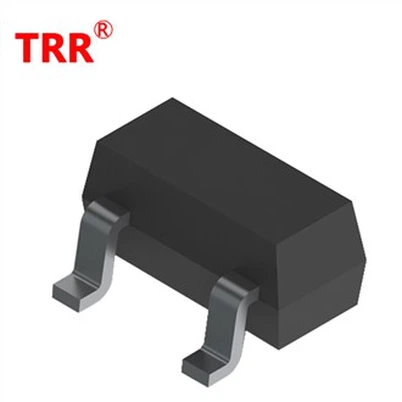
The BAW56 is a dual diode (common anode configuration) in SOT-23. When used in higher-voltage nodes:
Ensure both diodes in the package see similar voltages/stresses for thermal and voltage consistency.
Shared packaging means heat from one diode affects the other; derate more conservatively in high-ambient or high-duty applications.
BAV99 Diode Datasheet Cross-Referencing Reverse Leakage at Elevated Voltage
The BAV99 (series dual diode) has similar voltage ratings. Pay close attention to IR specs:
Leakage is often given at a specific test voltage (e.g., 75 V or 80 V).
At voltages approaching VR or higher temperatures, actual leakage can rise significantly (e.g., from nA to µA levels at 150°C).
Always match datasheet test conditions to your application.
Comparison Table Matching Diode Voltage Class to Circuit Type
|
Circuit Type |
Typical Voltage Range |
Recommended Diode Category |
Notes |
|
Low-voltage logic/signals |
< 30 V |
Standard small-signal |
Ample margin |
|
Higher-voltage internal nodes/protection |
30–60 V (with spikes) |
BAV70/BAW56/BAV99 with derating |
Focus on transients |
|
True high-voltage power |
> 100 V or kV |
Power/high-voltage diodes |
Different families entirely |
Common Mistakes When Selecting Diodes for Higher-Voltage Nodes
Selecting based solely on nominal VR without derating.
Ignoring transient spikes.
Misapplying small-signal diodes in power circuits.
Overlooking package-level effects in dual diodes.
Not verifying full datasheet conditions (temperature, test voltage).
Regulatory & Reliability Context for Medical Device Component Selection
Medical devices must comply with standards like IEC 60601-1 for basic safety and essential performance, which emphasize insulation, leakage currents, and overall reliability. Component derating and robust margins are key to passing safety testing and ensuring long-term field reliability. Consult the latest editions and involve regulatory experts-requirements evolve.
How to Verify Your Diode Choice Before Committing to Production
Model or measure actual maximum steady-state and transient voltages in the circuit.
Apply appropriate derating (e.g., 50–70% of VR).
Review full datasheet parameters, including temperature effects.
Perform bench testing and accelerated life tests.
Contact the diode manufacturer or OEM supplier for application-specific guidance, especially for medical use.
Consider second-sourcing and supply chain reliability.
FAQ
Q: What voltage rating do BAV70, BAW56, and BAV99 diodes actually have?
A: Typically 70–85 V (VR), with some variants up to 100 V. Always confirm the specific datasheet.
Q: Can small-signal diodes like these be used in high-voltage power circuits?
A: No. They are suited for low-to-moderate current switching and protection, not high-power or kV applications.
Q: What does "derating" mean when selecting a diode?
A: Operating below maximum ratings for enhanced reliability, especially under temperature, transients, or long life requirements.
Q: Why does actual circuit voltage matter more than datasheet typical values?
A: Datasheets provide test conditions; real operation (temperature, spikes, aging) can differ significantly.
Q: How do transient voltage spikes affect diode selection?
A: Spikes can exceed VR momentarily, causing breakdown. Account for them with margin or additional protection.
Q: Do dual-diode packages need special consideration for higher-voltage nodes?
A: Yes-thermal coupling and voltage sharing between elements matter.
Q: How can I verify a diode is truly suitable for my specific circuit?
A: Through simulation, measurement of actual stresses, derating calculations, and manufacturer consultation.
Q: What happens if a diode is selected too close to its maximum voltage rating?
A: Increased leakage, thermal runaway risk, reduced lifespan, and potential sudden failure.
Final ThoughtsMatch the Voltage Class to the Actual Circuit, Not Just the Label
Choosing the right diode for higher-voltage circuits in medical devices requires precision, margin, and thorough verification. Prioritize understanding your circuit's real operating conditions over datasheet headlines. This approach not only prevents costly failures but also supports smoother regulatory approval and better patient outcomes. When in doubt, consult datasheets directly, apply conservative derating, and engage suppliers early