What is the difference between SMD diodes and through-hole diodes?
Leave a message
1, Packaging form and size
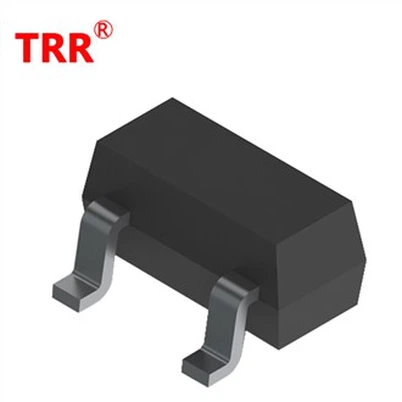
SMD diode: SMD diodes use surface mount technology, and their packaging forms usually include rectangular, cylindrical, etc. They are small in size, such as 0603, 0805 and other packaging specifications. These numbers represent the length and width of the diode (in inches). Due to its small size, SMD diodes are highly suitable for high-density circuit board assembly, helping to improve the integration and reliability of devices.
Through hole diode: Through hole diodes use traditional plug-in packaging, with longer pins that need to be installed through holes on the circuit board. The size of through-hole diodes is relatively large, and the pins occupy more space on the circuit board. However, through-hole diodes may have an advantage in heat dissipation performance because their larger volume and pin structure help dissipate heat.
2, Installation process
SMD diodes: The installation of SMD diodes relies on automatic surface mount machines or manual mounting, followed by soldering through wave soldering or reflow soldering. This installation method not only improves production efficiency, but also reduces manual operation errors, making the circuit board more compact and reliable. However, the soldering process of SMD diodes requires high technological requirements and strict control of soldering temperature and time to avoid component damage.
Through hole diode: The installation of through hole diodes is relatively simple, usually by manually or automatically inserting the pins into the circuit board holes, and then using plug soldering or wave soldering for soldering. Although this installation method is inefficient, it is easy to operate and has relatively low process requirements. In addition, through-hole diodes are more convenient for maintenance and replacement because they can be directly plugged and unplugged through pins.
3, Electrical performance
In terms of electrical performance, the difference between SMD diodes and through-hole diodes is not significant. Both follow the basic working principle of diodes and have unidirectional conductivity. However, due to differences in packaging form and size, there may be slight differences in high-frequency characteristics, heat dissipation performance, and other aspects between the two.
High frequency characteristics: SMD diodes, due to their compact packaging and tight arrangement, help reduce parasitic capacitance and inductance on the circuit board, thereby improving the high-frequency performance of the circuit. In contrast, through-hole diodes have larger pin and package sizes, which may introduce more parasitic components and affect the high-frequency characteristics of the circuit.
Heat dissipation performance: Although SMD diodes may not be as good as through-hole diodes in terms of heat dissipation, modern electronic manufacturing has significantly improved the heat dissipation performance of SMD diodes by optimizing packaging materials and designs. In addition, with the continuous advancement of packaging technology, such as the use of heat dissipation structures such as heat sinks and heat pipes, the heat dissipation problem of SMD diodes has been further alleviated.
4, Cost effectiveness
In terms of cost, SMD diodes and through-hole diodes have their own advantages and disadvantages.
Production cost: SMD diodes can significantly reduce production costs due to their efficient automated production process. In addition, due to the small circuit board space occupied by SMD diodes, it helps to reduce material consumption and production costs.
Maintenance cost: Although SMD diodes have lower initial installation costs, they may be more difficult to repair and replace. Because the connection between SMD diodes and circuit boards is usually achieved through soldering, once damaged, professional repair tools need to be used for disassembly and replacement. In contrast, through-hole diodes are more convenient for maintenance and replacement because they can be directly plugged and unplugged through pins.
5, Application scenarios
SMD diodes and through-hole diodes have their own focuses in application scenarios.
SMD diodes: Due to their compact packaging and efficient automated production processes, SMD diodes are widely used in miniaturized and highly integrated electronic devices such as smartphones, tablets, laptops, etc. In addition, SMD diodes also play an important role in high-frequency circuits, RF circuits, and other applications that require high performance and reliability.
Through hole diode: Through hole diodes are more suitable for situations that require high heat dissipation performance and are easy to maintain and replace. For example, in the fields of large electronic devices, industrial control equipment, communication equipment, etc., through-hole diodes still maintain a wide range of applications.
https://www.trrsemicon.com/diode/surface-mount-fast-recovery-rectifiers.html