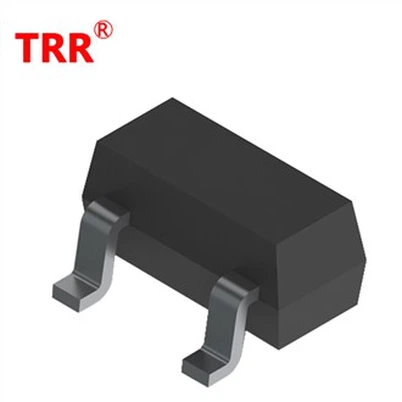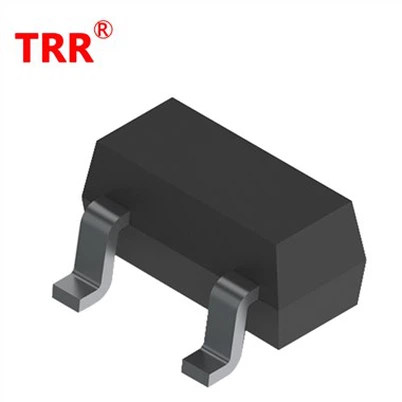
Do SMD diodes have polarity?
Leave a message
1, Basic principles and polarity of surface mount diodes
Surface mount diodes, as a type of semiconductor device, operate based on the unidirectional conductivity of PN junctions. Under forward voltage, diodes allow current to flow from the anode (positive electrode) to the cathode (negative electrode), while under reverse voltage, they are almost non-conductive. This unidirectional conductivity is the fundamental characteristic of diodes and the basis for their use in circuits such as rectification, detection, and voltage regulation.
Based on the above principle, surface mount diodes also have polarity. In packaging, surface mount diodes are usually indicated by specific markings or shapes to indicate their polarity. These markings may include letters, numbers, color dots, grooves, etc., depending on the manufacturer's design and specifications. For example, some surface mount diodes will have markings of "A" and "K", representing the anode (positive electrode) and cathode (negative electrode), respectively; Others may differentiate polarity based on differences in pin length or packaging shape.
2, Method for identifying the polarity of surface mount diodes
The most direct method is to check the markings on the surface mount diode. These markings may be letters, numbers, or symbols printed on the surface of the diode, or they may be formed by laser marking or other methods. When identifying, it is necessary to carefully refer to the data manual or specification sheet provided by the manufacturer to determine the specific meaning of the markings.
Observing packaging: Some surface mount diodes have different packaging shapes or pin lengths designed to indicate their polarity. For example, one pin of some diodes may be longer than the other pins, or there may be a protruding part on one side of the package, which can serve as a reference for identifying polarity.
Use a multimeter: If there are no obvious markings on the surface mount diode or the markings are unclear, a multimeter can be used for testing. Set the multimeter to diode test mode and use red and black probes to touch the two pins of the diode. If the multimeter shows conductivity (reading), the red probe is in contact with the anode (positive pole) and the black probe is in contact with the cathode (negative pole). It should be noted that prolonged power on should be avoided during testing to prevent damage to the diode.
3, Precautions in practical applications
Polarity matching: When installing a surface mount diode on a circuit board, it is necessary to ensure that its polarity matches the requirements in the circuit diagram correctly. If the polarity is reversed, the diode will not function properly and may even damage other components in the circuit.
Heat dissipation considerations: Although surface mount diodes have the advantage of miniaturization, their heat dissipation performance is relatively poor. In high-power applications, special attention should be paid to heat dissipation to avoid damage to diodes due to overheating.
Electrostatic protection: Surface mount diodes are sensitive to static electricity, so anti-static measures need to be taken during handling, such as wearing anti-static wristbands, using anti-static workbenches, etc., to avoid damage to the diode caused by electrostatic discharge.
Storage and Preservation: Surface mount diodes should be stored in a dry, cool, and well ventilated environment to avoid moisture, heat, or mechanical damage. At the same time, it should be placed in a dedicated anti-static packaging to ensure its long-term storage performance.
https://www.trrsemicon.com/diode/surface-mount-fast-recovery-rectifiers-dfr-2a.html