How to verify whether the purchased diode is genuine?
Leave a message
一, Appearance inspection: the basic but crucial first line of defense
1. Identification and packaging verification
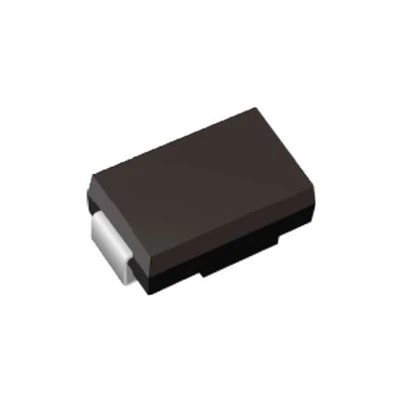
Authentic diodes are usually labeled with clear and standardized model information on the casing or packaging. For example, domestic diodes often have circuit symbols printed on the casing, directly indicating the polarity of the pins; Imported brands such as 1N4007 rectifier diodes must have their model identification completely consistent with the original factory data manual. If the identification is blurry, the font is rough, or there are spelling errors, be alert to refurbished or counterfeit products.
In terms of packaging, genuine products are usually packaged in anti-static bags or special trays, and come with original factory labels that include batch numbers, production dates, environmental labels, and other information. For example, in a certain procurement case, a counterfeit 1N5819 Schottky diode was packaged in a regular plastic bag and did not bear the environmental RoHS mark. The flaw was eventually discovered by comparing the original packaging.
2. Pin and shell technology
Authentic diode pins are usually treated with tin plating, with a smooth and oxidation free surface, consistent pin length, and no bending or deformation. For example, the longer end of the genuine LED pin is the positive pole, and the root of the pin is not corroded; Counterfeit products may have blackened or easily broken pins due to the use of inferior metal.
In terms of shell technology, the genuine shell material is uniform, without cracks, bubbles or deformation. For example, in a certain case, the counterfeit M7 rectifier diode casing was made of recycled plastic, with a rough surface and color difference, forming a sharp contrast with the original black epoxy resin casing.
3. Special mark recognition
Some diodes are marked with polarity through color rings, color dots, or grooves. For example:
Color ring marking: Zener diodes are often marked with a color ring near the negative pin. Genuine color rings have uniform color and precise position; Counterfeit products may have color ring deviation or color blur due to process defects.
Groove marking: Genuine high-frequency variable resistance diodes usually have a groove on the negative pin side, while counterfeit products may omit this marking or have insufficient groove depth.
二, Electrical performance testing: the core means of quantitative verification
1. Unidirectional conductivity test
Using a multimeter (pointer or digital) to measure the forward and reverse resistance of a diode is the fundamental method for verifying its unidirectional conductivity
Pointer multimeter: placed in the R × 1k Ω range, the forward resistance should be several hundred ohms to several thousand ohms, and the reverse resistance should be close to infinity. For example, the forward resistance of the genuine 1N4148 switch diode is about 600 Ω, and the reverse resistance is greater than 1M Ω; if the forward and reverse resistances are both close to 0 or infinite, it may be a breakdown or open circuit.
Digital multimeter: using a diode specific gear, the forward voltage drop should be 0.2-0.7V (silicon tube about 0.6V, germanium tube about 0.2V), and the reverse display should show "OL" or "1". For example, in a certain case, the forward voltage drop of a counterfeit BAS16 high-frequency diode reached 1.2V, far exceeding the normal range, revealing material doping defects.
2. Voltage regulation value test (for voltage regulator diodes)
The voltage regulator diode needs to be verified for its voltage regulation performance by applying an external bias voltage:
Test method: Build a circuit, connect a voltage regulator diode in series with an adjustable DC power supply and a current limiting resistor, and measure the voltage at both ends with a multimeter. For example, when the input voltage is greater than 3.6V, the output voltage of a genuine 3.6V voltage regulator diode (such as RD3.6E) should be stable within the range of 3.47-3.83V; If the output voltage fluctuates by more than 5% or cannot reach the nominal value, it may be a counterfeit or inferior product.
3. Switch characteristic test (for high-frequency diodes)
High frequency diodes (such as 1N4148, BAS16) need to verify whether their reverse recovery time (trr) meets the specifications:
Testing equipment: Use an oscilloscope in conjunction with a pulse generator to measure the transition time of a diode from forward conduction to reverse cutoff. For example, the TRR of genuine 1N4148 should be less than 8ns. If the measured value is greater than 20ns, it may be a low-frequency diode impersonating a high-frequency product.
三, Material Analysis: Technical Means for Deep Validation
1. X-ray fluorescence spectroscopy (XRF) analysis
Use XRF equipment to detect the metal composition of diode pins and chips, and verify whether they meet the original factory specifications. For example:
Pin composition: Genuine tin plated pins should contain over 96% tin, while counterfeit products may be doped with lead or other cheap metals.
Chip material: Genuine Schottky diode chips should use silicon-based materials, while counterfeit products may use silicon carbide (SiC) to impersonate, but their elemental composition differences can be detected through XRF.
2. Scanning Electron Microscope (SEM)
SEM can observe the microstructure of diode chips and verify whether their manufacturing process meets the original factory standards. For example:
Chip thickness: Genuine fast recovery diode chips typically have a thickness of 100-200 μ m, while counterfeit products may have uneven chip thickness due to process defects.
PN junction interface: The genuine PN junction interface is clear, while counterfeit products may have blurred interfaces due to uneven doping.
四, Supply Chain Traceability: Controlling Quality from the Source
1. Verification of original factory authorized channels
When purchasing, priority should be given to selecting authorized agents or distributors from the original factory to avoid purchasing through informal channels. For example:
Authorization certificate verification: The supplier is required to provide the original factory authorization certificate and verify its authenticity through the original factory's official website or customer service.
Batch traceability: Genuine diode packaging is usually labeled with a batch number, which can be queried through the original factory system for production date, test data, and other information. For example, in a certain case, the batch number of counterfeit M7 rectifier diodes did not match the original factory system records and was ultimately confirmed as refurbished goods.
2. Third party testing report
Require suppliers to provide testing reports issued by third-party testing agencies (such as SGS, UL) to verify whether the diode complies with international standards (such as IEC 60747). For example:
RoHS compliance: The testing report should clearly indicate whether the diode complies with the RoHS 2.0 standard, which means that the content of harmful substances such as lead, mercury, cadmium, etc. is less than the specified limit.
Reliability testing: The report should include test data on high temperature aging (such as 85 ℃/1000h), high and low temperature cycling (-40 ℃~125 ℃), etc., to verify the stability of the diode in extreme environments.
五, Industry Practice Cases: Drawing Experience from Lessons Learned
Case 1: Counterfeit 1N4007 rectifier diode causing power failure
A power supply manufacturer purchased a batch of 1N4007 rectifier diodes and found that some of the power supply output voltage fluctuated after use. After testing:
Appearance: Counterfeit product shell color ring offset, severe pin oxidation.
Electrical performance: Forward resistance>10k Ω, reverse resistance is only 500k Ω, far below the standard of genuine products.
Supply chain: The supplier is an unauthorized agent and cannot provide original batch traceability information.
Lesson: Strict verification of supplier qualifications should be conducted during procurement to avoid greater losses caused by purchasing inferior products at low prices.
Case 2: Refurbishing BAS16 high-frequency diode affects communication quality
A certain communication equipment manufacturer purchased a batch of BAS16 high-frequency diodes and found signal distortion after use. After testing:
Material: XRF analysis shows that the chip contains excessive lead and does not comply with RoHS standards.
Performance: Reverse recovery time>50ns, far exceeding the genuine 8ns standard.
Packaging: Use recycled plastic pallets without original factory labels.
Lesson: High frequency diodes have extremely high performance requirements. When purchasing, suppliers should be required to provide detailed test reports and measure key parameters through oscilloscopes.