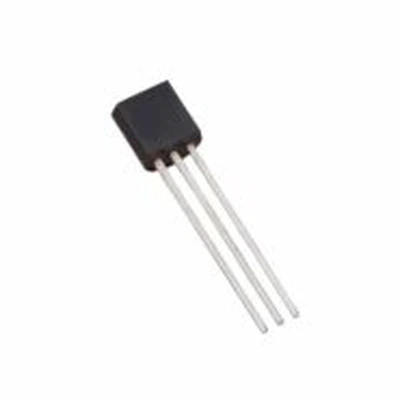
Does diode account for a large proportion of the cost in the energy system?
Leave a message
一, Energy storage system: The cost proportion of diodes is low, but their value weight is high
Energy storage systems are one of the fastest-growing fields in demand for diodes. Taking the global energy storage market in 2024 as an example, the shipment volume of diodes reached 4.2 billion, with a market size of only 1.8 billion yuan, but its impact on system BOM costs exceeded 11 billion yuan. This data reveals a key contradiction: the cost of a single diode is low, but its usage is large and directly related to system efficiency and lifespan.
The 'invisible champion' effect of cost proportion
In energy storage systems, the cost of diodes accounts for about 3% -5%, but their value distribution among the three core modules is extremely uneven:
BMS (Battery Management System): accounting for 55% of the total diode usage, a single 20 foot container requires 1600-1800 pieces, mainly TVS (Transient Voltage Suppressor) and Schottky diodes. BMS achieves battery balancing, overvoltage protection, and data acquisition through diodes, and its performance directly affects battery life and system safety.
PCS (Energy Storage Converter): accounts for 30% of the usage, and a single 500kW model requires 120-150 fast recovery diodes or silicon carbide (SiC) Schottky diodes. When the switching frequency of PCS increases from 16kHz to over 50kHz, the reverse recovery loss of silicon-based FRD (fast recovery diode) exceeds 1% and must be replaced with SiC diode to reduce the loss.
Auxiliary power supply and thermal management: accounting for 15% of usage, although the gross profit margin is the highest, diodes are more responsible for edge functions such as lightning protection and electrostatic protection in this scenario.
Technological iteration disrupts the cost structure
With the upgrade of energy storage systems to 1500V high-voltage platforms, the technical threshold and cost structure of diodes are being restructured:
High voltage conversion: The clamping voltage of TVS has been increased from 40V to 60V, requiring diodes to have higher voltage resistance and faster response speed.
High frequency: The increase in PCS switching frequency has led to a surge in losses in silicon-based diodes, causing the penetration rate of SiC diodes to jump from 12% in 2024 to 38% in 2027, driving an annual increase of 7% -9% in average prices.
High temperature: The temperature difference inside the battery cluster is required to be ≤ 3 ℃, and temperature sensitive TVS diodes have become standard. Domestic manufacturers have reduced the thermal resistance to 0.35K/W and the junction temperature to 25 ℃ through DFN8 × 8 packaging technology, allowing PCS to operate at full load even at an ambient temperature of 65 ℃. The aluminum material of the radiator has been reduced by 30%, and the system cost has decreased by 0.015 yuan/W.
Case: Sunshine Power's 1500V energy storage system, launched in 2025, uses SiC diodes and optimized packaging technology to increase PCS efficiency by 1.2%, reduce system cost per kilowatt hour (LCOS) by 0.03 yuan/kWh, and increase project net present value (NPV) by 8%.
二, Photovoltaic system: cost game and efficiency balance of diodes
Photovoltaic systems are one of the most mature fields for diode applications, but there has always been controversy over their cost proportion and technological route selection. Taking component level bypass diodes as an example, although their cost proportion is low, they directly affect the system's power generation and reliability.
1. The "cost-benefit" paradox of bypass diodes
In traditional photovoltaic modules, the cost of bypass diodes accounts for about 0.1% -0.3%, but their role is irreplaceable:
Hot spot protection: When the component is partially obstructed, the bypass diode can conduct current to prevent the hot spot effect from causing the battery cell to burn out.
Power generation guarantee: According to calculations, components without bypass diodes can lose more than 30% of their power generation in partially obstructed scenarios.
However, as the component power increases to over 700W, the cost optimization space for bypass diodes is compressed:
Material cost reduction: By reducing the number of diodes and optimizing the design of junction boxes, the material cost of a single component can be reduced by 6-7 yuan.
Production efficiency improvement: The number of welding points has been reduced from 6 to 2, the virtual welding rate has decreased by 50%, and the production cycle has increased by 20%.
Hidden cost elimination: Eliminate risks such as customer complaints and compensation caused by diode burnout, lightning strikes/electrostatic damage, etc.
2. Diode innovation in the era of intelligent photovoltaics
In intelligent photovoltaic systems, diodes are upgrading from passive protection components to active control nodes:
Ideal diode controller: Through microvolt level voltage difference detection and fast response (<1 μ s), the software definition of diode function is achieved, reducing losses by 0.2% -0.3%.
MPPT (Maximum Power Point Tracking) Integration: Integrating diodes with DC/DC converters to improve component level optimization efficiency. The case study of the 20MW Golmud power station in Qinghai shows that such a solution can increase annual electricity generation by 2% -3%.
三, Electric vehicles: The 'small cost, big impact' of diodes
Electric vehicles are one of the fastest-growing sub markets for diode demand. In 2024, the market size of Chinese automotive diodes will reach 5.8 billion yuan, of which the powertrain system accounts for 25.9%, mainly used in battery management, motor control, and energy recovery systems.
1. The "precision valve" of the battery management system
In BMS, diodes undertake core functions such as battery balancing, overvoltage protection, and insulation monitoring
Active balancing: By combining MOSFETs and diodes to achieve energy transfer between batteries, the balancing efficiency is improved to over 95%.
High voltage safety: 1200V SiC diode can meet the requirements of 800V high voltage platform, with reverse recovery time shortened to less than 10ns and switch loss reduced by 30%.
2. Efficiency lever of motor control system
In motor controllers, diodes work in conjunction with IGBT/SiC MOSFETs, and their performance directly affects system efficiency:
SiC diode replacement: Using SiC diodes can improve the efficiency of the motor controller by 1% -2% and increase the range by 5% -8%.
Packaging optimization: By using copper clip binding and silver sintering technology, the thermal resistance of the diode is reduced by 50%, allowing the junction temperature to rise to 200 ℃ and reducing the volume of the heat sink by 30%.
四, The Illusion of Cost Proportion and Value Reconstruction
From the data, the cost proportion of diodes in energy systems is generally less than 5%, but their value reconstruction logic far exceeds the cost itself:
Efficiency leverage: For every 0.1% reduction in diode losses, the energy storage system's cost per kilowatt hour can be reduced by 0.005 yuan/kWh, and the project's IRR (internal rate of return) can be increased by 1-2 percentage points.
Reliability multiplier: For every order of magnitude decrease in diode failure rate, system maintenance costs can be reduced by 30% -50%, and the lifespan can be extended by 5-8 years.
Technological iteration accelerator: The popularization of SiC diodes has increased the power density of energy storage systems by 16%, the power generation of photovoltaic modules by 2% -3%, and the range of electric vehicles by 5% -8%.