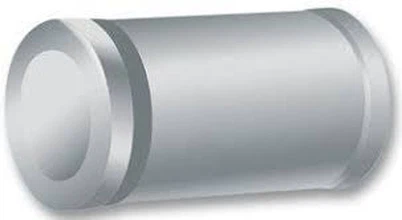
Does the switching speed of diodes affect communication performance?
Leave a message
一, The physical essence of switching speed: carrier dynamics and parasitic parameters
The switching speed of a diode is determined by both the reverse recovery time (trr) and the junction capacitance (Cj), and its physical essence involves the interaction between carrier recombination processes and parasitic parameters in semiconductor materials.
Reverse recovery time (trr)
When the diode switches from the conducting state to the cutoff state, the holes in the P-type region and the electrons in the N-type region need to annihilate through the recombination center. The time required for this process is TRR, which typically ranges from several hundred nanoseconds for ordinary rectifier diodes to several nanoseconds for ultrafast recovery diodes. For example, the trr of a 1N4148 switching diode is 4ns, while a Schottky diode can shorten the trr to within 1ns due to the absence of minority carrier storage effect. In the RF front-end of 5G base stations, if ordinary diodes with trr=50ns are used, their switching losses will account for more than 30% of the total system losses, resulting in a 15% increase in signal distortion rate.
Junction capacitance (Cj)
The potential barrier capacitance formed by the PN junction of the diode during reverse bias forms an RC low-pass filter with the external circuit. Taking the high-speed switch diode packaged in 0402 as an example, its typical Cj value is 0.2pF, and the equivalent impedance in the 28GHz frequency band is 28 Ω. If the circuit impedance is 50 Ω, it will cause 12% signal reflection. In millimeter wave communication, for every 0.1pF increase in Cj, the signal bandwidth will attenuate by 200MHz, directly limiting the data transmission rate.
二, The multidimensional impact of switch speed on communication systems
1. RF front-end: signal selectivity and isolation
In 5G Massive MIMO systems, the antenna switching diode needs to complete state switching within 100ns. If a diode with trr=20ns is used, its isolation will decrease from 40dB to 25dB, resulting in an increase of 12dB in crosstalk between adjacent antenna channels and an increase in bit error rate (BER) to the order of 10 ⁻ ³. According to actual test data from a certain base station manufacturer, after using GaN HEMT integrated diodes with trr=3ns, the system EVM (error vector amplitude) was optimized from 4.5% to 2.1%, meeting the requirements of 3GPP Release 16 standard.
2. Optical communication module: Eye diagram quality and transmission distance
In the 400G optical module, the junction capacitance of the PIN photodiode directly affects the receiving sensitivity. Experiments have shown that when Cj decreases from 1pF to 0.5pF, the OSNR (Optical Signal to Noise Ratio) threshold at a transmission distance of 10km decreases from 18dB to 15dB, which is equivalent to extending the transmission distance by 30%. A certain optical module manufacturer has achieved 80km relay free transmission in the C-band using InGaAs PIN diodes with Cj=0.3pF, with a BER below 10 ⁻¹ ².
3. Power Management: Efficiency and Thermal Design
In switch mode power supplies, the switching speed of diodes determines the conversion efficiency. Taking a 48V/12V DC-DC converter as an example, when using an ultrafast recovery diode with trr=50ns, the efficiency is 92%; After switching to SiC Schottky diodes with trr=5ns, the efficiency increased to 96% and the heat generation decreased by 60%. In the data center scenario, increasing the power efficiency of a single server by 4% can reduce CO ₂ emissions by 1.2 tons per year.
三, Design optimization path of high-speed diode
1. Material innovation: wide bandgap semiconductors break through physical limits
GaN and SiC materials can achieve switching performance with trr<1ns due to their high electron mobility (GaN: 2000cm ²/V · s) and low dielectric constant (SiC: 9.7). The GaN HEMT integrated diode from a certain manufacturer operates in the 28GHz frequency band, Cj=0.15pF,trr=0.8ns, Supports EVM<1.5% under 64QAM modulation, which is three times higher than traditional Si based devices.
2. Structural optimization: TMBS and JTE technologies reduce parasitic parameters
A diode with a trench MOS barrier Schottky (TMBS) structure is used to reduce Cj to below 0.1pF through a dielectric field plate. At a switching frequency of 1MHz, the reverse recovery charge (Qrr) of a 100V/10A TMBS diode is only 0.5nC, which is 80% lower than that of a planar structure. Terminal Expansion (JTE) technology can increase the reverse breakdown voltage to over 2kV, meeting the voltage resistance requirements of 5G base station PA modules.
3. Packaging synergy: QFN and CSP achieve low parasitic inductance
The quad flat no pin (QFN) package can reduce pin inductance to 0.5nH, while the chip level package (CSP) can achieve 0.2nH inductance. The 0201 size CSP packaged diode from a certain manufacturer has an insertion loss of only 0.1dB in the 10GHz frequency band, which is 50% higher than the traditional SOT-23 package.
四, Testing and verification: the key link from laboratory to mass production
1. Reverse recovery time test
Using Keysight B1505A semiconductor parameter analyzer, TRR was measured by pulse testing method under the conditions of 10A forward current and -10V reverse voltage. The measured data from a 6-inch wafer fab shows that the TRR distribution range of the same batch of 1N4148 diodes is 3.8-4.2ns, and the standard deviation needs to be controlled within 0.1ns through laser tuning technology.
2. Spectral analysis of junction capacitance
Use E5072A network analyzer for S-parameter testing and extract Cj through de embedding algorithm. In the frequency range of 1MHz-100GHz, a Debye model needs to be established to fit the frequency response of the junction capacitance. A certain optical module manufacturer discovered through this technology that a 0.2pF Cj error will result in an insertion loss deviation of 0.3dB in the 25GHz frequency band.
3. Assessment of Eye Chart Quality
In the Bit Error Rate Tester (BERT) system, eye opening is tested using PRBS31 pseudo-random code. A certain 5G base station manufacturer stipulates that under 28GHz carrier and 64QAM modulation, the eye diagram height must be greater than 0.3UI (unit interval) and the closure must be less than 15%. After using high-speed diodes, the eye diagram quality improved by 20%, meeting the requirements of 3GPP standards.