


We are an enterprise whose main business is the research and development, production and sales of semiconductor discrete components and products. Our company has core technologies in many fields such as wafers, packaging, device testing, and application design. We are committed to the research and development, production, sales, and application solution design of new components, and have obtained more than 80 national authorized invention patents.
Technical Excellence
Our company ensures superior product quality by leveraging cutting-edge technology in wafer manufacturing, packaging, and testing, providing clients with reliable and high-performance electronic components.
OEM/ODM Services
Leverage our OEM/ODM prowess to bring your product vision to life. With custom designs and high-quality manufacturing, we deliver solutions that perfectly align with your brand and market needs, ensuring a competitive edge in a rapidly evolving marketplace.
Leading Service
We have many years of industry experience and a complete production management, quality supervision, sales service operation system. Whether you want to buy transistors or diodes, just send your requirements by email and we can customize the product for you.
Quality Guaranteed
Our products have obtained ISO-14000; ISO-9001 IATF-16949 and other certificates, and have obtained more than 80 national invention patents, including the MB10F bridge stack commonly used in the power supply industry, the UMB10F/B7 bridge stack used in the LED industry, the world's smallest bridge stack IBS and a series of high junction temperature products.


Small signal transistor, fully known as a semiconductor triode, also known as a bipolar transistor and a triode transistor, is a kind of semiconductor component for controlling current to amplify weak signals into electrical signals with larger amplitude, and it is also used as a contactless switch. As one of the basic semiconductor components, a triode transistor is the core component of an electronic circuit for current amplification. A triode is made of two PN junctions that are very close to each other on a semiconductor substrate. The two PN junctions divide the whole semiconductor into three parts. The middle part is the base region, and the two sides are the emitter region and the collector region. The arrangement modes are PNP and NPN.
Features of Small Signal Transistor
Versatile Applications
Small signal transistors serve as critical components across a wide spectrum of devices, including audio systems and telecommunications equipment. Their ability to adapt to different electronic environments underscores their versatility, making them an essential part of both consumer electronics and industrial systems.
Efficient Design
These transistors are designed to be compact and power-efficient, allowing them to operate effectively without consuming excess energy or requiring additional space. This makes them ideal for use in devices where space is limited or power consumption needs to be minimized.
Precise Signal Control
Small signal transistors offer precise control over minor signals, ensuring clear and accurate signal transmissions. This is particularly important in applications like audio equipment and communication systems, where signal clarity can significantly impact performance.
Economical Benefits
Despite their advanced capabilities, small signal transistors are cost-effective. They offer reliable performance at a low cost, making them accessible for mass production and integration into various electronic devices.
Design Flexibility
The design of small signal transistors can easily be adjusted to fit the demands of both simple and complex circuits. This flexibility allows engineers to incorporate them into a range of electronic designs, from basic circuits to more sophisticated systems, without compromising performance or reliability.
Types of Small Signal Transistor
Bipolar Junction Transistors (BJTs)
BJTs consist of three layers of semiconductor material and come in two versions: NPN and PNP. They amplify signals by controlling the flow of current between the collector and emitter terminals using a small current at the base terminal. BJTs offer fast switching speeds and are commonly used in audio amplifiers, switching power supplies, and signal processing circuits.
Junction Field-Effect Transistors (JFETs)
JFETs are a type of FET that uses a junction instead of a metal gate to control the flow of current. They are known for their high input impedance and low noise levels, making them suitable for use in sensitive electronic devices such as preamplifiers and instrumentation amplifiers. JFETs can be enhanced or depleted, referring to the type of channel doping used.
Metal-Oxide-Semiconductor Field-Effect Transistors (MOSFETs)
MOSFETs are a type of FET that uses a metal gate and an insulating layer of silicon dioxide to control the flow of current. They have low drive requirements and high input impedance, making them ideal for use in switching and amplifier applications. MOSFETs come in both enhancement mode (normally off) and depletion mode (normally on) varieties.
Insulated Gate Bipolar Transistors (IGBTs)
IGBTs combine the best features of BJTs and MOSFETs into a single device. They have high current and voltage capabilities, making them suitable for use in power electronics applications such as motor controls, uninterruptible power supplies, and switch-mode power supplies. IGBTs offer fast switching speeds and low on-state voltage drops.
Heterojunction Bipolar Transistors (HBTs)
HBTs are a type of BJT that uses different semiconductor materials for the emitter, base, and collector regions. This allows for higher operating frequencies and improved temperature stability compared to traditional BJTs. HBTs are commonly used in radar systems, satellite communications, and other high-frequency applications.
Small signal transistors are integral in various devices and systems, spanning numerous applications.
General Purpose Switching
Small signal transistors serve as reliable on/off switches for a variety of electrical circuits, essential in devices ranging from home appliances to industrial machinery.
Bias Supply Circuits
They provide the necessary bias voltages for stable component operation, improving overall device performance and functionality.
LED Diode Driver
Responsible for controlling the current flow to LED diodes, small signal transistors regulate brightness and prevent damage from overcurrent conditions.
Infrared Diode Amplifier
Transistors amplify signals from infrared diodes, enhancing signal strength and clarity in remote controls and sensors.
Relay Driver
As relay drivers, transistors activate or deactivate high-current devices by controlling relays, isolating low-power control circuits.
Timer Circuits
Central to timing functions, these transistors regulate event timing in circuits, ensuring precise synchronization in devices.
Audio Mute Function
Transistors can interrupt the audio signal to silence output, used in volume controls across audio equipment.
High Voltage Preamplifier
In 'A' class preamplifiers, transistors handle high voltage signals with precision, critical for high-quality audio reproduction.
RGB Coils Driver
Driving RGB coils, transistors control individual color components in displays, producing sharp visuals in monitors and TVs.
Telecom Interface Circuits
Within telecommunications, transistors manage signal transmissions, ensuring clear and reliable data exchange between devices.
How to Pick the Right Transistor for Your Business
Application and Frequency Response
First, identify your circuit application, such as audio amplification or signal switching. Alongside this, consider the operating frequency range and ensure the transistor can handle it effectively, especially its cutoff frequency for high-frequency uses.
Gain, Breakdown Voltage, and Power Dissipation
Select your transistor based on the required gain. Ensure its maximum reverse breakdown voltage exceeds your circuit's highest voltage, and check its power dissipation to avoid overheating during operation, which is crucial for uninterrupted performance.
Packaging and Temperature Considerations
Choose an appropriate package type like SMD or through-hole based on your board design and available space. If your device operates in specific or extreme temperatures, select a transistor that can withstand those conditions without performance degradation.
How Small Signal Transistors Work
Amplifying Signals
Small signal transistors are designed to amplify tiny electrical signals without distortion. They achieve this by controlling the flow of carriers (electrons or holes) in their semiconductor material, which in turn controls the current through the device.
Controlling Current Flow
When a small input signal is applied to the base of a bipolar junction transistor, it modulates the flow of carriers in the base-emitter junction, causing a correspondingly larger current to flow between the collector and emitter. This action amplifies the signal.
Switching and Multiplexing
Transistors can also act as switches, turning circuits on or off depending on the signal applied to their base. This property is utilized in digital circuits for logic gates and in analog circuits for signal multiplexing.
Key Components
The operation of small signal transistors involves three layers of semiconductor material forming two junctions: the emitter, base, and collector in BJTs, or source, gate, and drain in FETs. The control over these junctions determines the device's function.
Safety and Maintenance in Small Signal Transistors Equipment
Safe Handling Practices
When handling small signal transistors, it is essential to take precautions to prevent damage to the delicate components. Always wear clean, static-free gloves to avoid electrostatic discharge that can harm the device. Additionally, use proper ESD (ElectroStatic Discharge) protection measures when working with sensitive electronic components like transistors. This may include using anti-static mats, wrist straps, and other ESD protection tools.
Proper Biasing and Heat Management
To ensure the proper operation of small signal transistors, it is crucial to apply the correct voltage to each of the transistor's terminals as specified in the datasheet. Avoid overdriving the transistor, which can cause overheating and potentially lead to failure. If the application generates high power levels, consider using heat sinks or cooling methods to manage heat dissipation effectively. Regularly monitor the temperature of the transistor during operation to prevent overheating.
Regular Visual Inspections
Periodically inspect the transistors for any signs of physical damage or abnormalities such as discoloration, cracks, or swelling. These symptoms may indicate internal damage or improper function. If any issues are discovered during inspection, replace the transistor immediately to avoid further problems in the circuit.
Electrical Testing and Verification
To ensure the proper functioning of small signal transistors, regularly test them within their circuits to verify they are operating within specified parameters. Use oscilloscopes or multimeters to check for any unexpected behavior that could signify degradation or damage. Keep detailed records of testing results to track the performance over time and identify trends or potential issues early on.
Protection from Environmental Factors
Shield the transistors from environmental factors like moisture, dust, and extreme temperatures that can affect their performance and lifespan. Consider packaging solutions that provide adequate protection based on your application environment. For example, use hermetic sealing for applications exposed to moisture or harsh chemicals. Ensure proper ventilation and cooling in high-temperature environments to prevent overheating and extend the lifespan of the transistors.
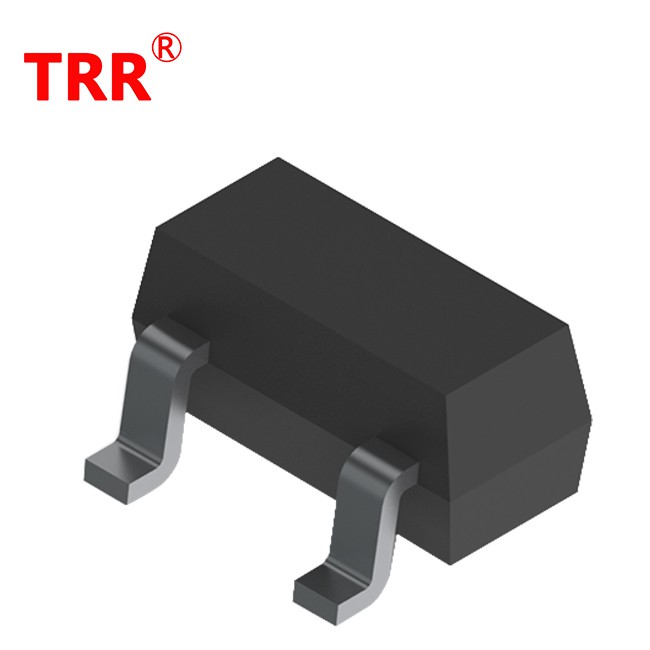
Materials
Small signal transistors are made of semiconductor materials such as silicon, germanium, or gallium arsenide. These materials have the ability to conduct electricity when doped with impurities, creating a region known as the "channel" where electrons can flow. The choice of material depends on the specific application and desired performance characteristics of the transistor.
Manufacturing Process
The manufacturing process for small signal transistors involves several steps. First, the semiconductor material is sliced into thin wafers using a diamond saw. Next, the wafers are polished to ensure a smooth surface. Then, a layer of insulating material is deposited onto the wafer to create a barrier between the channel and the surrounding material. This is followed by the deposition of metal contacts onto the wafer to form the source, drain, and gate regions of the transistor. Finally, the wafer is diced into individual transistors and packaged for use in electronic devices.
Quality Control
Quality control is an essential aspect of manufacturing small signal transistors. Each step of the process is carefully monitored to ensure that the final product meets strict standards for performance and reliability. Testing is performed at various stages of production to detect any defects or variations in the materials or processes used. Additionally, environmental factors such as temperature and humidity are controlled during manufacturing to prevent damage to the delicate components.
Certificate


Frequently Asked Questions
We're well-known as one of the leading small signal transistor manufacturers and suppliers in Shenzhen, China. If you're going to buy high quality small signal transistor in stock, welcome to get quotation from our factory. Also, OEM service is available.
TRANSISTOR S9018, TRANSISTOR S8550, Transistor BC807