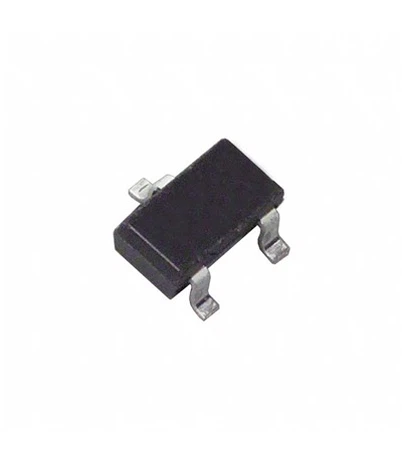
Which communication sub industries have the highest demand for diodes?
Leave a message
1, 5G base station construction: Ultra fast recovery diodes become a must-have
The global number of 5G base stations is expected to exceed 4 million by 2025, with each base station requiring over 10000 diodes, mainly used for RF front-end switches, power management modules, and signal detection circuits. Among them, the ultrafast recovery diode (trr<5ns) has become a key component of the base station radio frequency unit (RU) due to its ability to meet the nanosecond switching requirements of the 5G millimeter wave frequency band (24-48GHz).
Technical pain points:
High frequency loss control: In the 28GHz frequency band, for every 0.1pF increase in diode junction capacitance, the signal bandwidth will attenuate by 200MHz. The GaN HEMT integrated diode launched by Anson Mei supports EVM (Error Vector Amplitude)<1.5% under 64QAM modulation by reducing the junction capacitance to 0.15pF, meeting the 3GPP Release 16 standard.
Thermal management challenge: The power density of the AAU module in 5G base stations reaches 100W/mm ², and the diode junction temperature is required to be controlled within 150 ℃. Infineon's CoolSiC ™ The Schottky diode adopts TMBS (trench MOS barrier Schottky) structure, which reduces the thermal resistance to 5K/W and improves the heat dissipation efficiency by three times compared to traditional Si devices.
Market size: The market size of diodes for 5G base stations in China is expected to reach 4.2 billion yuan by 2025, with a compound annual growth rate of 18%. Among them, the unit price of automotive grade ultrafast recovery diodes remains above 4.7 yuan, and the price of SiC Schottky diodes is as high as 18-22 yuan per unit.
2, Optical communication module: PIN diode dominates high-speed transmission
In 400G/800G optical modules, the integration scheme of PIN photodiodes and transimpedance amplifiers (TIA) has become mainstream, with core indicators including responsivity (>0.9A/W), dark current (<1nA), and junction capacitance (<0.3pF). According to industry data, the global shipment of optical modules in data centers is expected to exceed 120 million units by 2025, driving a 25% increase in demand for PIN diodes.
Technological breakthrough direction:
Long distance transmission optimization: InGaAs material PIN diodes have a 3-fold increase in response in the C-band (1530-1565nm) compared to Si material, supporting 80km relay free transmission. The 0402 packaged PIN diode launched by Suzhou Gude has reduced the OSNR (optical signal-to-noise ratio) threshold from 18dB to 15dB by optimizing the doping concentration of the epitaxial layer.
Co packaged optical (CPO) adaptation: To meet the packaging requirements of CPO modules with a spacing of 0.5mm, Changjing Technology has developed Flip Chip PIN diodes, which reduce parasitic inductance by 60% compared to traditional wire bonding and support 112Gbps PAM4 signal transmission.
Competitive landscape: Domestic manufacturers such as Yangjie Technology and Jiejie Microelectronics have already occupied 35% of the mid to low end optical module market share, but still rely on imported products such as Ansenmei and ROHM in the high-end 800G/1.6T module field.
3, Satellite communication: Anti radiation diodes ensure space level reliability
The construction of Low Earth Orbit (LEO) satellite constellations has driven a surge in demand for radiation resistant diodes. Taking the Starlink project as an example, a single satellite requires more than 2000 anti radiation diodes for power amplifier bias, limiting protection, and frequency synthesis circuits.
Technical Requirements:
Total dose tolerance: It is necessary to pass a 100krad (Si) gamma ray radiation test to ensure that the performance degradation during the 15 year lifetime in orbit is less than 10%. Toshiba's radiation resistant Schottky diode uses SOI (silicon on insulator) technology to control leakage current fluctuations within ± 5%.
Single particle effect protection: In response to single particle burnout (SEB) caused by heavy ion impact, DIODES has developed a deep trench isolation (DTI) structure diode, which increases the SEB threshold from 45MeV · cm ²/mg to 80MeV · cm ²/mg.
Market space: The global market size for satellite communication diodes is expected to reach $830 million by 2025, with radiation resistant models accounting for over 60%. Domestic manufacturers such as Huawei Microelectronics have passed the GJB 9001C military standard certification, but their high-end products still rely on suppliers such as Microsemi from the United States and Thales from France.
4, Industrial Internet of Things (IIoT): Small signal diodes support massive connections
In the industrial Internet of Things scenario, diodes need to meet the requirements of low power consumption (<1 μ A), high integration (0201 package), and wide temperature operation (-40 ℃~125 ℃). Taking smart meters as an example, a single meter requires the use of at least 12 small signal diodes for ESD protection, voltage clamping, and signal rectification.
Technological Trends:
Ultra low VF diode: Anshi Semiconductor's LL4148 series reduces the forward voltage drop (VF) to 0.18V, which is 60% lower than the standard 1N4148, and can extend the battery life of IoT devices by more than 30%.
Array packaging: Changdian Technology's DFN0603-4L array diode integrates 4 diodes into a 0.6mm × 0.3mm package, meeting the requirement of reducing PCB area by 50%.
Demand forecast: By 2025, the global shipment of industrial IoT devices will reach 12.5 billion units, driving the demand for small signal diodes to 150 billion units, with a compound annual growth rate of 12%.
5, Technological iteration and domestic substitution of dual wheel drive
Currently, there are two major trends in the communication diode market:
Material upgrade: The penetration rate of SiC/GaN wide bandgap material diodes is rapidly increasing, and it is expected that the market size will exceed 1.5 billion US dollars by 2025, with an annual growth rate of over 40%.
Localization substitution: Driven by the national policy of "strengthening and supplementing the supply chain", domestic manufacturers have achieved 80% self-sufficiency in the mid to low end market, but still rely on imports in the high-end RF and anti radiation fields. Enterprises such as Yangjie Technology and Jiejie Microelectronics are increasing their investment in the research and development of silicon carbide diodes, and it is expected that the cost of domestically produced SiC diodes will decrease to 60% of imported products by 2027.