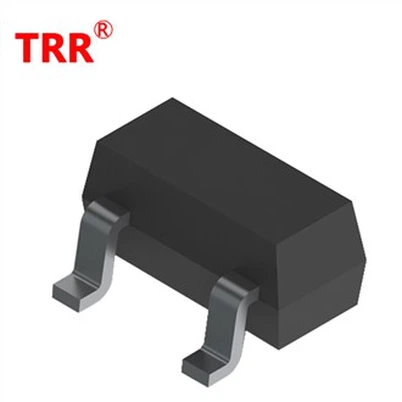
What is the working principle of PIN diode in RF communication?
Leave a message
1, Structural characteristics of PIN diode
A PIN diode consists of a P-type semiconductor layer, an intrinsic semiconductor layer (I layer), and an N-type semiconductor layer. P-type semiconductor layers are rich in holes, N-type semiconductor layers are rich in electrons, while intrinsic semiconductor layers have almost no impurities and high resistivity. This special structure enables PIN diodes to exhibit different advantages in electrical characteristics and practical applications compared to ordinary diodes. The presence of the I layer significantly reduces the junction capacitance of the PN junction, while increasing the width of the depletion region, thereby enhancing its responsiveness and sensitivity to high-frequency signals.
2, The working principle of PIN diode
(1) Forward bias state
When the PIN diode is in a forward bias state, that is, the P region is connected to a positive voltage and the N region is connected to a negative voltage. At this point, the external electric field will weaken the built-in electric field between the P and N regions, narrowing the depletion region. Under the action of electric field force, holes in the P region and electrons in the N region diffuse towards each other and inject into the I region. As the forward bias voltage increases, the number of charge carriers injected into the I region increases. These charge carriers recombine in the I region, forming a charge cloud that significantly reduces the resistance of the I region. Therefore, PIN diodes exhibit a low impedance state, similar to a short circuit, allowing RF signals to pass smoothly.
(2) Reverse bias state
When the PIN diode is in a reverse bias state, that is, the P region is connected to a negative voltage and the N region is connected to a positive voltage. The external electric field enhances the built-in electric field between the P and N regions, widening the depletion region. The charge carriers in the I region are strongly attracted to the boundary between the P and N regions, and there is almost no charge cloud present in the I region, resulting in an increase in resistance. At this point, the PIN diode exhibits a high impedance state, similar to an open circuit, which can effectively prevent the passage of RF signals and achieve signal isolation.
(3) Zero bias state
When there is no external voltage, the intrinsic region (I region) between P-type and N-type semiconductors forms a depletion region due to the built-in electric field on both sides, where there are almost no free carriers, thus exhibiting high impedance characteristics.
3, The working principle of PIN diode as an RF component
(1) RF switch
The application of PIN diodes in RF switches is one of its most important scenarios. By changing its bias voltage, the conduction and cutoff states of the PIN diode can be controlled, thereby achieving on-off control of the RF signal. Under forward bias, the PIN diode exhibits a low impedance state, allowing RF signals to pass smoothly; Under reverse bias, the PIN diode exhibits a high impedance state, and the RF signal is blocked. The performance of RF switches is usually measured by indicators such as insertion loss, isolation, and power capacity. Insertion loss reflects the signal attenuation of a switch in a conducting state, while isolation indicates the switch's ability to block signals in an open state. In order to achieve the goals of low insertion loss and high isolation, PIN diodes are usually designed with a thin I-layer structure to shorten the transit time of charge carriers and improve switching speed.
(2) Attenuator
PIN diodes can also be used as attenuators. By connecting multiple PIN diodes in series or parallel and controlling their bias voltage, variable attenuation of RF signals can be achieved. When the PIN diode is forward biased, its impedance is low and the attenuation of the signal is small; When reverse biased, impedance increases and signal attenuation increases. By precisely controlling the bias voltage, precise adjustment of attenuation can be achieved. Attenuators are used in communication systems to adjust signal strength, protect receiving devices from strong signal interference, and can also be used to adjust signal gain and balance.
(3) Phase shifter
PIN diodes can also be used to design phase shifters in radar and communication systems. By changing the bias voltage of the PIN diode, its internal capacitance and inductance can be altered, thereby changing the phase of the signal. Phase shifters play a crucial role in phased array radar, enabling rapid scanning and directional control of the radar beam. By precisely controlling the bias voltage of each PIN diode, precise adjustment of beam shape and direction can be achieved.
4, Advantages of PIN diodes in RF communication
(1) Fast switch speed
The switching speed of PIN diodes is very fast, which can complete the on-off switching of signals in a very short time. The switching speed mainly depends on the thickness of the I layer and the lifetime of the charge carriers. By optimizing the thickness of the I-layer and selecting materials with short lifetimes, the switching speed can be further improved. The fast switching speed enables PIN diodes to meet the requirements of high-speed communication and signal processing, making them suitable for high-frequency and high-speed RF applications.
(2) Low loss
PIN diodes have lower on resistance and insertion loss when forward biased. Due to the low doping concentration of the I layer, the recombination rate of charge carriers in the I region is low, thereby reducing energy loss. The low loss characteristic enables PIN diodes to reduce signal attenuation and distortion during RF signal transmission, improving the quality of signal transmission.
(3) High isolation level
PIN diodes have high impedance and isolation when reverse biased. Its high impedance characteristic can effectively isolate interference and crosstalk between different signal paths, ensuring the purity of the signal. High isolation enables PIN diodes to achieve precise control and transmission of signals in RF circuits.
(4) Good linearity
PIN diodes exhibit good linearity when forward biased. There is a linear relationship between its current and voltage, which can maintain the amplitude and phase characteristics of the signal unchanged during transmission. Good linearity makes PIN diodes suitable for communication systems that require high signal quality, such as digital communication, satellite communication, etc.
(5) Easy to integrate
PIN diodes can be integrated with other semiconductor devices on the same chip to form more powerful integrated circuit systems. Through integrated circuit technology, multiple PIN diodes can be integrated with other components to achieve complex RF functions. This integrated design not only improves the integration and reliability of the system, but also reduces the size and cost of the circuit.
https://www.trrsemicon.com/diode/smd-diode/schottky-diode-bat54.html