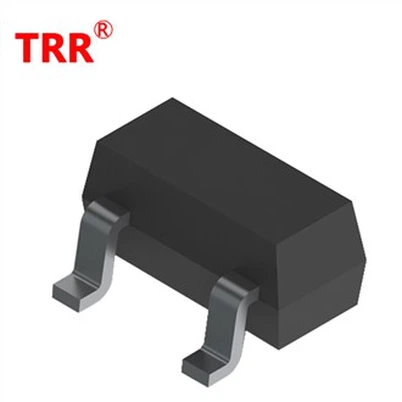
What is the current protection function of diodes in intelligent drug delivery devices?
Leave a message
1, Core characteristics and current protection mechanism of diodes
The core characteristic of a diode is its unidirectional conductivity - it only allows current to pass in the forward direction and exhibits a high impedance state in the reverse direction. This feature enables it to achieve various current protection functions in circuits:
Reverse cutoff protection
When the device circuit encounters a reverse voltage surge (such as reverse polarity of the power supply, electrostatic discharge, or electromagnetic interference), the diode quickly enters a reverse cutoff state, blocking the flow of current and preventing sensitive components (such as microcontrollers and sensors) from being damaged by reverse current. For example, in an intelligent insulin pump, if the power polarity is accidentally reversed, the diode can immediately cut off the circuit to avoid burning out the motor drive module or dose control chip.
Transient Voltage Suppression (TVS)
Intelligent drug delivery devices often face transient high-voltage pulses caused by switch operations, motor start stop, or external electromagnetic interference. TVS diodes clamp transient voltage to a safe range with an extremely short response time (nanosecond level), protecting subsequent circuits. For example, in wireless charging modules, TVS diodes can absorb voltage spikes induced by coils to prevent overvoltage shocks during energy transmission.
Voltage stabilization function
Zener diodes maintain stable output voltage through reverse breakdown characteristics. In intelligent drug delivery devices, it is commonly used to provide stable power for low-power sensors or communication modules. For example, in implantable drug release devices, a voltage regulator diode can ensure that the microcontroller can still receive a stable 3.3V power supply even when the battery voltage fluctuates, avoiding dose calculation errors caused by unstable voltage.
2, Typical application scenarios of diodes in intelligent drug delivery devices
1. Anti reverse connection protection: a low-cost and highly reliable basic protection
Connecting diodes in series at the power input of intelligent drug delivery devices is the simplest and most effective solution to prevent reverse polarity of the power supply. For example, the portable nebulization drug dispenser uses a 1N4007 rectifier diode connected in series with the power circuit. When the user accidentally installs the battery in reverse, the diode blocks the current to avoid damage to the motor drive module or heating element. Although this scheme introduces a conduction voltage drop of about 0.7V (silicon tube), its impact on battery life can be negligible in low-power devices.
2. Continuous current protection: suppresses the back electromotive force of inductive loads
The inductive loads such as motors and solenoid valves in intelligent drug delivery devices may generate reverse electromotive force when power is cut off, which may cause breakdown of the driving transistor or MOSFET. The freewheeling diode is connected in parallel to both ends of the inductive load, providing a discharge path for the back electromotive force and protecting the switching element. For example, in an automatic injector, a Schottky diode (such as 1N5819) is connected in parallel at both ends of the stepper motor that drives the needle to advance. Its low forward voltage drop (0.3V) and fast recovery characteristics can effectively absorb the energy impact when the motor is powered off, extending the life of the drive circuit.
3. Clamp protection: limits the input voltage range of ADC
Microcontrollers in intelligent drug delivery devices often monitor sensor signals such as pressure, flow rate, and temperature through analog-to-digital converters (ADCs). If the sensor output voltage exceeds the ADC range, it may damage the chip. By paralleling a bidirectional clamp diode (such as BAV99) at the input of the ADC, the input voltage can be limited to a safe range (such as 0-3.3V). For example, in intelligent infusion pumps, clamp diodes can prevent flow sensors from outputting abnormally high voltage due to faults, protecting the ADC module from damage.
4. Transient suppression: ensuring the stability of wireless communication
Intelligent drug delivery devices achieve data transmission or remote control through wireless technologies such as Bluetooth and NFC. Wireless modules are susceptible to electromagnetic interference, which can cause voltage spikes. TVS diodes (such as SMAJ5.0A) connected in parallel to antenna interfaces or power lines can clamp transient voltages to a safe level within nanoseconds, preventing communication interruptions or data loss. For example, in wearable drug monitoring patches, TVS diodes can suppress electromagnetic interference generated when mobile phones and other devices approach, ensuring the stability of Bluetooth data transmission.
3, Key considerations for diode selection and circuit design
1. Parameter matching: Select characteristic parameters based on the application scenario
Reverse breakdown voltage (Vbr): It should be higher than the maximum reverse voltage of the circuit and reserve a safety margin (such as 20% or more).
Positive current (If): It is necessary to meet the maximum operating current requirement of the equipment to avoid overheating and damage.
Reverse recovery time (Trr): In high-frequency switching circuits, diodes with shorter Trr (such as Schottky diodes) should be selected to reduce losses.
Packaging form: Choose SMD or DIP packaging based on device space limitations, and consider heat dissipation requirements.
2. Circuit layout optimization: reduce the impact of parasitic parameters
Shorten lead length: reduce parasitic inductance and lower the risk of high-frequency oscillation.
Increase copper foil area: Improve heat dissipation and prevent performance degradation of diodes due to overheating.
Multi diode parallel connection: In high current scenarios, multiple diodes are connected in parallel to disperse current and improve reliability.
3. Redundant design: Enhance system fault tolerance capability
Adopting a dual diode parallel or series structure in critical protection circuits to enhance anti-interference capability. For example, in implantable drug delivery devices, the power input terminal adopts a dual diode series anti reverse design, which can provide protection even if a single diode fails.