What is SMD diode?
Leave a message
1, Basic concepts of SMD diodes
SMD diode, also known as surface mount diode or crystal diode, is an electronic component with unidirectional conductivity. It only allows current to flow in one direction, which makes it play an important role in circuits such as rectification, detection, and voltage regulation. SMD diodes are directly mounted on the surface of circuit boards using surface mount technology (SMT), eliminating the need for traditional punching and insertion processes, thereby improving production efficiency and circuit board reliability.
2, The structural principle of SMD diodes
The structure of SMD diode is similar to that of ordinary diode, mainly composed of P region (positive region) and N region (negative region), with a PN junction in between. PN junction is made of P-type semiconductor and N-type semiconductor through certain process steps, and has single conductivity. When the PN junction is forward biased, i.e. the P region is connected to the positive electrode and the N region is connected to the negative electrode, electrons will move from the N region to the P region, forming a forward current. When the PN junction is reverse biased, with the P region connected to the negative electrode and the N region connected to the positive electrode, due to the difference in charge distribution, electrons and holes no longer move towards the middle, forming an electric field that prevents current from passing through.
Under reverse bias, if the voltage is too high, breakdown will occur, causing a rapid increase in current and damaging the PN junction. Therefore, when using SMD diodes, it is necessary to ensure that the reverse voltage does not exceed their breakdown voltage to ensure their normal operation.
3, Types of SMD diodes
SMD diodes can be classified into various types based on their functions and purposes. Here are several common types of SMD diodes:
Ordinary rectifier diode: mainly used in rectifier circuits to convert alternating current into direct current.
Switching diode: mainly used in switching circuits to achieve the switching function of the circuit by controlling its conduction and cutoff states.
Zener diode: mainly used in voltage stabilization circuits to stabilize the output voltage by adjusting its reverse breakdown voltage.
Varactor diode: made using the principle that the capacitance value of the PN junction of the diode changes with the applied reverse voltage, commonly used in electronic tuning circuits, scanners, phase shifters, and other circuits.
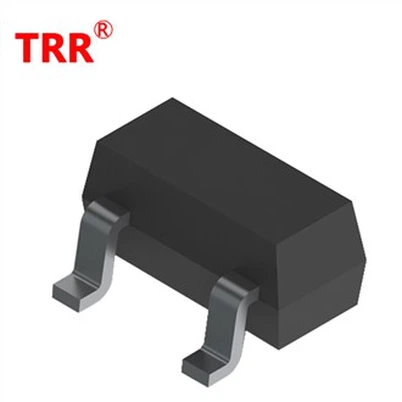
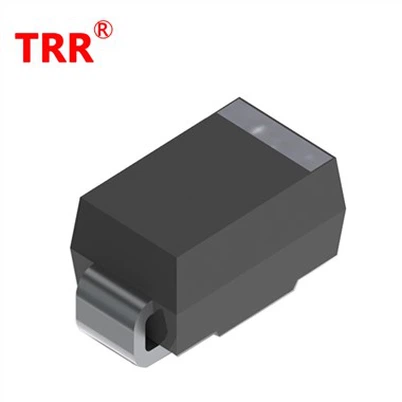
In addition, according to different packaging forms, SMD diodes can also be divided into rectangular chip diodes, cylindrical chip diodes, etc. The rectangular chip diode has three short pins with a length of only 0.65mm, which is very suitable for the assembly of high-density circuit boards. The cylindrical chip diode, on the other hand, has a slightly larger volume and a shape similar to a small button, commonly known as a button type diode.
4, Application of SMD diodes
SMD diodes have been widely used in electronic devices due to their advantages of small size, light weight, and stable performance. Here are some typical application scenarios:
Laptops and smart devices: SMD diodes play an important role in laptops and smart devices, such as rectifier diodes in rectifier circuits and switch diodes in switch circuits.
Household appliances: SMD diodes also play an important role in household appliances, such as voltage regulator diodes in televisions and varactor diodes in air conditioners.
Automotive Electronics: With the development of automotive electronics technology, SMD diodes are becoming increasingly widely used in the field of automotive electronics, such as LED driver diodes in automotive lighting systems.
Communication and Optoelectronics: SMD diodes also play an important role in the fields of communication and optoelectronics, such as photodiodes and photodetectors in fiber optic communication.
https://www.trrsemicon.com/diode/switching-diode-bas16tw.html