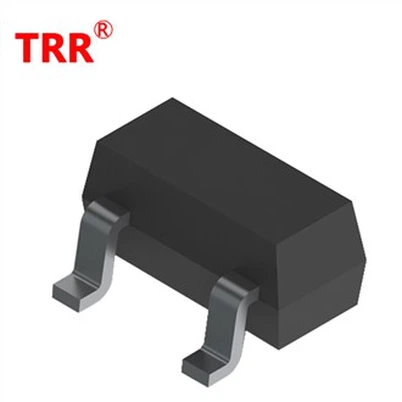
The protection function of diodes in home appliance power circuits
Leave a message
1, Basic characteristics of diodes
A diode is a two terminal electronic component composed of a P-type semiconductor and an N-type semiconductor. Its most significant feature is that it only allows current to flow in one direction, that is, when a voltage is applied to the diode and the positive electrode is connected to the P-type semiconductor and the negative electrode is connected to the N-type semiconductor, the diode conducts; Otherwise, it ends. This characteristic makes diodes have unique application value in rectification, voltage clamping, reverse voltage protection, and transient voltage suppression.
2, The protection function of diodes in home appliance power circuits
Rectification function
One of the most common applications of diodes in home appliance power circuits is rectification. The direction of the current provided by the AC power supply is constantly changing, and many household appliances require a stable DC power supply to operate. Through its unidirectional conductivity, diodes can effectively convert alternating current into direct current, providing stable direct current power for household appliances. The rectification function not only improves the utilization rate of the power supply, but also ensures the stable operation of household appliances.
Voltage clamp function
Voltage clamping is another important protective function of diodes in power circuits. In practical use, unstable grid voltage or internal circuit faults in household appliances may lead to abnormal voltage increases. When the voltage exceeds the forward voltage of the diode, the diode will conduct, diverting the excess voltage and limiting the voltage to a specific value. This voltage clamp function effectively protects home appliance circuits from overvoltage breakdown and extends the service life of the equipment.
Reverse voltage protection function
During the use of household appliances, reverse current flow may occur due to reasons such as reversed power plug connections or incorrect power polarity. This reverse current not only damages the components in the power circuit, but may also cause serious damage to the entire household appliance. Diodes play a crucial role in reverse voltage protection. When the polarity of the power supply is reversed, the diode will immediately cut off, preventing the reverse flow of current and protecting circuit components from damage. This reverse voltage protection function is crucial for the safe operation of household appliances.
Transient voltage suppression function
Transient voltage suppression (TVS) is another important application of diodes in power circuits. When household appliances are started, turned off, or subjected to external interference, peak voltage may be generated. If these peak voltages are not dealt with in a timely manner, they can cause serious damage to home appliance circuits. By absorbing these voltage transients, diodes can effectively suppress transient overvoltages and protect circuits from damage. This transient voltage suppression function is of great significance for improving the anti-interference ability and stability of household appliances.
3, Implementation and Optimization Design of Diode Protection Function
When designing home appliance power circuits, in order to achieve the protection function of diodes, it is necessary to select appropriate diodes based on the operating voltage and current of the circuit. Factors to consider include maximum forward current, maximum reverse voltage, maximum forward voltage, etc. In some cases, it may be necessary to use diodes in parallel or series to meet specific voltage and current requirements. Parallel connection can increase current capacity, while series connection can increase voltage capacity.
In addition, diodes generate heat when conducting, so when designing protective circuits, heat dissipation issues also need to be considered. It may be necessary to use a heat sink or design sufficient heat dissipation space to ensure that the diode does not overheat and become damaged during operation.
4, Practical application cases of diode protection function
Taking a television as an example, its power circuit usually includes various diode components such as rectifier diodes, voltage clamp diodes, and transient voltage suppression diodes. The rectifier diode converts AC power into DC power, providing a stable DC power supply for the television; The voltage clamp diode limits the voltage to not exceed the set value, protecting the TV circuit from overvoltage breakdown; The transient voltage suppression diode absorbs the peak voltage generated during the start-up and shutdown of the television, protecting the circuit from transient overvoltage. The coordinated operation of these diode components ensures the stable operation and safe use of the television.
https://www.trrsemicon.com/diode/smd-diode/schottky-diode-bat54.html