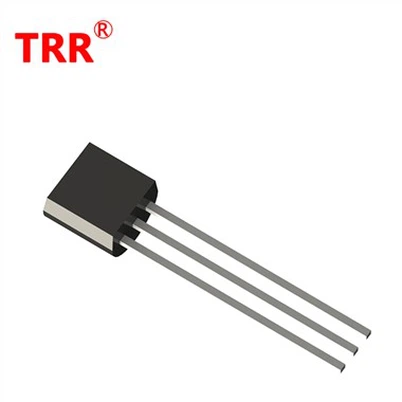
Open or Short How a Failed Diode Can Cripple Your Medical Equipment ?
Leave a message
Two Ways a Diode Dies: Open vs. Short
Almost every diode failure that isn't caused by physical damage comes down to electrical overstress - too much voltage, too much current, or too much heat over time. When a diode finally gives up, it does so in one of two ways, and the difference matters a lot.
Open circuit failure - the diode stops conducting altogether. The path is broken, as if someone snipped the wire. No current gets through, even when it should.
Short circuit failure - the diode conducts in both directions. It no longer blocks reverse current, so it behaves like a plain piece of wire instead of a one-way valve.
Engineering data shows that overvoltage events (like high-voltage spikes or reverse-polarity mistakes) tend to push a diode into a short, while large current pulses can drive it either open or short. There's also a slow-motion failure called degradation: long-term heat and repeated stress gradually raise the diode's reverse leakage current and shift its ratings, so it misbehaves long before it fully dies. Understanding open circuit vs short circuit diode behaviour is the first step to predicting what will break.
When a Diode Fails OPEN - What Stops Working
An open diode is a missing piece of the circuit. The current that was supposed to flow simply doesn't. In a medical device, that shows up as:
Loss of rectification - if the open diode was converting AC to DC, that supply rail goes dead, and whatever it powered stops working.
Dead or partial power - the device may not turn on at all, or a specific subsystem (display, pump motor, sensor) loses power while the rest seems fine.
Intermittent faults - a diode on the edge of failing open can conduct sometimes and not others, creating those maddening "works on Monday, dead on Tuesday" symptoms.
Failed redundancy - in circuits where diodes steer current between a battery and mains, an open diode can silently knock out backup power, so the device dies the moment the wall power blinks.
These open-circuit diode failure symptoms are often misdiagnosed as software bugs or loose connectors, which is why they eat up so much service time.
When a Diode Fails SHORT - What Goes Wrong Products Description
A shorted diode is arguably more dangerous, because it doesn't just stop a function - it can take other parts down with it. When the valve stops blocking, you get:
Overcurrent and burnout - current rushes through the now-conducting path, often blowing fuses, tripping protection, or overheating nearby components.
Loss of reverse blocking - the diode no longer protects against reverse voltage, so a reverse-polarity event can cascade into more damage.
Rectifier collapse - in a power supply bridge, one shorted diode can short the transformer winding every half-cycle, cooking the transformer or the switching stage.
Raised leakage current - a degraded or partially shorted diode leaks more current than its datasheet allows, which can push a medical device past its safety limits.
In short, an open diode usually causes a missing function; a shorted diode often causes a spreading failure. Either way, the device is no longer trustworthy - and in a medical setting, "not trustworthy" is not an option.
The Medical Functions Most at Risk
So which parts of a medical instrument actually suffer when a diode goes? Based on where diodes typically sit in these designs, the functions most exposed are:
Power conversion - the AC/DC and DC/DC rails that feed everything else. This is where rectifier and fast-recovery diodes live, and a failure here can shut the whole device down.
Signal acquisition and monitoring - ECG, SpO₂, pressure and temperature front-ends rely on clean, stable rails. A leaky or failed diode injects noise or drops the supply, corrupting the readings clinicians trust.
Display and alarms - false alarms, blank screens, or silent alarms can all trace back to unstable power caused by a failing diode.
Battery charging and backup - charging circuits and power-path switching depend on diodes; a failure can stop charging or kill the backup path.
Isolation and protection - diodes help steer fault current and block reverse paths that keep the safety barrier intact.
When you map it out like this, it's clear why a part that costs pennies deserves real attention from a serious reliable medical grade diode supplier.
How the Right Part Lowers Your Failure Risk - M7, S1A, RS2M
You can't make failure impossible, but you can make it far less likely by choosing parts with the right ratings, real quality control, and generous margin. Three proven SMA-package diodes cover most medical designs.
Diode M7 - The Rugged General Rectifier
The M7 is the surface-mount equivalent of the classic 1N4007. It's a general-purpose rectifier in the SMA (DO-214AC) package, rated up to 1000 V reverse voltage and 1.0 A forward current, with a glass-passivated junction and a UL 94V-0 flame-rated body. That high voltage rating gives you healthy headroom against the spikes that cause shorted-diode failures. A dependable M7 diode manufacturer is the place to start for rugged rectification.
Diode S1A - The Low-Leakage Signal Rectifier
The S1A is a 1.0 A, 50 V glass-passivated general-purpose rectifier in SMA, with a low forward voltage around 1.1 V and a 30 A surge rating across a −55 °C to +150 °C range. Its low leakage and low capacitance make it a safe choice near sensitive measurement circuits, where even small leakage matters. For signal-side rails, a careful S1A rectifier diode supplier helps protect the accuracy of your readings.
Diode RS2M - The Fast Recovery Specialist
The RS2M is a fast recovery rectifier in SMA, rated 1000 V and 2.0 A, with a reverse recovery time around 500 ns and a glass-passivated, UL 94V-0 construction. Fast, clean turn-off reduces the heat and stress that lead to degradation failures in high-frequency power stages. Buying RS2M fast recovery diode wholesale from one trusted source keeps your switching stage consistent across every production run.
How to Prevent Diode Failure
A little discipline up front prevents most field failures. Here's a practical checklist:
Add voltage margin - pick a reverse rating well above your peak working voltage to survive transients.
Derate for current and heat - never run a diode at its absolute limits; leave room for surges and high ambient temperatures.
Manage thermal stress - good layout, copper area, and airflow keep the junction cool, since heat is a leading cause of degradation.
Screen incoming parts - work with a supplier that provides traceability and real test data, not mystery reels.
Test in the field - most handheld multimeters can check a diode: high resistance in the forward direction usually means an open, while low resistance in reverse points to a short.
Following these steps turns a fragile design into a robust one - and answers the question every technician eventually asks, "how do you know if a diode is bad?"
What the Data and Standards Say
The standards reinforce why all this matters. IEC 60601-1, the safety standard for medical electrical equipment, requires devices to stay safe not only in normal operation but also under a single fault condition. A shorted or open diode is exactly the kind of single fault the standard has in mind - your design must fail gracefully, not dangerously. Reliability engineering practice points the same direction: proper component derating and stress analysis are proven ways to push failure rates down and keep equipment running through its full service life. Choosing well-screened, generously rated diodes is one of the simplest ways to meet both goals.
Case Study How Sunhing Helped Cut Field Failures
A medical equipment maker came to Sunhing after a wave of warranty returns. Devices were failing intermittently in the field, and teardown after teardown pointed back to under-rated rectifiers that were failing short under voltage spikes.
Sunhing's engineers reworked the bill of materials around three proven parts: M7 for high-voltage rectification, S1A for the low-voltage signal rails, and RS2M for the fast-switching stage - each with extra voltage margin and full lot traceability from a single audited line.
The customer reported:
A sharp drop in field failures after the redesign reached production.
Fewer warranty returns and service call-outs.
More stable readings and alarms, thanks to cleaner, more reliable power rails.
(Figures in this case study are illustrative - please confirm or replace them with your own verified results before publishing.)
Why Source From a Reliable Manufacturer or Factory
After years on the sales floor, here's the plain truth: two diodes with the same part number are not always the same diode. The differences - in leakage, in surge survival, in how consistent the parts are reel to reel - are exactly what decides whether your device fails open or short in the field a year from now. That's why buying from a serious manufacturer and factory, rather than the cheapest broker of the month, protects both your patients and your reputation.
A trustworthy partner gives you glass-passivated, UL-rated, RoHS-compliant parts; honest datasheets and test data; full lot traceability; and the ability to scale from samples to high-volume wholesale orders without quietly swapping the part underneath you. The recognition that quality-focused names like ESTA have earned for consistent screening and dependable supply is exactly the standard you want behind the components in a life-supporting device. Sunhing's M7, S1A, and RS2M diodes are built to that standard.
Frequently Asked Questions
Q: What happens when a diode fails open?
A: It stops conducting, so the circuit it served loses power. You'll often see a dead device, a dead subsystem, or frustrating intermittent faults - and backup power paths can silently disappear.
Q: What happens when a diode shorts out?
A: It conducts in both directions and stops blocking reverse current. That usually means overcurrent, blown fuses, raised leakage, and the risk of damage spreading to nearby components.
Q: What causes diodes to fail in medical equipment?
A: Mostly electrical overstress - voltage spikes, overcurrent, reverse polarity - plus long-term heat that slowly degrades the part. Under-rated or poorly screened parts fail far sooner.
Q: How do you know if a diode is bad?
A: With a multimeter's diode mode: a good diode conducts one way and blocks the other. High resistance both ways suggests an open; low resistance both ways suggests a short.
Q: Which medical functions are most affected by a failed diode?
A: Power conversion, signal and monitoring accuracy, displays and alarms, battery charging and backup, and the isolation/protection circuits that keep the device safe.
Don't Let a Few-Cent Part Sink Your Device
If you're designing or sourcing for medical equipment and want diodes that fail rarely - and fail safely - we're here to help. Send us your specs and we'll recommend the right M7, S1A, or RS2M part for your design, with datasheets, samples, and competitive quotes for both prototype and wholesale volumes