Diodes in Medical Device Isolation ProtectionStandards?
Leave a message
What "Isolation Protection" Actually Means in Medical Devices
Isolation protection is, in plain English, the wall between dangerous voltages and the people who touch the equipment. The governing standard here is IEC 60601-1, the international rulebook for the safety of medical electrical equipment. It defines two layers of safety thinking that every engineer should know:
MOPP (Means of Patient Protection): the stricter level, used wherever a device touches a patient.
MOOP (Means of Operator Protection): a lighter level for parts only handled by staff.
The numbers behind these terms are unforgiving. To satisfy 2 x MOPP, a component on the isolation barrier typically needs to withstand 4,000 VAC of isolation and maintain an 8 mm creepage distance, roughly double the requirement of a single MOPP. On the leakage side, patient leakage current usually must stay below 100 µA, and for the most sensitive cardiac (Type CF) devices, the limit drops to a mere 10 µA. Ten millionths of an amp. That is the margin engineers are working with.
When a design crosses those lines, it does not just fail a lab test. It can mean lost months, scrapped inventory, and a damaged reputation with hospitals and OEM customers. So every part on that barrier, including the diodes, has to earn its place.
Why Diodes Sit at the Heart of the Isolation Barrier
A diode does one beautifully simple job: it lets current flow in one direction and blocks it in the other. In a medical power circuit, that simple behavior does a lot of heavy lifting:
Rectification. Converting AC mains into the clean DC that sensitive electronics need.
Reverse blocking. Stopping current from flowing backward into places it should never go.
Reverse polarity protection. Shielding the board if a power source is connected the wrong way.
Transient and fault containment. Helping steer abnormal current away from the patient-contact side of the design.
A weak or poorly specified medical grade rectifier diode can leak, overheat, or break down under reverse voltage, and any of those failures can quietly compromise the isolation barrier. A well-chosen diode, by contrast, keeps leakage low, handles surges, and holds the line even under single-fault conditions, which is precisely what IEC 60601-1 demands. This is why component selection at the diode level is never trivial in medical work.
Meet the WorkhorsesDiode M7, Diode S1A, and Diode RS2M
Not every diode is built for the same job. Here is how three of the most widely used rectifiers compare, and where each one earns its keep.
Diode M7: The Reliable General Rectifier
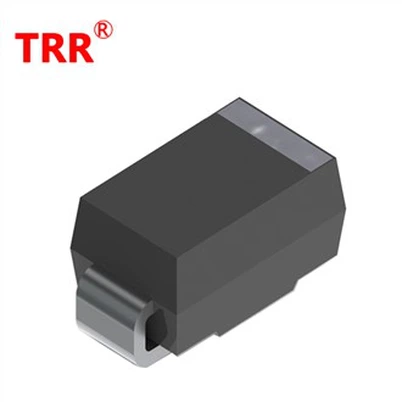
The Diode M7 is a 1 A, 1000 V surface-mount rectifier in the compact SMA (DO-214AC) package, electrically equivalent to the classic 1N4007. It is a standard-recovery part valued for its stability, high reliability, and low leakage current. You will find it doing dependable AC/DC conversion and reverse polarity protection in low-power supply sections, control boards, and auxiliary circuits. When a design needs a rugged, proven, cost-effective rectifier that simply works, the M7 is often the first part engineers reach for. As an M7 diode manufacturer, we see it specified across countless medical and industrial power boards.
Diode S1A: The Compact General-Purpose Choice
The Diode S1A belongs to the popular S1A–S1M general-purpose rectifier family, rated at 1 A with a 50 V reverse voltage in the same space-saving SMA footprint. Its lower voltage rating makes it ideal for low-voltage rails, signal rectification, and protection in tightly packed boards where space and automated assembly matter. For OEMs building compact monitoring or diagnostic modules, working with a dependable S1A rectifier diode supplier keeps the bill of materials clean and the supply chain predictable.
Diode RS2M: The Fast Recovery Specialist
The Diode RS2M is where speed comes in. This surface-mount fast recovery rectifier is rated up to 2 A and 1000 V, with a reverse recovery time of roughly 500 ns, far quicker than a standard rectifier. That speed matters in switching power supplies, where diodes turn on and off thousands of times per second. Slow switching wastes energy as heat and can generate electrical noise that interferes with sensitive measurements. A proper fast recovery diode for medical power supply designs keeps efficiency high and noise low. When buyers need volume, sourcing RS2M fast recovery diode wholesale from a single qualified partner reduces both cost and risk.
How to Choose a Medical-Grade Diode: A Practical Checklist
Picking the right diode for a regulated product comes down to a handful of questions. Run through these every time:
Reverse voltage margin. Choose a rating well above your peak working voltage. Leaving headroom is cheap insurance against breakdown.
Forward current and thermal headroom. Make sure the package can shed heat at your real-world duty cycle, not just on paper.
Reverse recovery time. Standard recovery for line-frequency rectification, fast recovery (like the RS2M) for switching stages.
Leakage current. Lower is always better in medical designs, where every microamp counts toward your system leakage budget.
Package and assembly fit. SMA parts such as the M7, S1A, and RS2M suit automated PCB assembly and consistent quality.
Traceability and quality control. Confirm your medical grade SMD diode supplier offers documentation, lot traceability, and consistent testing.
That last point is where many projects quietly succeed or fail. The best component in the world is only as good as the factory and quality system behind it.
What the Standards and Field Data Tell Us
The engineering community is clear on why this discipline matters. Industry guidance built around IEC 60601-1 repeatedly stresses that medical devices must stay safe even if one safety barrier fails, which is why the standard requires two independent means of protection against shock. For patient-connected Type BF and CF equipment, even a few microamps of leakage can be unacceptable, and managing the parasitic capacitance and component leakage that contribute to it is one of the central design challenges in modern medical power supplies.
Reputable power supply makers reinforce the point with their own practices: 100% hi-pot testing and burn-in are common, precisely because catching a marginal component before it ships is far cheaper than a field failure. Every diode that touches the isolation path is part of that risk story. Choosing parts with stable, low-leakage behavior is not a luxury; it is how you keep your leakage budget under control and your certification on track.
Case StudyHow Sunhing Helped a Medical OEM Hit 2 x MOPP
A medical equipment OEM came to Sunhing after struggling to keep the leakage current on a new patient-monitoring power board within Type BF limits. Their original diodes showed inconsistent reverse leakage from lot to lot, which made certification testing a moving target.
Working together, the team:
Swapped in tightly screened Diode M7 and Diode RS2M parts for the rectification and switching stages.
Standardized on a single qualified SMA supply chain to remove lot-to-lot variation.
Provided full traceability documentation to support the customer's IEC 60601-1 risk file.
The result was a more stable, repeatable leakage profile and a smoother path through compliance testing, with fewer surprises at the certification lab. It is a small illustration of a big truth: in medical electronics, component consistency is just as important as the headline specification. (Sunhing can confirm the specific figures for your records.)
Why It Pays to Buy From a Specialized Manufacturer, Not Just a Catalog
When the stakes include patient safety and regulatory approval, where you buy matters as much as what you buy. A specialized M7 diode manufacturer and factory partner brings advantages a generic catalog cannot:
Consistent quality across every lot, backed by real testing.
Traceability and documentation that slot straight into your risk management file.
Reliable lead times and wholesale pricing when you scale from prototype to production volumes.
Application support from people who understand isolation, not just part numbers.
We are proud that our commitment to quality has earned positive industry recognition, including acknowledgement associated with ESTA, a reflection of the standards we hold ourselves to. For buyers who want a single trusted source for S1A rectifier diode supplier needs, RS2M fast recovery diode wholesale orders, and broader medical grade SMD diode supplier requirements, that depth of partnership pays off long after the first shipment arrives.
Frequently Asked Questions
Q: What diodes are used in medical devices?
A: Medical power and control boards commonly use surface-mount rectifiers such as the M7 (general rectification), S1A (low-voltage general purpose), and RS2M (fast recovery for switching stages). The right choice depends on voltage, current, and switching speed in your specific circuit.
Q: Are M7 diodes medical grade?
A: The M7 is a robust, low-leakage 1 A / 1000 V rectifier widely used in medical and industrial power designs. "Medical grade" ultimately depends on how the finished device meets IEC 60601-1 as a whole, so the key is sourcing well-screened, traceable parts from a qualified supplier and validating them in your application.
Q: What is the difference between the M7, S1A, and RS2M?
A: In short: the M7 is a 1 A / 1000 V standard rectifier, the S1A is a 1 A / 50 V general-purpose rectifier for lower-voltage rails, and the RS2M is a fast recovery rectifier (up to 2 A / 1000 V, around 500 ns) built for high-frequency switching circuits.
Q: How do diodes help meet IEC 60601-1 isolation requirements?
A: Diodes block reverse current, support rectification, and help contain fault currents, all of which contribute to keeping leakage current low and the isolation barrier intact under normal and single-fault conditions, the core goals of the standard.
Q: Where can I buy medical-grade diodes in bulk?
A: Buy from a specialized manufacturer or factory that offers lot traceability, consistent quality testing, and wholesale pricing, rather than an anonymous catalog. That combination protects both your compliance and your budget