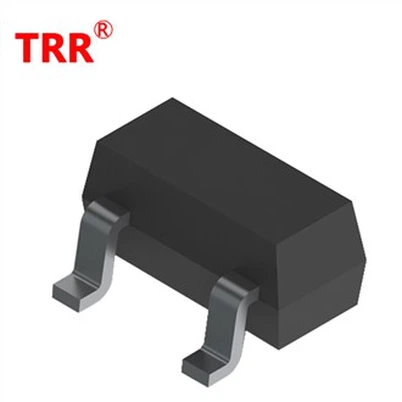
How to know the direction of SMD diodes?
Leave a message
1, Understand the basic structure of SMD diodes
SMD diodes typically include a PN junction with one end as the anode (positive electrode) and the other end as the cathode (negative electrode). In terms of packaging, manufacturers usually set some markings or features on the diode to indicate its polarity for easy identification and installation.
2, Marking recognition method
Dot mark: Many SMD diodes have a small dot or triangle mark printed on one end, which usually represents the cathode (negative pole). If there is only one mark on the diode, then it is the cathode.
Ribbon or color ring: Some diodes may have a ribbon or color ring on the cathode side, and the color may vary from manufacturer to manufacturer, but the function is the same, used to indicate the cathode.
Letter or number markings: Some diodes may have specific letters or numbers printed on their surface, which may directly indicate polarity or indirectly indicate it through the manufacturer's coding system. Reviewing the data manual provided by the manufacturer is key to understanding these markings.
Gap or edge cutting: Some diodes have small gaps or edges on the packaging edge, which is usually also the identification of the cathode.
3, Physical feature observation method
Shape differences: Although most SMD diodes are similar in appearance, some models may indicate polarity through subtle differences in shape. For example, the cathode end may be slightly wider or longer.
Pin shape: Although SMD diodes typically do not have traditional pins, some specially designed diodes (such as some DO-214AC packages) have tiny pins at the bottom, and the shape or length differences of these pins can also be used to indicate polarity.
4, Use professional tools
Magnifying glass or microscope: For diodes with blurred or difficult to identify markings, using a magnifying glass or microscope can magnify details and help see the markings more clearly.
Polarity tester: This is a tool specifically designed to test the polarity of electronic components. By simply touching the probe of the tester to both ends of the diode, the tester can display the polarity of the diode.
Multimeter: Although a multimeter is primarily used to measure voltage, current, and resistance, in some cases, its polarity can also be indirectly determined by measuring the forward and reverse resistance of a diode. However, this method requires certain experience and skills.
5, Reference manufacturer data
The most direct and accurate method is to refer to the data manual or specification sheet provided by the manufacturer. These data usually include detailed information such as the packaging size of the diode, polarity labeling instructions, electrical characteristics, etc. When purchasing diodes, make sure to have the latest data manual at hand for quick reference when needed.
6, Precautions in practice
Light and angle: When identifying markers, ensure sufficient lighting in the working environment and observe the diode from different angles to capture details more comprehensively.
Maintain cleanliness: When handling and installing diodes, keep the working area and the diode itself clean to avoid impurities such as oil and dust affecting identification and installation accuracy.
Recording and Marking: For heavily used diodes, it is recommended to mark the polarity of each batch of diodes before installation or record it next to each diode to avoid confusion.
Caution in operation: Due to the small size of SMD diodes, special care should be taken during operation to avoid damage or loss.
https://www.trrsemicon.com/diode/dip-diode/silicon-planar-zener-diodes-1n4733a.html