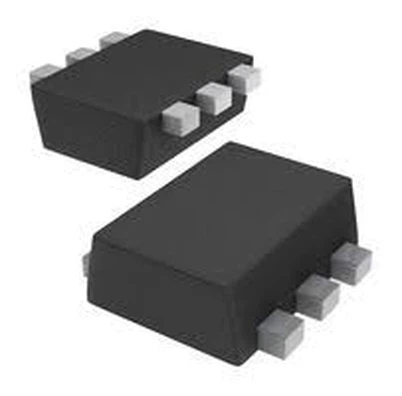
How can diodes optimize the stability of charging circuits?
Leave a message
1, The importance and problems faced by the stability of charging circuit operation
(1) Importance
The stability of the charging circuit is crucial for electronic devices. A stable charging process can ensure that the battery is charged according to the prescribed charging curve, avoiding issues such as overcharging and overdischarging, thereby extending the battery's lifespan. At the same time, a stable charging circuit can improve charging efficiency, reduce energy loss, lower equipment heat generation, and enhance equipment safety and reliability.
(2) The problems faced
In practical applications, charging circuits face many issues that affect stability. Power fluctuation is a common problem, and unstable grid voltage can cause changes in the input voltage of the charging circuit, thereby affecting the stability of charging current and charging voltage. Load changes can also affect the charging circuit. When the load suddenly increases or decreases, the charging circuit needs to quickly adjust the output to meet the load requirements. If the adjustment is not timely, it will lead to unstable output voltage and current. In addition, electromagnetic interference is also an important factor that cannot be ignored. The surrounding electromagnetic field may interfere with the normal operation of the charging circuit, leading to signal distortion, misoperation, and other problems.
2, The role of diodes in charging circuits
(1) Rectification effect
In AC charging circuits, diodes can convert AC power into DC power. Common rectification circuits include half wave rectification, full wave rectification, and bridge rectification. The bridge rectifier circuit uses four diodes to rectify the full wave of AC power into DC power, which has the advantages of low output voltage ripple and high efficiency. Through rectification, the diode provides a stable DC power supply for the charging circuit, laying the foundation for the subsequent charging process.
(2) Anti reverse connection function
In the charging circuit, if the polarity of the power supply is reversed, it may cause equipment damage. The unidirectional conductivity of diodes can be used to prevent reverse connection of power sources. When the power polarity is correct, the diode conducts and the current flows normally; When the polarity of the power supply is reversed, the diode cuts off, preventing current from passing through, thus protecting the safety of the charging circuit and equipment.
(3) Continuation effect
In the charging circuit of a switching power supply, the inductive element generates a reverse electromotive force when the switching tube is turned off, which may damage the switching tube. The freewheeling diode can provide a path for reverse electromotive force, allowing the current in the inductor to continue flowing, avoiding the impact of reverse electromotive force on the switching transistor, and improving the stability and reliability of the switching power supply.
(4) Clamping action
In the charging circuit, diodes can also play a clamping role. When overvoltage occurs in the circuit, the diode will conduct, clamping the voltage within a certain range to prevent damage to the components in the circuit caused by overvoltage. For example, during battery charging, if the charging voltage is too high, the clamp diode will conduct, bypassing the excess voltage and protecting the battery from overcharging.
3, Method of optimizing charging circuit stability through diodes
(1) Reasonable selection
Select diode type according to circuit requirements: Different charging circuits have different requirements for diodes. For rectifier circuits, rectifier diodes with low forward voltage drop and low reverse leakage current should be selected to improve rectification efficiency and reduce energy loss; For anti reverse circuit, diodes that can withstand a certain reverse voltage and current should be selected; For freewheeling circuits, diodes with fast switching speed and short reverse recovery time should be selected to reduce switching losses.
Consider the parameters of the diode: In addition to selecting the type, it is also necessary to consider the forward current, reverse withstand voltage, surge current capability, and other parameters of the diode. The forward current should be greater than the maximum operating current in the circuit, the reverse withstand voltage should be higher than the maximum reverse voltage that may occur in the circuit, and the surge current capability should meet the surge current requirements that may occur in the circuit.
(2) Optimize circuit design
Rectification circuit design: Using a bridge rectifier circuit can improve rectification efficiency and reduce losses in rectifier diodes. At the same time, adding filtering capacitors to the rectifier circuit can further reduce the ripple of the output voltage and improve the stability of the charging circuit.
Anti reverse circuit design: A diode can be connected in series at the power input end as anti reverse protection. To reduce the impact of forward voltage drop of diodes on the circuit, multiple diodes can also be connected in parallel.
Continuous current circuit design: A continuous current diode is connected in parallel across the inductance element of the switching power supply to ensure that the current in the inductance can continuously change, reducing switching losses and electromagnetic interference.
Clamp circuit design: Select the appropriate clamp diode and clamp voltage according to the needs of the circuit, and clamp the overvoltage within a safe range.
(3) Heat dissipation treatment
During operation, diodes generate heat. If the heat is not dissipated in a timely manner, it can cause the temperature of the diode to rise, affecting its performance and stability. Therefore, effective heat dissipation measures need to be taken. For high-power diodes, heat sinks can be used for heat dissipation; For surface mount diodes, it is possible to layout them reasonably on the circuit board, increase the heat dissipation channels, and improve the heat dissipation effect.
4, Testing validation and daily maintenance
(1) Test validation
After optimizing the stability of the charging circuit using diodes, comprehensive testing and verification are required. Including voltage stability testing, current stability testing, efficiency testing, temperature testing, etc. By using professional testing instruments, various performance indicators of the charging circuit are tested to ensure that the stability of the circuit meets the design requirements.
(2) Daily maintenance
In order to maintain the long-term stability of the charging circuit, daily maintenance is necessary. Regularly check the working status of diodes and other components in the charging circuit, and promptly detect and handle faults. At the same time, attention should be paid to maintaining the safety and cleanliness of the charging environment, avoiding the impact of dust and moisture on the charging circuit.
https://www.trrsemicon.com/diode/smd-diode/es1a-es1j-sma.html