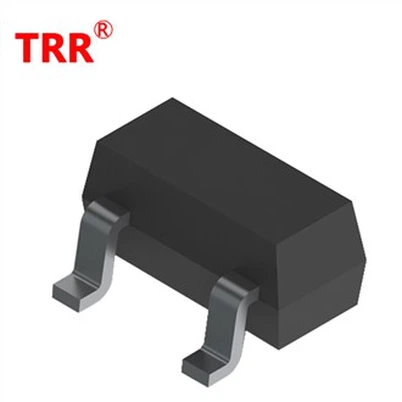
Does a faulty diode pose a risk to the ventilator?
Leave a message
Why a Ventilator Is Different From Other Devices
Most electronics can afford a hiccup. A ventilator cannot. That changes how every component must be chosen.
A critical-care ventilator is life-support equipment, which means three things drive the entire design:
No unplanned downtime. The machine has to keep delivering breaths even when something goes wrong.
Single-fault safety. Under safety standards, the device must stay safe - or keep risk acceptable - even if one component fails.
Reliable alarms and backup. If a function does degrade, the operator must be warned immediately, and backup power must take over.
That's a high bar, and it's exactly why ventilator power supply reliability isn't a "nice to have." It's the foundation the whole machine stands on, and every diode in the power path is part of that foundation.
Where Diodes Sit Inside a Ventilator
To understand the risk, it helps to know where these little parts actually live. In a typical ventilator you'll find diodes in:
The main AC/DC power supply - converting wall power into the clean DC rails that run everything.
The battery backup and power-path switching - steering current between mains and battery so the machine never loses power.
The blower or motor drive - the high-current stage that actually moves air to the patient.
Sensor and alarm circuits - the low-level electronics that measure flow and pressure and sound the alarm if something is wrong.
A fault in any one of these areas has a different consequence, which is why thinking about diode fault risk in medical devices has to be done circuit by circuit, not in the abstract.
What a Diode Fault Could Actually Do
A diode fails in one of two ways, and each maps to a different ventilator risk.
When a diode fails open, it stops conducting. The current that should flow simply doesn't, so:
A power rail can go dead, taking its subsystem with it.
A battery-backup path can quietly disappear, so the backup isn't there when mains power blinks.
Faults can be intermittent - the most frustrating kind to diagnose.
When a diode fails short, it conducts both ways and stops blocking reverse current, so:
Overcurrent can blow fuses, trip protection, or overheat nearby parts.
A rectifier stage can collapse, stressing the transformer or switcher.
Leakage rises, which can push the device outside its limits.
In a ventilator, an open fault tends to cause a missing function, while a short tends to cause a spreading one. Neither is acceptable in a machine someone is breathing through, which is why component quality matters so much here.
The Real Risk Scenarios
Let's translate that into the scenarios designers actually plan against:
Total power loss. A failure in the main supply that isn't backed up could interrupt ventilation - the most serious outcome, and the one redundancy exists to prevent.
Silent backup failure. A failed diode in the power-path circuit can disable battery backup without any obvious sign, so the machine looks fine until mains power drops.
An alarm that doesn't sound. If a fault reaches the alarm circuit, the one safety net meant to warn staff could fail too - which is why standards treat alarm integrity so seriously.
Drifting ventilation parameters. A degraded diode raising leakage in a sensor rail can skew flow or pressure readings, nudging the delivered breath away from the prescribed setting.
The reassuring part is that every one of these is a known risk that good engineering anticipates - through redundancy, monitoring, and choosing dependable parts in the first place.
How Safety Standards Address This
This isn't left to chance. IEC 60601-1, the general safety standard for medical electrical equipment, is built on two pillars: basic safety and essential performance - the clinical functions that, if lost or degraded, create unacceptable risk. The standard requires a device to remain single-fault safe (or keep risk acceptable) throughout its expected service life, so designers must assume a part like a diode can fail and prove the machine stays safe anyway.
On top of that sits IEC 60601-2-12, the particular standard for critical-care ventilators. It supplements the general standard with requirements aimed squarely at the unique hazards of mechanically ventilating patients who may depend on the device to survive. Importantly, the standards favour inherently safe design first - building reliability in - with alarms and backups as additional layers, not the primary defence. In other words: the best way to handle a possible diode fault is to make it far less likely and to ensure the machine fails safely if it ever happens.
How the Right Diodes Reduce the Risk - M7, S1A, RS2M
You manage component risk by choosing parts with margin, low leakage, low heat, and consistent quality. Three proven SMA-package diodes cover most ventilator designs.
Diode M7 - The Rugged Main-Supply Rectifier
The M7 is the surface-mount equivalent of the classic 1N4007: a general-purpose rectifier in SMA (DO-214AC), rated up to 1000 V and 1.0 A, with a glass-passivated junction and a UL 94V-0 body. That high voltage rating gives generous headroom against spikes, so the part isn't stressed in normal use - and an unstressed part fails far less often. A dependable M7 diode manufacturer is the right starting point for rugged power rectification.
Diode S1A - The Low-Leakage Sensor and Alarm Part
The S1A is a 1.0 A, 50 V glass-passivated general-purpose rectifier in SMA, valued for its low leakage and low capacitance, with a low forward voltage near 1.1 V across a −55 °C to +150 °C range. Low leakage protects the accuracy of sensor and alarm circuits, where a small error can have outsized consequences. For these sensitive rails, a careful S1A rectifier diode supplier is well worth it.
Diode RS2M - Fast Recovery for the Power and Drive Stages
The RS2M is a fast recovery rectifier in SMA, rated 1000 V and 2.0 A with a reverse recovery time around 500 ns and a glass-passivated, UL 94V-0 build. Clean, fast switching means less heat in the blower-drive and power stages - and less heat means lower stress and longer life. Sourcing RS2M fast recovery diode wholesale from one trusted line keeps performance consistent across production.
Designing for Fail-Safe Ventilator Power
Choosing good parts is step one. Designing so that any single fault stays safe is step two. A practical checklist:
Build in redundancy. Independent backup power and power-path protection so no single diode can cut off ventilation.
Derate everything. Run diodes well below their voltage, current, and temperature limits for a wide safety margin.
Manage heat. Good thermal design slows aging and reduces the most common cause of failure.
Screen and burn in. Use a supplier that performs burn-in and provides real test data, catching weak parts before they ship.
Make faults visible. Self-checking alarms and monitoring so that if something does fail, staff know right away.
Done well, these steps answer the question "how are ventilators protected from a single component failure?" - through layered, fail-safe design rather than hope.
Case StudyHow Sunhing Supported a Ventilator OEM
A ventilator manufacturer came to Sunhing while hardening the power section of a new critical-care platform. Their reliability team wanted to remove under-margined, inconsistent rectifiers that posed a single-fault concern in the backup-power path.
Sunhing's engineers standardised the design around three proven diodes: M7 for the main rectification, S1A for the low-leakage sensor and alarm rails, and RS2M for the fast-switching blower-drive stage - each with extra voltage margin and full lot traceability from a single audited line.
The customer reported:
A cleaner single-fault analysis, with no diode able to silently disable backup power.
Fewer field failures and service call-outs after the redesign reached production.
More consistent performance across temperature and production batches.
Why Source From a Reliable Manufacturer or Factory
After years on the sales floor, here's the plain truth: two diodes with the same part number are not always the same diode. In life-support equipment, the differences - in leakage, in surge survival, in batch-to-batch consistency - are exactly what decides whether a machine stays dependable for years. That's why buying from a serious manufacturer and factory, rather than the cheapest broker of the month, protects both patients and your reputation.
A trustworthy partner gives you glass-passivated, UL-rated, RoHS-compliant parts; honest datasheets and test data; full lot traceability; burn-in screening; and the ability to scale from samples to high-volume wholesale orders without quietly swapping the part underneath you. The recognition that quality-focused names like ESTA have earned for consistent screening and dependable supply is exactly the standard you want behind components in a ventilator. Sunhing's M7, S1A, and RS2M diodes - backed by a reliable medical grade diode supplier mindset - are built to that standard.
Frequently Asked Questions
Q: Can a diode failure stop a ventilator?
A: In a poorly designed system, a critical diode fault could interrupt a function. That's exactly why ventilators are built with redundancy, backup power, and alarms - so that a single component failure does not stop ventilation.
Q: What happens if a ventilator power supply fails?
A: A well-designed ventilator switches to battery backup and raises an alarm. The risk comes when a fault quietly disables that backup path, which is why power-path components must be chosen and screened carefully.
Q: Why do ventilators need backup power?
A: Because patients may depend on continuous ventilation. Backup power keeps the machine running through mains interruptions or a single fault, buying time for staff to respond.
Q: How are ventilators protected from a single component failure?
A: Through inherently safe design first - redundancy, derating, and reliable parts - with monitoring and alarms as additional layers, as required by IEC 60601-1 and the ventilator standard IEC 60601-2-12.
Q: Which diode qualities matter most in a ventilator?
A: High voltage margin, low leakage, low heat generation, predictable failure behaviour, and consistent, traceable manufacturing quality.
Build Ventilators People Can Depend On
If you design or source critical-care equipment and want diodes that are dependable, low-leakage, and fully traceable, we're here to help. Send us your specs and we'll recommend the right M7, S1A, or RS2M part for your design - with datasheets, samples, and competitive quotes for both prototype and wholesale volumes.