Diode reduces power loss in TV power board
Leave a message
1, Basic principles and characteristics of diodes
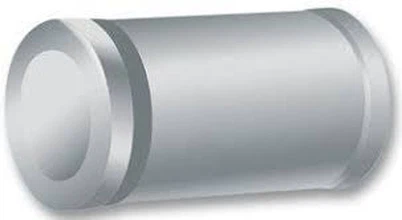
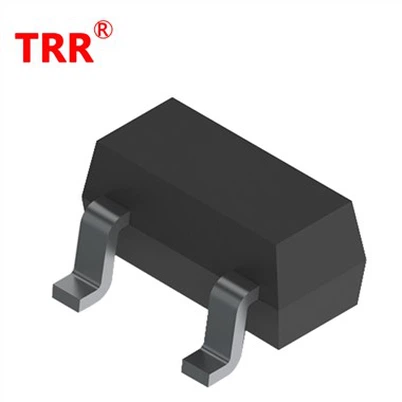
A diode is an electronic component with two electrodes that only allows current to flow in one direction. Its internal structure is based on PN junction, which is a special thin layer formed at the interface where a part of the semiconductor material is doped into P-type and another part is doped into N-type. The unidirectional conductivity of PN junction enables the diode to conduct in forward bias and turn off in reverse bias.
The volt ampere characteristic curve of a diode reveals its conductivity behavior in relation to the applied voltage. When the forward voltage is low, the diode is in a cut-off state and the current is weak; When the forward voltage exceeds a certain threshold (conduction voltage), the current rapidly increases. Under reverse voltage, the diode only allows a very small reverse saturation current to pass through until the reverse voltage reaches the breakdown voltage, and the diode enters a reverse breakdown state, causing a sharp increase in current.
2, Application of diodes in TV power boards
In TV power boards, diodes are widely used and critical, mainly including rectifier diodes, switch diodes, and voltage regulator diodes.
Rectifying diode: The main function of a rectifying diode is to convert alternating current into direct current, providing stable direct current power for the television. In TV power boards, rectifier diodes are usually used in conjunction with filtering circuits to smooth the output voltage, reduce ripple, and ensure stable operation of the TV.
Switching diode: Switching diodes are used to control the on/off of current and achieve the switching function of circuits. In TV power boards, switch diodes are commonly used in switch power circuits to achieve stable voltage output by quickly switching current on and off. This fast response capability helps reduce power fluctuations and improve the stability of TV images.
Zener diode: Zener diode has the function of stabilizing the output voltage, which can automatically adjust the output voltage within a certain range to ensure the stable operation of the TV under different voltages. Zener diodes are commonly used in the voltage regulation power supply circuit of televisions. Through their reverse breakdown characteristics, they achieve precise voltage control and protect televisions from voltage fluctuations.
3, The mechanism of reducing power loss by diodes
The mechanism by which diodes reduce power loss in TV power boards is mainly based on their conduction and cutoff characteristics. By selecting the working conditions and additional circuits of the diode reasonably, the power consumption of the circuit can be effectively reduced and the efficiency of the circuit can be improved.
Power loss in conducting state: When a diode is in conducting state, its forward voltage drop is small, the conducting resistance is low, and current can flow in the forward direction. At this point, the diode consumes almost no energy and has minimal power loss. Therefore, in scenarios where power loss needs to be reduced, the conduction characteristics of diodes can be utilized to bypass excess current around the load and reduce losses during power transmission.
Power loss in cut-off state: When the diode is in cut-off state, its reverse voltage drop is large, the cut-off resistance is very high, and almost no current flows through. At this point, the diode plays a role in preventing current from flowing and can block the transmission of power. This characteristic makes diodes play an important role in protecting circuits from high voltage damage. Meanwhile, by designing the circuit reasonably, the cutoff characteristics of diodes can be utilized to reduce unnecessary power losses.
The current limiting and voltage stabilizing function of diodes: In TV power boards, diodes can also be used as current limiters and voltage regulators. By connecting diodes in series or parallel, precise control of current and voltage can be achieved, thereby further reducing power loss. For example, in a current limiting circuit, when the load current exceeds a certain value, the diode begins to conduct, bypassing the excess current around the load; In a voltage regulator circuit, the voltage regulator diode maintains the stability of the output voltage and reduces power loss caused by voltage fluctuations through its reverse breakdown characteristic.
4, Practical application cases of diodes reducing power loss
There are countless application cases of diodes in reducing power loss in the design of TV power boards. Here are some typical application scenarios:
Reducing power loss in rectifier circuits: By selecting the appropriate type and parameters of rectifier diodes in rectifier circuits, rectification efficiency can be optimized and power loss can be reduced. For example, using high-efficiency Schottky diodes as rectifying components can significantly reduce forward voltage drop and on resistance, thereby improving rectification efficiency.
Power loss control in switch mode power supply: In switch mode power supply circuits, stable control of power output voltage and current can be achieved by precisely controlling the conduction and cutoff time of switch diodes. Meanwhile, by adopting soft switching technology and other technical means, the power loss during the switching process can be further reduced.
Optimization of power loss in voltage regulator circuit: In the voltage regulator circuit, the voltage regulator diode maintains the stability of the output voltage through its reverse breakdown characteristic. By designing the parameters and structure of the voltage regulator circuit reasonably, the efficiency of voltage regulation can be optimized and power loss can be reduced. For example, by using low-power voltage regulators and appropriate current limiting resistors, precise control of the output voltage can be achieved while reducing power loss.
5, The benefits of reducing power loss with diodes
The benefits of diodes in reducing power loss in TV power boards are mainly reflected in the following aspects:
Improving circuit efficiency: By reducing power loss, diodes help improve the circuit efficiency of TV power boards. This means that at the same input power, the TV can achieve higher output power, thereby improving overall performance.
Energy conservation and environmental protection: Reducing power loss means reducing energy waste. The widespread use of high-efficiency components such as diodes in consumer electronics products such as televisions can help achieve energy-saving and emission reduction goals, and promote sustainable development.
Extending equipment lifespan: Reducing power loss can also lower the heat generation of components such as TV power boards, thereby extending the service life of the equipment. This is of great significance for improving the reliability and stability of television.
Improving user experience: By optimizing the power loss of the TV power board, the performance indicators such as picture quality and sound quality of the TV can be improved. At the same time, reducing power consumption also helps to reduce the noise and heat generated by the TV during operation, enhancing the user's viewing experience.
https://www.trrsemicon.com/diode/dip-diode/schottky-barrier-rectifier-mbr20100ct.html