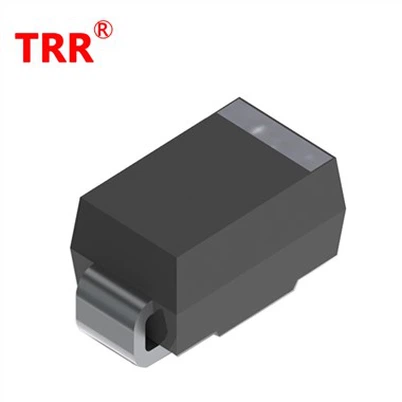
Design current protection for battery management system using diodes
Leave a message
1, The basic characteristics of diodes and their role in current protection
A diode is an electronic component with unidirectional conductivity that allows current to pass through under forward voltage and cut off under reverse voltage. This characteristic gives diodes a unique advantage in current protection. In BMS, diodes can be used as reverse current protection components to prevent current from flowing in the opposite direction in the battery pack or circuit, thereby avoiding potential equipment damage or safety accidents.
2, Application scenarios of diodes in battery management systems
Reverse current protection:
When the battery pack is connected to an external power source, if the polarity of the power source is reversed, the diode will quickly cut off, preventing reverse current from flowing into the battery pack and protecting the battery from damage.
During battery discharge, if an abnormal situation occurs in a battery cell (such as an internal short circuit), a diode can isolate the cell to prevent reverse current from affecting other normal cells.
Transient voltage suppression:
During the process of battery charging and discharging, transient voltage spikes may occur in the circuit due to various reasons such as sudden load changes, switch actions, etc. These peak voltages may cause damage to the battery pack and other circuit components. The use of diodes (especially TVS diodes) can effectively absorb these transient energies, limit voltage spikes, and protect circuit safety.
Thermal management assistance:
In high current applications, diodes may generate a certain amount of heat. Although this is not usually the main role of diodes in current protection, a well-designed heat dissipation system (such as using heat sinks, increasing heat dissipation space, etc.) can ensure stable operation of diodes under high load conditions, indirectly improving the effectiveness of current protection.
3, Key elements of using diodes to design current protection circuits
Choose the appropriate diode type:
It is crucial to choose the appropriate diode type based on the specific requirements and working environment of BMS. For example, for transient voltage suppression scenarios that require rapid response, TVS diodes are an ideal choice; For reverse current protection scenarios, ordinary rectifier diodes or Schottky diodes may be more suitable.
Determine the parameters of the diode:
When designing a current protection circuit, it is necessary to carefully consider the various parameters of the diode, including maximum forward current, maximum reverse voltage, forward voltage drop, etc. These parameters will directly affect the protection effect and reliability of the diode.
Circuit layout and wiring:
Reasonable circuit layout and wiring are crucial for ensuring the effectiveness of diode protection circuits. Impedance and interference in the circuit should be minimized as much as possible to ensure that the diode can respond quickly and effectively absorb reverse current or transient voltage.
Heat dissipation design:
In high-power applications, the heat dissipation problem of diodes cannot be ignored. A reasonable heat dissipation system should be designed to ensure that the diode does not overheat under high load conditions, thereby maintaining its stable protective performance.
4, Practical application case of diode current protection circuit
Taking the BMS of electric vehicles as an example, it includes complex current protection mechanisms. In these mechanisms, diodes play a crucial role.
Reverse current protection for battery pack:
In the battery pack of electric vehicles, each battery cell is isolated through diodes. When an abnormality occurs in a unit (such as an internal short circuit), the diode will quickly cut off to prevent reverse current from affecting other units. This design not only improves the safety of the battery pack, but also extends the service life of the battery.
Transient voltage suppression circuit:
During the charging and discharging process of electric vehicles, transient voltage spikes may occur in the circuit due to sudden load changes and switch actions. To suppress these peak voltages, BMS usually integrates transient voltage suppression components such as TVS diodes. These components can quickly respond and absorb transient energy, thereby protecting the battery pack and other circuit components from damage.
https://www.trrsemicon.com/diode/dip-diode/schottky-barrier-rectifier-mbr20200ct.html