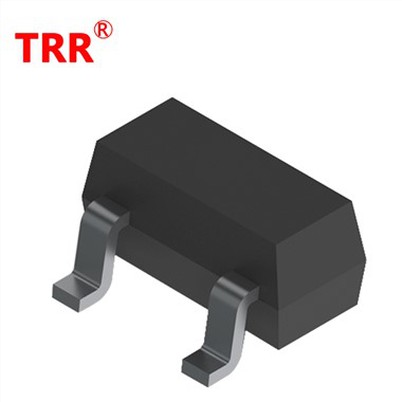
The World's First 5G Chip Has Been Launched
Leave a message
Research and Development Background
5G, also known as the fifth generation mobile communication technology, is a new generation wireless communication technology standard following 4G (the fourth generation mobile communication technology). Compared with 4G, 5G has significantly improved transmission speed, latency, and number of connections. Research and development began in the early 2010s, and with the continuous maturity of technology, major technology companies and research institutions have invested heavily in the development of breakthrough 5G chips.
The world's first 5G chip released this time is thanks to years of scientific research and technological breakthroughs. The R&D team overcame many technical challenges and ultimately achieved mass production and commercialization of 5G chips, laying the foundation for the comprehensive deployment of 5G networks.
Technical features
This world's first 5G chip demonstrates outstanding technological advantages in multiple aspects:
High speed transmission:
The transmission rate reaches 10Gbps, which is over a hundred times faster than 4G. This means that downloading a high-definition movie only takes a few seconds, greatly enhancing the user experience.
Ultra low latency:
The latency is only 1 millisecond, which is one tenth of 4G. This is of great significance for application scenarios such as autonomous driving and remote healthcare that require extremely high latency.
High density connection:
Supporting simultaneous connection of millions of devices, which is thousands of times faster than 4G. This provides solid technical support for the development of the Internet of Things, making concepts such as smart homes and smart cities a reality.
Energy efficiency optimization:
Optimized in terms of energy efficiency, with lower power consumption and extended device life, which helps to reduce overall energy consumption.
Multi band support:
Compatible with multiple frequency bands, including Sub-6GHz and millimeter wave bands. This makes the deployment of 5G networks more flexible globally, adapting to the spectrum resources of different countries and regions.
Market impact
The release of the world's first 5G chip has had a profound impact on the market
Promoting 5G network deployment:
Mass production and commercialization have accelerated the pace of global 5G network construction. Major telecom operators will be able to provide faster and more stable 5G network services to meet users' demand for high-quality communication.
Promote industrial upgrading:
Provided a new technological platform for terminal products such as smartphones, tablets, and IoT devices. Manufacturers can develop more innovative applications based on 5G technology to promote industrial upgrading and innovative development.
Enhance user experience:
The high-speed transmission, low latency, and high-density connections brought about will significantly enhance the user experience. Users can enjoy smoother high-definition videos, ultra fast download speeds, and more stable network connections.
Inspire emerging applications:
Powerful performance will inspire the birth of a series of emerging applications. For example, fields such as virtual reality (VR), augmented reality (AR), autonomous driving, and telemedicine will experience rapid development with the support of 5G technology.
Future Development Prospects
The release of the world's first 5G chip is just the starting point for the development of 5G technology. In the future, 5G chips will continue to advance in the following areas:
Technical upgrade:
With the continuous evolution of 5G technology, 5G chips will continue to optimize performance, improve transmission speed, reduce power consumption, support more frequency bands and a wider range of application scenarios.
Application Expansion:
Applications will not only be limited to the communication field, but also play an important role in industrial Internet, intelligent manufacturing, smart cities and other fields to promote the digital transformation of various industries.
International cooperation:
Technology companies and research institutions from various countries will work together to promote the development and popularization of 5G technology, achieving mutual benefit and win-win outcomes.
Standard setting:
As a new generation of communication technology, the standardization of 5G is crucial. Major technology companies will actively participate in the formulation and improvement of 5G standards, ensuring the openness and compatibility of technology, and promoting the healthy development of the 5G ecosystem.