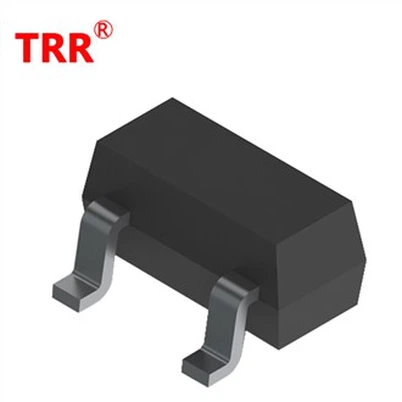
The Latest Progress in Photodiode Technology
Leave a message
Application of new materials
Silicon carbide (SiC) and gallium nitride (GaN)
Traditional photodiodes mainly use silicon (Si) as the material, but in recent years, new semiconductor materials such as silicon carbide and gallium nitride have gradually attracted attention. Silicon carbide has superior thermal stability and electrical properties, making it suitable for high-temperature and high-power applications. Gallium nitride has become an important choice for high-frequency and high-efficiency photodiodes due to its wide bandgap and high electron mobility. The application of these new materials has significantly improved the performance and application range of photodiodes.
Organic photodiode
Organic photodiodes (OPDs) have attracted attention due to their lightweight, flexibility, and low cost. The emergence of a new generation of organic materials has improved their photoelectric conversion efficiency and stability, demonstrating promising application prospects in fields such as flexible displays, wearable devices, and sensors.
Performance improvement
Photoelectric conversion efficiency
The photoelectric conversion efficiency is an important indicator for measuring the performance of photodiodes. In recent years, researchers have successfully improved the photoelectric conversion efficiency of photodiodes by optimizing material and structural design. For example, by adopting quantum dot technology, the response speed and sensitivity of photodiodes are significantly enhanced, achieving higher photoelectric conversion efficiency.
Response speed and bandwidth
Response speed and bandwidth are key factors affecting the performance of photodiodes in the field of optical communication. The new high-speed photodiode has significantly improved its response speed by optimizing its structural design, such as shortening the current flow path and increasing the thickness of the light absorption layer, which can meet the needs of high-speed data transmission.
temperature stability
With the diversification of application environments, the temperature stability of photodiodes has become increasingly important. The application of new materials and improved packaging technology enable photodiodes to maintain good performance even in extreme environments such as high temperature and humidity, greatly enhancing their reliability.
Innovation in manufacturing processes
Micro nano processing technology
The advancement of micro nano processing technology has brought revolutionary changes to the manufacturing of photodiodes. Through precise photolithography and etching techniques, manufacturers are able to control the size and structure of photodiodes at the micrometer level, achieving higher performance and efficiency. The application of this technology not only improves production efficiency, but also reduces production costs.
3D packaging technology
The introduction of 3D packaging technology has greatly improved the integration of photodiodes, enabling them to integrate more functions in a limited space. This technology is particularly suitable for applications that require strict space, such as smartphones and wearable devices. In addition, 3D packaging can improve thermal management performance and further enhance the stability of photodiodes.
The future trend of the market
Expansion of the Optical Communication Market
With the development of technologies such as 5G and fiber optic communication, the demand for photodiodes in the optical communication market continues to rise. High speed photodiodes play a crucial role in optical communication systems, and their high-speed and high-sensitivity characteristics meet the needs of future high-speed networks. It is expected that the optical communication market will experience rapid growth in the coming years, driving the demand for photodiodes.
The Development of Smart Home and Internet of Things
The rise of smart homes and the Internet of Things has led to the continuous expansion of the application of photodiodes in the field of sensors. By combining with other sensors, photodiodes can achieve more intelligent environmental monitoring and control systems. In the future, with the popularization of smart homes, the market demand for photodiodes will further increase.
Innovation in Wearable Devices
The rapid development of wearable devices has provided new application scenarios for photodiodes. The new type of photodiode can be integrated into health monitoring, motion tracking and other devices to monitor users' physiological status in real time. With the increasing emphasis on health management, the application prospects of photodiodes in wearable devices are broad.