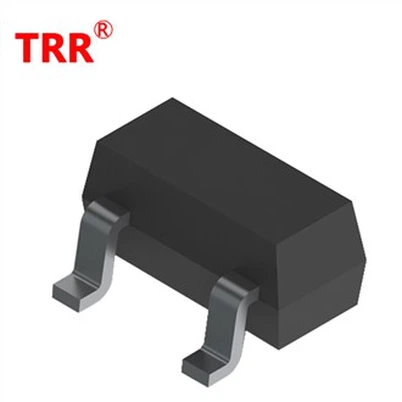
The Application Of MOSFETs in Battery Management Systems Is Increasing
Leave a message
The role of MOSFET in battery management system
The Battery Management System (BMS) is an important component that ensures that the battery pack is always in optimal working condition during the charging and discharging process. Its main functions include battery voltage monitoring, temperature monitoring, current control, state estimation, and charge and discharge management. As a key component in BMS, MOSFET is widely used in the following areas:
Current switch and power control
One of the most common applications of MOSFETs is the on/off control of current during charging and discharging processes. During the process of battery charging and discharging, the flow of current must be precisely controlled. Excessive current can cause battery damage, while insufficient current cannot efficiently complete the charging and discharging tasks. MOSFET has high-speed switching, low on resistance, and low thermal loss, which can effectively control the charging and discharging current of the battery, ensuring that the battery operates within a safe current range.
Especially in electric vehicles (EVs), the application of MOSFETs is more widespread. In order to ensure the efficient operation of electric vehicle batteries, MOSFETs are used in battery voltage management, battery balancing, charger design, and DC-DC converters. These applications can ensure stable operation of the battery under various loads, improving the battery's lifespan and charging and discharging efficiency.
Battery protection
The protection function of the battery is a key task in BMS. MOSFETs are used to protect batteries from abnormal operating conditions such as overvoltage, overcurrent, and overtemperature. MOSFETs can quickly disconnect the battery from external circuits when abnormal conditions are detected, thereby avoiding damage caused by overcharging, overdischarging, or overheating of the battery.
For example, overcurrent protection MOSFET can prevent excessive current during battery discharge; Overvoltage protection MOSFET can automatically disconnect when the battery voltage is too high, thereby avoiding battery damage due to overcharging. The application of these MOSFETs greatly enhances the safety of battery systems.
Thermal management
During the process of battery charging and discharging, the battery system is prone to generate heat due to the flow of current and the presence of internal resistance. Excessive temperature not only reduces the efficiency of the battery, but may also shorten its lifespan and even pose safety hazards. MOSFET can reduce the heat generation of the system through precise current control, and at the same time, it has high thermal conductivity, which helps optimize the thermal management of the system.
The thermal stability and heat dissipation capability of MOSFETs are crucial in battery management systems. The use of high-power MOSFETs can effectively reduce internal heat loss in the system and improve thermal management efficiency. Through reasonable thermal design, BMS can ensure stable operation even in high load or high temperature environments.
Advantages of MOSFET
High efficiency and low loss
One of the biggest advantages of MOSFETs is their high switching efficiency and low on resistance. Compared with traditional power transistors, MOSFETs have lower switching losses and faster switching speeds, and can operate stably at higher frequencies. Low on resistance enables MOSFETs to minimize heat generation when current passes through, improving the overall efficiency of battery management systems.
Especially in fields such as electric vehicles and smart devices that require high energy efficiency, MOSFETs can significantly improve the charging and discharging efficiency of batteries, thereby extending their battery life and improving their lifespan.
Miniaturization and integration
With the development of miniaturization and lightweight electronic products, the volume and weight requirements for battery management systems are becoming increasingly high. MOSFETs have small size and good integration, which can effectively meet this demand. In the battery management system of electric vehicles, the high integration of MOSFETs not only helps reduce the size of the system, but also lowers the overall cost of the battery pack.
In addition, the integrated design of MOSFETs can integrate multiple functions in multiple control circuits, such as overcurrent protection, overvoltage protection, etc., further simplifying the design of battery management systems.
Fast response and high-precision control
MOSFET has a very fast response speed and high-precision current control capability, which can monitor and adjust the working status of the battery in real time. In the BMS of electric vehicles, fast switching speed can ensure that the battery pack can be adjusted instantly in different working modes, improving the stability and safety of the system.
For example, during battery charging, MOSFETs can adjust the current in real-time based on the battery's charging status to avoid overcharging or overdischarging, thereby protecting the battery from damage. The fast response speed also enables the battery management system to respond to various emergencies in a short period of time, ensuring the safety of the system.
Powerful thermal stability
In battery management systems, the thermal stability of MOSFETs is one of the important indicators for evaluating their performance. MOSFETs can withstand high operating temperatures and have high thermal conductivity, which is helpful for the design of heat dissipation systems. The efficient heat dissipation performance enables BMS to operate continuously and stably in higher load environments, especially in electric vehicles or large energy storage systems, which can effectively improve the service life of battery packs.
The Future Development of MOSFETs in Battery Management Systems
With the rapid development of markets such as new energy vehicles, renewable energy, and smart devices, the demand for battery management systems will continue to grow, and the application of MOSFET technology in BMS will also be further deepened. In the future, with the continuous evolution of MOSFET technology, its application in battery management systems will present the following trends:
More efficient MOSFET materials
With the application of new semiconductor materials, the efficiency and performance of MOSFETs will be further improved. The application of wide bandgap materials such as gallium nitride (GaN) and silicon carbide (SiC) will enable MOSFETs to have higher operating voltage, lower on resistance, and higher thermal stability. The application of these new material MOSFETs is expected to shine in new energy vehicles and high-power battery systems.
Integrated design
Future MOSFETs will be more integrated, able to integrate more functions in one chip, such as battery monitoring, charge and discharge control, temperature management, etc. Integrated design can not only simplify the structure of battery management systems, but also reduce system costs, improve system reliability and stability.
More intelligent battery management
With the development of artificial intelligence and Internet of Things technology, future battery management systems will become more intelligent, able to monitor the health status of batteries in real time, predict the remaining life of batteries, and make automatic adjustments. MOSFET will be combined with sensors, data analysis, and cloud computing technology to achieve more precise battery control and management.