Why Diodes Matter So Much in Life-Support Equipment Safety Standards ?
Leave a message
What "Life-Support Safety Standards" Really Mean
Let's start by clearing the fog around Transistorthe standards, because the language can be intimidating. The master standard for medical electrical equipment is IEC 60601-1, and it rests on two simple ideas
Basic safety - the device must not harm the patient or operator under normal use or if a single thing goes wrong.
Essential performance - the clinical functions that matter most must keep working accurately; if they degrade beyond set limits, that's an unacceptable risk.
Two more concepts tie it all together. The first is the single-fault principle: a device must stay safe even if one component fails, throughout its entire expected service life. The second is the family of particular standards that sit on top of IEC 60601-1 for specific devices - there are more than sixty of them, covering ventilators, defibrillators, infant incubators, and more.
The reassuring part is the philosophy behind it all: standards favour inherently safe design first - building reliability into the hardware - with alarms and backups as extra layers, not the main defence. And that philosophy points straight back to the quality of your medical device safety standards components.
Why Diodes Are Safety-Critical Components
A diode looks like the simplest thing on the board - a one-way valve for electricity. Yet that simple job underpins safety in several ways:
Rectification - turning AC mains into the clean DC that sensitive medical circuits need.
Reverse blocking - stopping current from flowing the wrong way, which helps keep isolation barriers intact.
Transient protection - soaking up voltage spikes before they reach delicate electronics.
Power-path steering - routing current between mains and battery so the device never loses power.
When a diode misbehaves - failing open, failing short, or slowly leaking more current as it ages - those safety functions are compromised. That's why a thoughtful approach to IEC 60601 component selection treats the diode not as a throwaway commodity, but as a part that has to be right.
The Roles These Parts Play Across a Life-Support Device
It helps to picture where these components actually live and work together inside a machine:
Main power supply - rectifier diodes convert and condition incoming power.
Battery backup and switching - diodes and transistors steer and switch power so backup takes over seamlessly.
Sensor and alarm circuits - low-leakage diodes protect the accuracy of the signals clinicians rely on.
Motor, blower, and drive stages - transistors do the heavy switching while fast diodes handle the current cleanly.
Diodes and transistors are partners here. The transistor switches and drives; the diode rectifies, protects, and steers. Get both right and the whole machine becomes more reliable - which is the foundation of life support equipment reliability.
Meet the Parts: Transistor, S1A, RS2M
You don't need exotic components to build safe equipment - you need the right proven parts, properly screened. Here's how three workhorses fit.
Transistor - The Switching and Drive Core
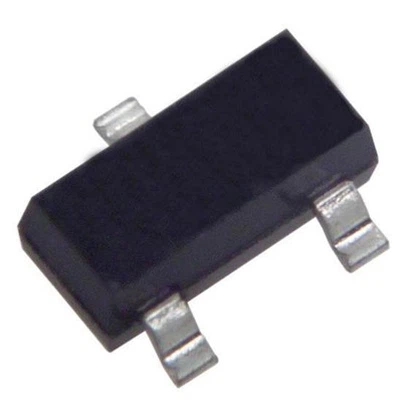
The Transistor is the muscle of the power and drive circuits. Whether it's switching a power supply stage or driving the blower motor in a ventilator, the transistor does the heavy lifting of turning current on and off thousands of times a second. In life-support gear, you want a transistor with solid voltage and current margin, predictable behaviour, and consistent quality batch to batch - exactly what a serious transistor and diode supplier should guarantee.
Diode S1A - The Low-Leakage Signal Rectifier
The S1A is a 1.0 A, 50 V glass-passivated general-purpose rectifier in the compact SMA (DO-214AC) package, prized for its low leakage and low capacitance, with a low forward voltage around 1.1 V across a −55 °C to +150 °C range. Low leakage protects the accuracy of sensor and alarm circuits, where a small error can have an outsized clinical impact. For these sensitive rails, a careful S1A rectifier diode supplier is well worth it.
Diode RS2M - The Fast Recovery Specialist
The RS2M is a fast recovery rectifier in SMA, rated 1000 V and 2.0 A with a reverse recovery time around 500 ns and a glass-passivated, UL 94V-0 build. Fast, clean turn-off keeps power and drive stages efficient and cool, which directly reduces stress and extends life. Buying RS2M fast recovery diode wholesale from one trusted line keeps performance consistent across every production run.
How Component Choice Maps to the Standards
This is where it all connects. The standards ask for single-fault safety and maintained essential performance - and your component choices are how you actually deliver that.
Voltage margin means a part isn't stressed in normal use, so it fails far less often.
Low leakage protects measurement accuracy, helping the device hold its essential performance over years.
Predictable failure behaviour lets you design so that any single fault stays safe rather than cascading.
Full traceability gives you the documented evidence the standards (and regulators) expect.
In short, picking generously rated, low-leakage, well-screened diodes and transistors is one of the most direct ways to satisfy IEC 60601-1 - not on paper, but in the real world where patients are connected.
A Selection Checklist for Safety-Critical Components
When you're choosing parts for a life-support design, run through this list:
Voltage and current margin - well above worst-case working conditions.
Low leakage - especially in signal, sensor, and reference paths.
Derating - never run a part near its absolute limits; leave room for surges and heat.
Thermal design - keep junctions cool, since heat is the leading cause of aging and failure.
Construction quality - glass-passivated junctions, UL recognition, RoHS compliance.
Screening and burn-in - work with a supplier that catches weak parts before they ship.
Traceability - full lot documentation for your risk file and regulatory submissions.
Tick every box and you've answered the question every designer eventually faces: "how do you choose safe components for medical devices
What the Data and Standards Say
The reach of these standards shows how seriously the world takes this. IEC 60601-1 has been adopted across the globe - the FDA recognizes the US-adopted ANSI/AAMI ES60601-1, the EU references the harmonized EN 60601 series under its medical device regulation, and Health Canada, Australia's TGA, and regulators across Asia and Latin America all build on the same framework. The standard defines essential performance precisely as a clinical function whose loss or degradation beyond set limits creates unacceptable risk - and it expects manufacturers to prove their device stays safe even under a single fault, for its whole service life.
The engineering data reinforces the message. A diode's reverse leakage roughly doubles for every 10 °C rise in temperature, and long-term heat and stress slowly shift a part's key parameters - which is exactly why margin, cooling, and quality screening aren't optional in life-support gear. Reliable components are the quiet backbone of every standard on the shelf.
Case Study: How Sunhing Supported a Life-Support OEM
A manufacturer of life-support equipment came to Sunhing while tightening the reliability of a new platform. Their team wanted to remove inconsistent, under-margined parts that complicated their single-fault analysis and risked drifting out of spec over the product's long service life.
Sunhing's engineers standardised the design around three proven parts: the Transistor for the switching and drive stages, S1A for the low-leakage sensor and alarm rails, and RS2M for the fast-switching power section - each with extra margin and full lot traceability from a single audited line.
The customer reported:
A cleaner, simpler single-fault analysis for certification.
Fewer field failures and service call-outs after production.
More stable performance across temperature and across production batches.
(Figures in this case study are illustrative - please confirm or replace them with your own verified results before publishing.)
Why Source From a Reliable Manufacturer or Factory
After years on the sales floor, here's the honest truth: two parts with the same number are not always the same part. In life-support equipment, the differences - in leakage, in surge survival, in batch-to-batch consistency - are exactly what decides whether a machine stays dependable for years. That's why buying from a serious manufacturer and factory, rather than the cheapest broker of the month, protects both patients and your reputation.
A trustworthy partner gives you glass-passivated, UL-rated, RoHS-compliant parts; honest datasheets and test data; full lot traceability; burn-in screening; and the ability to scale from samples to high-volume wholesale orders without quietly swapping the part underneath you. The recognition that quality-focused names like ESTA have earned for consistent screening and dependable supply is exactly the standard you want behind components in a life-support device. Sunhing - a medical grade diode manufacturer at heart - builds its Transistor, S1A, and RS2M parts to that standard.
Frequently Asked Questions
Q: Why are diodes important in medical device safety?
A: Because they handle rectification, reverse blocking, transient protection, and power-path steering - functions that directly affect whether a device stays safe under normal use and single faults.
Q: What components are critical in life-support equipment?
A: Power supply rectifiers, switching transistors, sensor and alarm diodes, and power-path components. Each must have margin, low leakage, predictable failure behaviour, and traceable quality.
Q: What standards apply to life-support devices?
A: The general standard IEC 60601-1, plus particular standards for specific devices such as ventilators (IEC 60601-2-12), defibrillators, and incubators, all adopted by the FDA, EU, and regulators worldwide.
Q: How do you choose safe components for medical devices?
A: Pick generous voltage and current margin, low leakage, proper derating, good thermal design, quality construction, burn-in screening, and full traceability - and source from a reliable supplier.
Q: Do small parts really affect patient safety?
A: Yes. A single under-rated or poorly screened diode or transistor can compromise a safety function, which is why the standards ultimately depend on good component choices.
Build Life-Support Equipment People Can Trust
If you design or source life-support equipment and want diodes and transistors that are dependable, low-leakage, and fully traceable, we're here to help. Send us your specs and we'll recommend the right Transistor, S1A, or RS2M part for your design - with datasheets, samples, and competitive quotes for both prototype and wholesale volumes
.