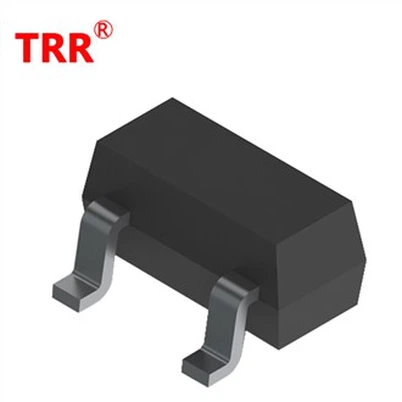
When should diodes be used?
Leave a message
1, The core role in rectifier circuits
Rectification is the process of converting alternating current (AC) into direct current (DC), and diodes are the core components in rectification circuits. In rectifier circuits, diodes utilize their unidirectional conductivity to allow only the positive or negative half cycle of alternating current to pass through, thereby achieving the conversion of alternating current to direct current. This conversion is crucial for devices such as power adapters, chargers, inverters, etc., as they require a stable DC power source to operate. Therefore, in situations where AC power needs to be converted to DC power, diodes are an indispensable choice.
2, Signal extraction in detection circuit
Detection is the process of extracting the original information signal from the modulated signal, and diodes also play an important role in the detection circuit. In devices such as radio receivers, the received signal is usually modulated and needs to be demodulated into the original information signal. In the detection circuit, diodes can separate the carrier and modulation signals in the modulation signal through their nonlinear characteristics, thereby extracting the original information signal. Therefore, in situations where information needs to be extracted from modulated signals, diodes are an ideal choice.
3, Voltage Stability in Voltage Regulating Circuits
Voltage stabilization circuits are used to maintain the stability of output voltage, and diodes are also widely used in voltage stabilization circuits. Especially the Zener diode (also known as the voltage regulator diode), which can maintain stable voltage output in reverse breakdown state, is used to construct various voltage regulator circuits. These voltage stabilizing circuits play an important role in power circuits, electronic measuring instruments, and other applications, as they require stable voltage to ensure the normal operation of the equipment. Therefore, in situations where stable output voltage is required, diodes are indispensable components.
4, Efficient Control in Switching Circuits
Diodes also perform well in switch circuits. Due to their fast switching speed and low on resistance, diodes can efficiently control the flow of current in circuits. In applications such as switching power supplies, motor control, and LED drivers, diodes quickly respond to external control signals to achieve on/off switching of circuits, thereby accurately controlling the magnitude and direction of current. This efficient switch control not only improves the response speed of the system, but also reduces energy consumption and heat generation. Therefore, in situations where efficient control of current flow in circuits is required, diodes are the ideal choice.
5, Auxiliary components in signal amplification and processing circuits
Although diodes are usually inferior to transistors in signal amplification, they still play an important role in certain specific signal amplification and processing circuits. For example, in RF amplifiers, diodes can be used to amplify and modulate signals; In the interface between analog and digital circuits, diodes can be used to achieve signal conversion and matching. In addition, diodes can also be used to construct various circuits such as filters and oscillators to meet specific signal processing requirements. Therefore, in situations where signal amplification and processing assistance is needed, diodes are also a worthwhile choice to consider.
6, Protecting safety barriers in circuits
Diodes also play an important role in protecting circuits. They can be used to construct overvoltage protection circuits, overcurrent protection circuits, etc., to prevent damage to components in the circuit. For example, in a power circuit, diodes can be connected in parallel across the load. When the power supply voltage is too high, the diodes will conduct and release excess voltage, thereby protecting the load from damage. In addition, diodes can also be used to construct surge protection circuits, short-circuit protection circuits, etc., to improve the safety and reliability of circuits. Therefore, in situations where the safety of components in a circuit needs to be protected, diodes are also an indispensable choice.
7, Other special application scenarios
In addition to the common application scenarios mentioned above, diodes also have some special applications. For example, in optoelectronic devices, diodes can be used to construct components such as photodiodes and photodiodes, which are used to detect optical signals and convert them into electrical signals; In temperature sensors, diodes can be used to construct components such as thermistors, which are used to detect temperature and output corresponding electrical signals. In addition, diodes can also be used to construct various digital circuit components such as triggers and latches to meet specific digital signal processing requirements.
https://www.trrsemicon.com/diode/smd-diode/tvs-diodes-smbj10ca.html