What Really Happens When a Diode Fails in a Medical Device ?
Leave a message
The Real Cost of a Failed Diode
Let's put numbers to it, because the stakes are easy to underestimate. The impact of a single failed part stacks up across several layers:
Patient safety. This is the one that matters most. A failure that distorts a reading or interrupts a function can put a patient at risk - and in life-support and monitoring gear, that's unacceptable.
Downtime. A device out of service is a device not earning or treating. One study found equipment failures cropping up in a striking share of operative procedures, lengthening them and raising both cost and risk.
Repairs and service calls. Each field failure means a technician, a part, a truck roll, and lost time.
Recalls. This is where it gets expensive fast. Medical device recalls hit 1,059 events in 2024 - the highest in four years - and the most serious Class I recalls reached their highest level in fifteen years. Strikingly, device failure became the leading cause of recalls for the first time in over five years.
Reputation and value. Research cited by industry analysts found that a manufacturer's share price drops by an average of around 10% after a single major recall, with longer-term damage to brand and trust.
Add it up and the medical equipment failure cost dwarfs the price of doing it right the first time. A reliable part isn't an expense - it's insurance.
Where Failures Show Up Across a Device
A diode fault doesn't announce itself the same way everywhere. Depending on where the part sits, the consequence differs:
Main power supply - a failure here can take the whole device down.
Battery backup and power-path - a fault can silently disable backup, so the device dies the moment mains power blinks.
Sensor and alarm circuits - leakage or failure here corrupts readings or, worse, stops an alarm from sounding.
Motor and drive stages - a fault can halt the moving parts a device depends on.
The exact open-versus-short mechanics behind each of these are covered in our companion article; the takeaway here is simply that every location carries a real-world consequence, which is why component quality can't be an afterthought.
The Ripple Effect: From One Part to a Whole Recall
Here's the pattern that keeps quality managers up at night. It rarely starts with a dramatic explosion. It starts small:
A low-cost or poorly screened diode is used to shave pennies off the bill of materials.
In the field, a percentage of those parts fail early or drift out of spec.
Complaints and adverse-event reports start trickling in.
An investigation traces the issue to a common component across many units.
A correction or recall follows - across every device that shares the part.
This is why regulators and quality experts repeatedly flag supplier changes and out-of-spec components as common triggers for field issues. One weak part, multiplied across a production run, becomes a systemic problem. Preventing that chain reaction is far cheaper than reacting to it - and it's the heart of avoiding medical device downtime and recalls.
Meet the Parts That Lower Your Risk: Transistor, S1A, RS2M
The most reliable way to avoid these consequences is to start with parts that have margin, low leakage, low heat, and consistent quality. Three proven workhorses cover most designs.
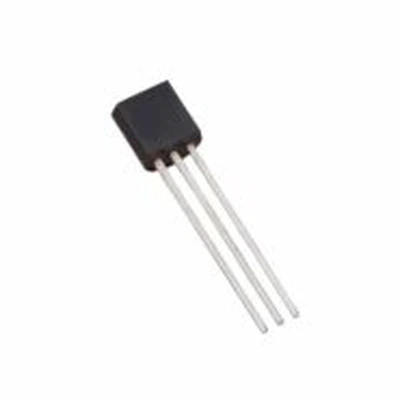
Transistor - The Dependable Switching Core
The Transistor handles power switching and drive duties. You want one with solid voltage and current margin, predictable behaviour, and batch-to-batch consistency, so it isn't stressed in normal use and doesn't become the weak link. That consistency is the mark of a serious reliable component supplier.
Diode S1A - Low Leakage for Accurate, Stable Circuits
The S1A is a 1.0 A, 50 V glass-passivated general-purpose rectifier in the compact SMA (DO-214AC) package, valued for its low leakage and low capacitance, with a low forward voltage around 1.1 V across a −55 °C to +150 °C range. Low leakage protects the accuracy of sensor and alarm circuits, helping avoid the quiet failures that lead to complaints. A careful S1A rectifier diode supplier is worth it.
Diode RS2M - Fast Recovery, Lower Stress
The RS2M is a fast recovery rectifier in SMA, rated 1000 V and 2.0 A with a reverse recovery time around 500 ns, a glass-passivated junction, and a UL 94V-0 build. Fast, clean switching means less heat and less stress, which translates into fewer failures over the device's life. Buying RS2M fast recovery diode wholesale from one audited line keeps quality consistent across runs.
How to Prevent Diode Failure
This is the part that pays off. Most field failures are preventable with a few disciplined habits:
Add margin. Choose voltage and current ratings well above worst-case conditions, so parts aren't stressed in everyday use.
Derate and manage heat. Run diodes below their limits and design for cooling, since heat is the leading cause of aging and failure.
Screen incoming parts. Use a supplier that performs burn-in and provides real test data, and qualify them properly - incoming controls catch problems before they ship.
Build in redundancy. Especially for backup power, so no single part can disable a critical function.
Demand traceability. Full lot documentation lets you contain any issue to a known batch instead of an entire product line.
Follow these and you've answered the practical question, "how can you prevent diode failure - and you've shrunk the odds of every costly consequence above. Early prevention, like early detection, dramatically reduces both the scope and the cost of any problem.
What the Data and Standards Say
The standards reinforce the whole argument. IEC 60601-1, the safety standard for medical electrical equipment, is built on basic safety and essential performance, and it requires a device to stay safe even under a single fault, throughout its expected service life. In other words, the standard assumes a part like a diode can fail and expects you to design - and source - so that failure stays safe. Reliability engineering points the same way: proper derating, thermal design, and supplier controls are the proven levers for driving failure rates down. The recall data simply shows what happens when those levers are ignored.
Case StudyHow Sunhing Helped Prevent Costly Failures
A medical OEM came to Sunhing after a cluster of field failures threatened to turn into a recall. Their teardown pointed to under-margined, inconsistent parts that varied from batch to batch - a classic supplier-quality issue.
Sunhing's engineers reworked the power and signal sections around three proven parts: the Transistor for switching, S1A for low-leakage rectification, and RS2M for the fast, low-heat power stage - each with extra margin and full lot traceability from a single audited line.
The customer reported:
A sharp drop in field failures after the redesign reached production.
Fewer service calls and complaints, easing the recall pressure.
Cleaner traceability, so any future issue could be contained to a known lot.
(Figures in this case study are illustrative - please confirm or replace them with your own verified results before publishing.)
Why Source From a Reliable Manufacturer or Factory
After years on the sales floor, here's the honest truth: the consequences we've discussed almost always trace back to component consistency. Two diodes with the same number are not always the same diode, and at scale the differences in leakage, surge survival, and uniformity decide whether you ship trouble-free or end up managing a recall. That's why buying from a serious manufacturer and factory, rather than the cheapest broker of the month, is the cheapest insurance you'll ever buy.
A trustworthy partner gives you glass-passivated, UL-rated, RoHS-compliant parts; honest datasheets and test data; full lot traceability; burn-in screening; and the ability to scale from samples to high-volume wholesale orders without quietly swapping the part underneath you. The recognition that quality-focused names like ESTA have earned for consistent screening and dependable supply is exactly the standard you want behind your devices. Sunhing - a medical grade diode manufacturer at heart - builds its Transistor, S1A, and RS2M parts to that standard.
Frequently Asked Questions
Q: What happens when a diode fails in a medical device?
A: Consequences range from a single bad reading or a device shutdown to silent backup failure, field complaints, and - if the same part fails across many units - a recall. The impact depends on where the diode sits.
Q: How much does medical equipment downtime cost?
A: It varies widely, but the full cost includes lost use, repairs, service calls, and potential recalls. Research suggests a single major recall alone can knock around 10% off a manufacturer's share price.
Q: How can you prevent diode failure?
A: Use generous margin, derate, manage heat, screen and qualify incoming parts, build in redundancy, and demand full traceability from a reliable supplier.
Q: Why do electronic components fail in medical devices?
A: Mostly electrical overstress and heat, often made worse by under-rated or poorly screened parts. Supplier changes and out-of-spec components are common triggers for field issues.
Q: Is a cheap diode ever worth the risk?
A: Rarely. The savings are pennies; the potential cost - downtime, recalls, reputation - runs to millions. A reliable part is insurance, not an expense.
Avoid the Failure Before It Costs You
If you design or source medical equipment and want to eliminate the failures that lead to downtime and recalls, we're here to help. Send us your specs and we'll recommend the right Transistor, S1A, or RS2M part for your design - with datasheets, samples, and competitive quotes for both prototype and wholesale volumes