What is the function of a transistor?
Leave a message
The basic principle of transistors
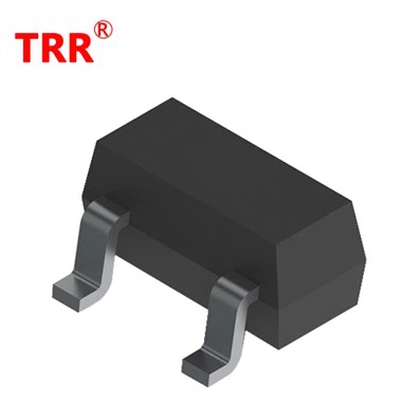
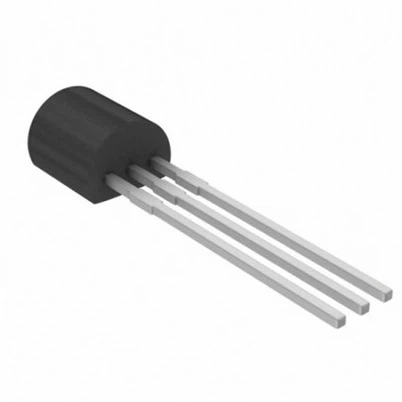
Transistor, also known as semiconductor transistor, is an electronic device based on semiconductor materials such as silicon or germanium, whose core is the ability to control the flow of current. Compared with traditional vacuum tubes, transistors have significant advantages such as small size, low power consumption, long lifespan, and high reliability. The basic structure of a transistor includes three regions: the emission region, the base region, and the collector region. By controlling the current or voltage in the base region, it is possible to achieve significant modulation of the current from the emission region to the collector region. This ability makes the transistor an indispensable switch and amplifier component in electronic circuits.
The main function of transistors
Amplification function: One of the most basic and important functions of transistors is to amplify signals. In amplification circuits, transistors can amplify weak electrical signals to a strong enough level for subsequent circuit processing or driving loads. This amplification effect is not limited to audio signals, but also includes various types of signals such as video and radio frequency. It is one of the key technologies that enable wireless communication, broadcasting, television and other systems to achieve.
Switching function: By operating the transistor in the saturation or cutoff region, it can be used as a high-speed electronic switch. In digital circuits, transistors serve as the basic building blocks of logic gate circuits, capable of performing logical operations such as AND, OR, and NOT, thereby constructing complex digital systems such as computer processors and microcontrollers. The fast switching characteristics of transistors enable digital circuits to have advantages such as high speed, efficiency, and programmability, making them the cornerstone of modern information technology.
Voltage regulation and rectification: In power management circuits, transistors also play an important role in voltage regulation and rectification. Through specific circuit design, transistors can stabilize the output voltage and protect the load from voltage fluctuations; At the same time, it can also convert AC power into DC power, providing stable DC power for various electronic devices.
Frequency conversion and modulation: In the field of wireless communication, transistors are widely used for frequency conversion and signal modulation. By changing the bias conditions and input signals of transistors, frequency conversion of signals (such as frequency converters) can be achieved, as well as modulation of low-frequency signals onto high-frequency carriers (such as modulators), thus achieving long-distance transmission of information.
The Impact of Transistors on Modern Society
The continuous development of transistor technology has greatly promoted the progress of information technology and promoted the informatization and intelligence development of society. It makes computers shrink from giants to portable devices, the Internet becomes popular, and smart terminals such as smart phones and tablet computers become necessities of people's daily life. In the medical field, transistor technology has promoted the precision and portability of medical equipment, improving the efficiency and accuracy of diagnosis and treatment; In the industrial field, the widespread application of automated production lines, intelligent robots and other equipment is inseparable from the powerful control and data processing capabilities provided by transistors.
https://www.trrsemicon.com/transistor/npn-transistor-2sd669.html