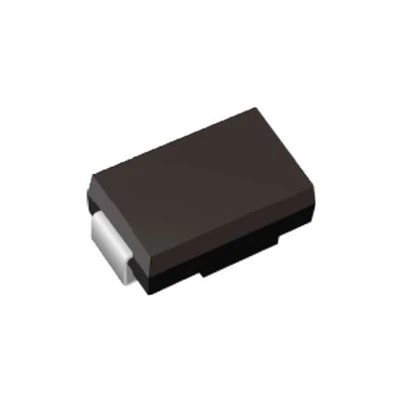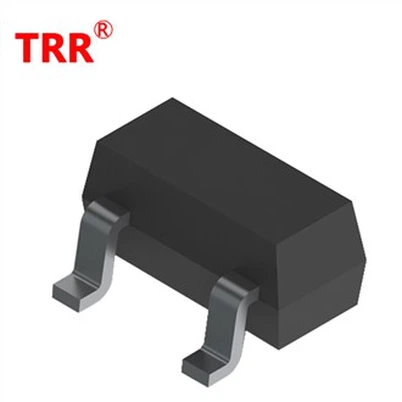
What is the difference between a diode and a Zener diode?
Leave a message
1, The difference between structure and working principle
diode
A diode, also known as a crystal diode, is a semiconductor device with a PN junction. It is formed by connecting P-type and N-type semiconductors through a specific process to form a PN junction. When a diode is connected to a forward voltage, that is, the P terminal is connected to the positive electrode and the N terminal is connected to the negative electrode, the direction of the electric field in the PN junction is reversed, causing the positive holes in the P-type semiconductor to diffuse to the negative electrons in the N-type semiconductor, forming a forward current, and the diode enters a conducting state. On the contrary, when reverse voltage is applied, that is, the P terminal is connected to the negative electrode and the N terminal is connected to the positive electrode, the direction of the electric field in the PN junction is strengthened, causing the positive holes in the P-type semiconductor and the negative electrons in the N-type semiconductor to be attracted together, forming an electric field that prevents current from passing through, and the diode presents a cutoff state.
Zener diode
Zener diode, also known as voltage regulator diode, is a special type of diode. Its structure is similar to that of a regular diode, but the PN junction is designed to be very thin so that reverse breakdown can occur at a small reverse voltage. The working principle of a Zener diode is based on the reverse breakdown characteristics of a PN junction. When the reverse voltage increases to a certain level (i.e., the Zener voltage), the reverse current will sharply increase, but at this time, the voltage of the Zener diode remains basically unchanged. This characteristic enables the Zener diode to provide stable voltage output in reverse breakdown state, thereby playing a stabilizing role.
2, Comparison of performance parameters
diode
The main performance parameters of diodes include forward conduction voltage, reverse breakdown voltage, and reverse leakage current. The forward conduction voltage refers to the voltage at which a diode begins to conduct under forward bias. Reverse breakdown voltage refers to the maximum voltage that a diode can withstand under reverse bias, beyond which the diode may be damaged. Reverse leakage current refers to the small current passing through a diode under reverse bias.
Zener diode
The main performance parameters of a Zener diode include Zener voltage, reverse breakdown voltage, and reverse leakage current. Zener voltage refers to the stable voltage provided by a Zener diode in the reverse breakdown state. The reverse breakdown voltage is similar to that of a diode, but a Zener diode can still maintain stable output in the reverse breakdown state. The reverse leakage current is usually small in Zener diodes, but it increases sharply during reverse breakdown, but it is still within a controllable range and will not damage the device.
3, Differences in application fields
diode
Due to its unidirectional conductivity, diodes have a wide range of applications in electronic circuits. It is mainly used in rectification circuits to convert alternating current into direct current, as well as in detection circuits to extract modulation signals, and in oscillation circuits to generate oscillation signals. In addition, diodes are often used in electronic switches, signal amplification, and other fields. In household appliances, radio circuits, and industrial control circuits, diodes play an important role.
Zener diode
Zener diodes are highly favored due to their voltage stabilizing characteristics. It is mainly used in applications that require stable voltage output, such as regulated power supplies, reference voltage sources, waveform shaping, and limiting circuits. Zener diodes also play an important role in applications such as switching power supplies, wireless communication, and high-frequency circuits. In addition, Zener diodes are commonly used in circuits such as overvoltage protection and surge suppression to protect other components from high voltage damage. Its low power consumption, high-speed switching characteristics, and various packaging forms make Zener diodes widely used in electronic device protection circuits, power management systems, and other fields.
https://www.trrsemicon.com/diode/dip-diode/silicon-rectifier-diodes-1n4007.html