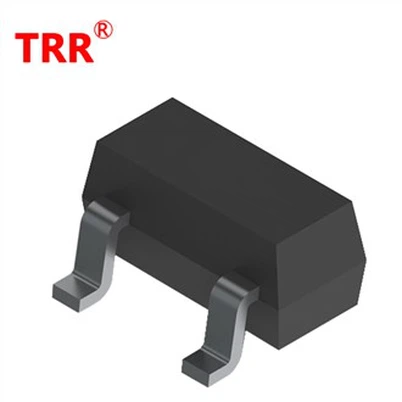
What is a high-voltage transistor?
Leave a message
definition
High voltage transistors, as the name suggests, refer to transistors that can withstand higher operating voltages. These types of transistors typically use special semiconductor materials and advanced manufacturing processes to ensure stable and reliable operation in high voltage environments. High voltage transistors can be bipolar transistors (such as power transistors GTR), field-effect transistors (such as specific high-voltage models of IGBT and MOSFET), or other types of semiconductor switching devices, whose main feature is that they can withstand voltage levels much higher than ordinary transistors.
characteristic
High voltage endurance: This is the most significant characteristic of high-voltage transistors. They can operate safely at voltages of several thousand volts or even higher, far beyond the voltage range of ordinary transistors.
High current handling capability: In addition to high voltage, high-voltage transistors also have the ability to handle high currents. This enables them to play an important role in high-power applications.
Fast switching speed: Many high-voltage transistors, especially IGBTs and certain types of MOSFETs, have extremely fast switching speeds, which help reduce power loss and improve system efficiency.
High reliability: High voltage transistors are carefully designed and rigorously tested to ensure stable performance even in harsh working environments.
Thermal stability: Due to the large amount of heat generated by high-voltage transistors during operation, they usually have good heat dissipation performance and thermal stability.
application
Power electronics: High voltage transistors are widely used in the field of power electronics. They are used in multiple aspects such as power conversion, motor control, and grid transmission to improve the efficiency and stability of the power system. For example, in high-voltage direct current transmission systems, high-voltage transistors are used as the main components of converters.
Industrial automation: In the field of industrial automation, high-voltage transistors are used to drive various motors and actuators. By precisely controlling the speed and torque of the motor, they can achieve precise control over the production process.
Energy conversion: High voltage transistors also play an important role in devices such as solar photovoltaic inverters and wind power converters. They can convert the electricity generated by renewable energy into a form of electricity suitable for grid transmission.
Transportation: High voltage transistors are used in battery management systems and motor drive systems in new energy vehicles such as electric vehicles and hybrid vehicles. Their efficiency and reliability contribute to improving the range and performance of cars.
Future prospects
With the continuous development of technology, high-voltage transistors will continue to play an important role in various fields. In the future, we can expect progress in the following areas:
The application of new materials: The emergence of new semiconductor materials will further enhance the performance of high-voltage transistors. For example, wide bandgap semiconductor materials such as silicon carbide (SiC) and gallium nitride (GaN) have higher breakdown electric field strength and lower on resistance, which is expected to promote the development of high-voltage transistors towards higher voltage and greater current.
Progress in manufacturing technology: With the continuous improvement of manufacturing technology, the size of high-voltage transistors will be further reduced, costs will be further lowered, and performance will be more stable and reliable.
Intelligent development: Future high-voltage transistors will pay more attention to intelligent development. By integrating sensors, controllers, and other components, self diagnosis, self-protection, and other functions can be achieved to improve the safety and reliability of the system.
https://www.trrsemicon.com/transistor/npn-transistor-bc817-25.html