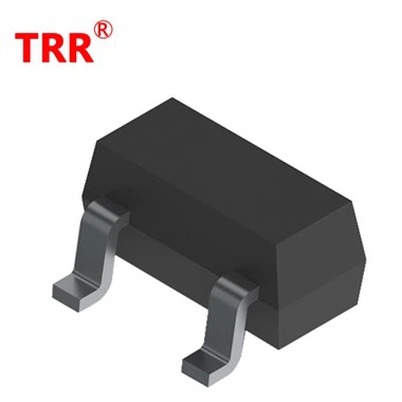
What does SMD mean in a circuit?
Leave a message
1, Definition and Characteristics of SMD
SMD, Surface mount devices are a technology that directly solder electronic components onto the surface of a circuit board. Compared with traditional pin type components, SMD has significant advantages. Firstly, SMD components have small size and light weight, which can greatly save space on circuit boards and make electronic product designs more compact. Secondly, the pins or pads of SMD are directly soldered to the pads on the circuit board, without the need for sockets or sockets, thereby improving the reliability and stability of the circuit. In addition, SMD's soldering process has a high degree of automation, which can significantly improve production efficiency and reduce production costs.
2, The manufacturing process of SMD
The manufacturing process of SMD usually includes the manufacturing, packaging, and testing of components. During the manufacturing process, the pins or pads of the components are designed to match the pads on the circuit board, in order to form stable electrical connections during mounting. Encapsulation refers to packaging components in specific packaging to protect them from external environmental influences and facilitate storage and transportation. The testing phase is to ensure that the performance and quality of the components meet the design requirements.
Specifically, the manufacturing process of SMD can be divided into the following steps:
Component manufacturing: Manufacturing electronic components that meet specifications according to design requirements.
Packaging design: Design appropriate packaging forms to encapsulate components in specific packaging.
Packaging production: Packaging components and conducting necessary testing and screening.
Preparation for mounting: Pre treat the packaged SMD components, such as removing oxidation and applying solder paste.
Mounting and soldering: Use an automatic surface mount machine to mount SMD components onto a circuit board and perform soldering.
Testing and Inspection: Conduct testing and inspection on the welded circuit board to ensure the stability and reliability of the circuit.
3, The Application of SMD in Circuits
SMD has a wide range of applications in circuits, covering almost all electronic fields. SMD components are widely used in consumer electronics products such as mobile phones, computers, and tablets to achieve compact layout and efficient connection of circuit boards. In addition, SMD also plays an important role in industrial automation, automotive electronics, aerospace and other fields.
Specifically, the application of SMD in circuits can include the following aspects:
Power management: In power circuits, SMD components such as surface mount resistors and capacitors are used for functions such as filtering, voltage reduction, and stabilization.
Signal processing: In signal processing circuits, SMD components such as SMD diodes and transistors are used for tasks such as signal amplification, attenuation, and modulation.
Communication module: In communication circuits, SMD components such as patch filters, patch oscillators, etc. are used for tasks such as signal filtering, oscillation, and modulation.
Storage and computing: In storage and computing circuits, SMD components such as surface mount memory and surface mount processors are used for data storage and processing.
4, The Development Trends and Challenges of SMD
With the continuous development of electronic technology, SMD is moving towards higher performance, smaller size, and lower cost. However, this also brings some challenges. Firstly, as the size of components decreases, the difficulty of their manufacturing and testing also increases. Secondly, how to reduce costs while ensuring performance is an important issue faced by SMD manufacturers. In addition, with the increasing awareness of environmental protection, how to reduce environmental pollution in the SMD manufacturing process is also a hot topic of concern in the industry.
To address these challenges, electronic engineers and manufacturers need to constantly explore and innovate. For example, adopting advanced manufacturing processes and materials to improve the performance and reliability of components; Optimize design and production processes to reduce costs and environmental pollution; Strengthen testing and screening processes to ensure the quality and stability of components.
https://www.trrsemicon.com/diode/smd-diode/schottky-barrier-diodes-bat754a.html