What common misconceptions should be avoided when purchasing diodes?
Leave a message
一, Model and packaging confusion: details determine success or failure
1. Multiple package traps of the same model
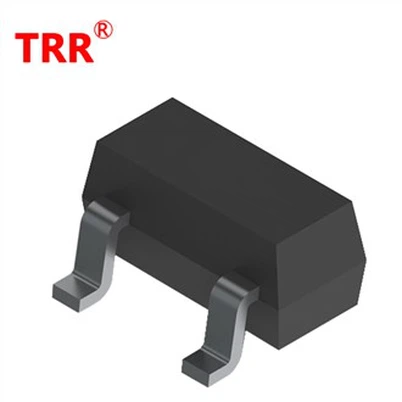
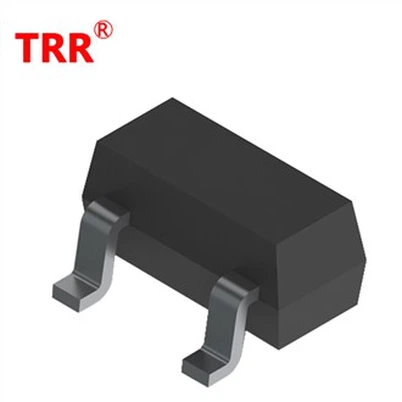
The suffix of the diode model often contains packaging information, but there may be multiple packaging forms for the same model. For example, the 1N4148 diode has more than ten types of packages, including DO-35 (axial glass package), SOD-123 (patch small package), SOT-23 (three pin patch), etc. If only the main model is checked and the packaging is ignored during procurement, it may result in component installation failure or performance mismatch.
Case: A certain electric vehicle anti-theft device project was forced to redesign the PCB due to insufficient space on the power board caused by mistakenly purchasing 1N4148 packaged in SOD-123, resulting in delayed delivery and increased costs.
Avoidance strategy:
Require suppliers to provide a model and packaging comparison table, clearly indicating dimensional parameters (such as length, width, height, pin spacing).
Perform 3D modeling verification on key components to ensure compatibility with PCB layout.
2. Confusion between medium body/narrow body/wide body
The width of diode packaging directly affects heat dissipation and mechanical strength. The JEDEC standard defines the SOIC package width as 3.9mm (narrow body) or 7.5mm (wide body), while the EIAJ standard SOP package width is 5.3mm. If the design requires a wide body package but mistakenly purchases a narrow body, it may cause component overheating or poor soldering.
Case: A power module experienced solder joint detachment in a high-temperature environment due to the misuse of 3.9mm wide SOIC-8 packaged diodes, resulting in batch rework.
Avoidance strategy:
Clearly indicate packaging standards (such as JEDEC/EIAJ) and specific dimensions in the BOM table.
Request the supplier to provide photos or 3D models of the packaged items for secondary confirmation.
二, Parameter misjudgment: dual risks of performance and security
1. Insufficient reverse withstand voltage margin
The reverse withstand voltage (VRRM) of diodes needs to have a margin of 20% -30% to cope with voltage fluctuations. If only the nominal voltage is selected, it may cause breakdown due to transient overvoltage.
Case: A certain electric vehicle anti-theft device project used SS24 Schottky diode (nominal reverse withstand voltage 40V), which caused component breakdown and equipment loss of control due to voltage fluctuations in a 60V system.
Avoidance strategy:
Select components with reverse withstand voltage ≥ 1.3 × VIN_max based on the maximum input voltage (VIN_max) of the circuit.
For wide voltage applications (such as 48V/60V compatible systems), priority should be given to using voltage resistant models above 80V.
2. Forward current and thermal design imbalance
The forward average current (IF (AV)) of the diode needs to be matched with the heat dissipation conditions. If the thermal resistance (R θ JA) and ambient temperature are ignored, it may cause the component to overheat and burn out.
Case: A certain switching power supply project selected a 1N5819 Schottky diode (IF (AV)=1A), but due to insufficient heat sink area, the actual operating current exceeded the standard when it was only 0.5A.
Avoidance strategy:
Calculate actual power consumption: P=Vf × If (Vf is the forward voltage drop, If is the operating current).
Choose packaging or add heat dissipation measures (such as thermal pads, heat sinks) based on thermal resistance parameters.
3. Neglecting reverse recovery time
High frequency switching circuits (such as DC-DC converters) require the use of diodes with short reverse recovery time (trr). If ordinary rectifier tubes are misused, it may lead to a significant increase in switch losses.
Case: A Buck circuit used a 1N4007 rectifier diode (trr=300ns) with an efficiency of only 82%. After switching to a UF4007 fast recovery diode (trr=50ns), the efficiency increased to 88%.
Avoidance strategy:
When the switching frequency is greater than 100kHz, Schottky diodes (trr<10ns) or fast recovery diodes (trr<50ns) are preferred.
Refer to the TRR frequency relationship curve in the data manual for selection.
三, Brand and Supply Chain Management: Hidden Risk Prevention and Control
1. Multi brand compatibility trap
The same type of diode may be produced by multiple brands, but there may be differences in parameters. For example, there are brands such as ST, NXP, ON for the 74HC14d high-speed CMOS device, and their threshold voltage and transmission delay may be different.
Case: A medical equipment project caused signal timing disorder due to mixing different brands of 74HC14d, requiring recalibration of the circuit.
Avoidance strategy:
Clearly specify the brand in the BOM table or provide a list of alternative brands.
Require suppliers to provide a brand consistency statement to avoid mixed batch supply.
2. Cold materials and shutdown risks
Some diodes are facing production stoppage due to market contraction or technological iteration. If substitutability is not evaluated in advance, it may lead to supply interruption during the mass production stage.
Case: A certain industrial controller project was forced to switch to an alternative model after the original factory stopped production due to the failure to stock TL431 voltage regulator diode in advance, and the circuit performance needs to be re certified.
Avoidance strategy:
Conduct a lifecycle assessment of key components and prioritize the use of mainstream brands or long-life models.
Establish a secondary supplier system to diversify supply chain risks.
四, Optimization of Procurement Process: From Experience to Systematic Management
1. Standardization of BOM table
Clearly label key information such as model, packaging, brand, parameter margin, etc.
Example:
1N4148WS-SOD-123-NXP-VRRM≥75V-IF(AV)≥200mA
2. Supplier collaboration
Require suppliers to provide data manuals, test reports, and sample verification.
Conduct on-site audits of new suppliers to evaluate their inventory management and quality control capabilities.
3. Application of digital tools
Use component databases such as Octopart and Digi Key for parameter comparison.
Deploying an ERP system to achieve traceability of the procurement process and avoid human errors.