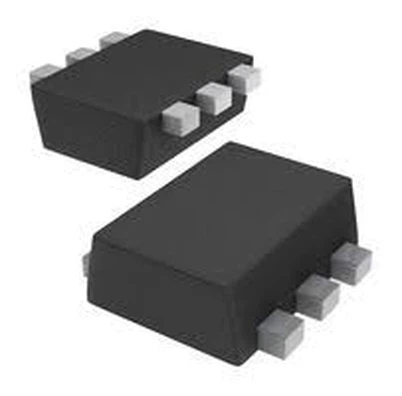
What are the basic functions of diodes in communication systems?
Leave a message
1, The invisible guardian of signal processing: the core function of diodes
Diodes play multiple roles in signal modulation, demodulation, mixing, and switching in communication systems, and their performance directly affects communication quality
Signal modulation and demodulation
Variable capacitance diode: By changing the bias voltage to adjust the capacitance value, modulation and demodulation of frequency modulation signals can be achieved. A certain radio receiver uses varactor diodes, with a frequency coverage range of 100MHz-1GHz and frequency stability better than ± 0.5ppm.
Detector diode: converts high-frequency signals into low-frequency audio signals. A certain AM radio uses Schottky detection diodes, which increase detection efficiency by 50%, reduce distortion to 0.5%, and achieve an audio signal-to-noise ratio of 60dB.
Mixing and Frequency Conversion
Diode mixer: mixes RF signals with local oscillation signals to generate intermediate frequency signals. A certain satellite communication system uses a diode double balanced mixer with a noise figure of only 3dB and a linearity of 40dBm, supporting multi band signal reception.
Harmonic generation: Utilizing the nonlinear characteristics of diodes to generate harmonics for signal amplification and frequency extension. A certain radar system uses harmonic generation technology to increase detection range by 30% and achieve a resolution of 0.1 meters.
Switches and Protection
PIN diode: used as an RF switch in the microwave frequency band to switch signal paths. A certain 5G base station uses PIN diode switches with a switching speed of Dana seconds and an insertion loss of only 0.2dB, supporting beamforming technology.
Transient voltage suppression diode (TVS): protects sensitive circuits from electrostatic discharge (ESD) and voltage surge damage. A certain communication device uses TVS diodes with an ESD protection capability of 30kV and a response time of less than 1 nanosecond.
2, Material Innovation: The Rising Engine of Diode Performance
Breakthroughs in materials science are reshaping the performance boundaries of diodes, driving communication technology towards higher frequency bands and wider bandwidths
Perovskite diode
Photoelectric conversion efficiency: The photoelectric conversion efficiency of perovskite photodiodes in the visible light band exceeds 30%, with a response time of less than 1 microsecond. A certain fiber optic communication system uses perovskite photodiodes, with a signal transmission rate of 40Gbps and an error rate of less than 1e-12.
Stability enhancement: By using "solvent screening" technology to remove defects in nanosheets, the lifespan is extended to 50000 hours, and humidity sensitivity is reduced by 90%.
Silicon carbide (SiC) diode
High temperature and high voltage resistance: SiC diodes can operate stably at high temperatures of 600 ℃, with reverse leakage current three orders of magnitude lower than silicon devices. A certain military communication equipment uses SiC diodes, which increase power density by 40% and support Ka band signal amplification.
Graphene silicon heterojunction diode
Ultra high frequency response: The high mobility characteristics of graphene make the diode response frequency reach the terahertz (THz) level. A certain 6G communication prototype adopts this technology, with a data transmission rate of 1Tbps and a latency of less than 0.1 milliseconds.
3, Practical application: Breakthrough in efficiency from satellite to base station
In the practical application of communication systems, diodes have achieved significant performance improvement and functional expansion:
satellite communication system
Signal forwarding: The ground station signal is upconverted to the Ku band using a diode mixer. A certain communication satellite adopts this technology, with a signal forwarding efficiency of 99.9% and a coverage area radius of 3000km.
Power amplification: Utilizing the nonlinear characteristics of diodes to achieve harmonic amplification. The output power of a certain satellite repeater reaches 200W, and the gain flatness is better than ± 0.5dB.
5G base station
Beamforming: Controlling the direction of the antenna beam through a PIN diode array. A certain 5G base station adopts this technology, with a user download rate of 10Gbps, a coverage area increase of 50%, and an interference suppression capability of 30dB.
Energy Efficiency Optimization: Adopting Schottky diode rectifier, power efficiency reaches 95% and energy consumption is reduced by 40%.
Radar system
Pulse compression: Using the fast switching characteristics of diodes to generate modulated pulses. A certain synthetic aperture radar (SAR) adopts this technology, with a resolution of 0.1 meters and a range of 500 kilometers.
Anti interference: using a diode limiter to suppress interference signals. The anti-interference ability of a certain military radar has been improved by 20dB, with a false alarm probability lower than 1e-6.
https://www.trrsemicon.com/diode/smd-diode/1smb5957a.html