What are the advantages of using fast recovery diodes in high-frequency inverters?
Leave a message
一, Technical principle: Low level logic for reverse recovery time and high-frequency adaptation
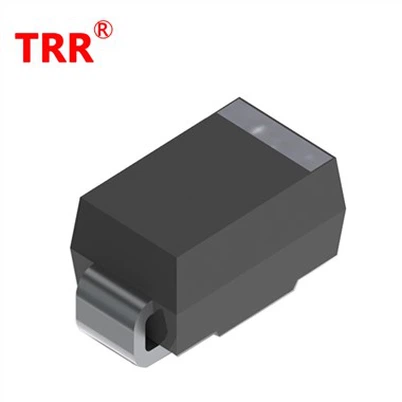
The core advantage of fast recovery diodes lies in their unique physical structure and process design. Unlike traditional PN junction diodes, FRD adopts a PIN junction structure, which introduces a thin base region (I layer) between P-type and N-type silicon materials, significantly reducing the reverse recovery charge (Qrr). Its reverse recovery time (TRR) is usually between tens of nanoseconds and hundreds of nanoseconds, and the ultra fast recovery type can even be shortened to less than 10 nanoseconds. This feature enables it to quickly switch between conduction and cutoff states in high-frequency switching circuits, avoiding voltage spikes and electromagnetic interference (EMI) caused by traditional diodes due to long reverse recovery time.
For example, in the Boost boost circuit of a high-frequency inverter, FRD acts as a freewheeling diode, which can quickly cut off the reverse current at the moment when IGBT or MOSFET is turned off, preventing energy from feedback to the switching tube, thereby reducing switching losses and improving system efficiency. Experimental data shows that the Boost circuit using FRD has an efficiency improvement of 3% -5% compared to ordinary diodes. In a 100kW wind inverter, the annual power savings can reach tens of thousands of kWh.
二, Performance advantage: Dual guarantee of efficiency and reliability for high-frequency inverters
1. Low switching losses to improve conversion efficiency
High frequency inverters achieve DC to AC conversion through PWM (Pulse Width Modulation) technology, with a switching frequency typically above 20kHz. In this scenario, the reverse recovery loss of the diode becomes a key factor restricting efficiency. The low TRR characteristic of FRD can significantly reduce energy loss during the switching process. Taking a 500kW photovoltaic inverter as an example, after replacing ordinary diodes with FRD, the system efficiency increased from 96.5% to 98.2%. In the scenario of annual power generation of 1 million kWh, the annual energy loss can be reduced by about 17000 kWh.
2. High voltage resistance and low forward pressure drop, optimizing thermal management
The reverse withstand voltage (VRRM) of FRD can reach several thousand volts and is suitable for high-voltage DC bus scenarios (such as 1500V photovoltaic systems). Meanwhile, its forward voltage drop (VF) is usually between 0.4V-0.6V, which is 30% -50% lower than that of ordinary diodes. The low VF characteristic reduces conduction loss, lowers heat generation, and simplifies heat dissipation design. For example, in offshore wind power generation systems, the application of FRD reduces the volume of inverter cooling modules by 40%, reduces system weight by 15%, and significantly improves the environmental adaptability of equipment.
3. Anti electromagnetic interference, ensuring system stability
The rapid current changes generated by high-frequency switches can easily cause EMI problems, affecting the accuracy of inverter control signals. The fast recovery characteristic of FRD can suppress sudden changes in reverse recovery current, reduce voltage spikes, and thus lower EMI noise. Experiments have shown that at a switching frequency of 100kHz, FRD can reduce the EMI intensity at the output of the inverter by more than 10dB, meeting the requirements of IEC 61000-4-6 standard and avoiding system misoperation caused by interference.
三, Application scenario: Full coverage from new energy generation to industrial drive
1. Wind power generation system
FRD is widely used in rotor side Crowbar protection circuits in doubly fed wind turbines. When the grid voltage drops, the Crowbar circuit quickly releases the rotor energy to the bypass resistor through FRD to prevent overcurrent damage to the inverter. For example, a 10MW offshore unit uses IGBT type Crowbar combined with FRD, which can complete energy release within 10ms when the voltage drops to 20%, ensuring that the system resumes grid connected operation within 0.2 seconds.
2. Photovoltaic inverter
In string photovoltaic inverters, FRD serves as the output rectifier element to convert high-frequency AC power into smooth DC power. Its fast recovery feature can improve the maximum power point tracking (MPPT) accuracy of the inverter, especially in local occlusion scenarios, which can reduce power generation losses. For example, a certain experimental project uses intelligent reconstruction technology combined with FRD to increase power generation by 12.4% and system overall efficiency by 8% under obstructed conditions.
3. Industrial motor drive
In frequency converters, FRD is used for rectification and inversion to achieve precise control of motor speed. Its low forward voltage drop characteristic can reduce energy loss during motor start-up and extend equipment life. For example, in the drive system of a steel mill, the use of FRD frequency converter reduces the starting current of the motor by 20% and reduces the annual maintenance cost by 30%.
四, Selection key points: parameter matching and reliability verification
1. Key parameter selection
Reverse recovery time (trr): It should be less than 1/10 of the switching cycle. For example, at a switching frequency of 100kHz, trr should be ≤ 100ns.
Forward current (IF): Depending on the load current, a margin of 1.5-2 times should be left. For example, a 100A load requires an FRD with a rated current of 150A-200A.
Reverse withstand voltage (VRRM): It needs to be 1.2 times higher than the DC bus voltage. For example, a 1500V system requires the use of FRD with a voltage resistance of 1800V or higher.
2. Thermal design and reliability testing
Thermal resistance (R θ JA): Choose a low thermal resistance package (such as a copper substrate package) with a thermal resistance of ≤ 0.5K/W to ensure a junction temperature of ≤ 175 ℃.
Life test: It is required to pass the thermal runaway test in IEC 62979 standard, which means that the surface temperature rises by ≤ 15 ℃ when the rated current is applied for 1 hour in a 75 ℃ environment.
3. Packaging and cost optimization
Compact packaging: such as TO-220FP, DO-201AD, etc., suitable for high-density integration scenarios.
Cost benefit analysis: In 10MW wind turbines, although using FRD increases the unit cost by 5%, the long-term benefits brought by the improvement of system efficiency can cover the initial investment.