Transistor Technology and Green Energy
Leave a message
Basic concepts
Basic principles of transistors
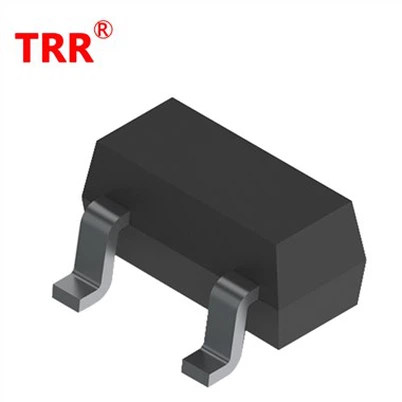
A transistor is a semiconductor device that can amplify or switch electronic signals. It mainly consists of three parts: emitter, base, and collector. By controlling the current at the base, the current from the emitter to the collector can be adjusted to achieve signal amplification and switching functions. Transistors are divided into two categories: bipolar junction transistors (BJTs) and field-effect transistors (FETs), with field-effect transistors further divided into junction field-effect transistors (JFETs) and insulated gate field-effect transistors (MOSFETs).
The Importance of Transistors in Green Energy
In green energy systems, transistors play a crucial role as the core components for power conversion and control. Efficient power conversion and intelligent control are key to improving energy efficiency, and the performance of transistors directly determines the efficiency and reliability of these systems. With the continuous advancement of transistor technology, the performance of green energy systems is also constantly improving.
The Application of Transistor Technology in Solar Power Generation
Photovoltaic inverter
It is an important component of solar power generation systems, whose main function is to convert the direct current generated by photovoltaic cells into alternating current for use in households or the power grid. The efficiency and stability of photovoltaic inverters largely depend on the internal power semiconductor devices, with transistors being the core components. Modern photovoltaic inverters widely use high-efficiency transistors such as MOSFETs and IGBTs (Insulated Gate Bipolar Transistors) to achieve efficient energy conversion and stable output.
Maximum Power Point Tracking (MPPT)
It is an important means to improve the efficiency of photovoltaic systems by adjusting the operating point of photovoltaic cells to always operate at the maximum power point. The MPPT controller extensively uses transistors internally to achieve fast and precise voltage and current regulation, thereby improving the overall efficiency of the photovoltaic system.
Application of transistor technology in wind power generation
Wind turbine control system
It is necessary to convert the variable frequency electrical energy output by the generator into constant frequency electrical energy through a frequency converter, in order to integrate it into the power grid or supply it to users. Transistors, especially IGBTs, are extensively used inside frequency converters to achieve efficient energy conversion and stable output. In addition, transistors are also used to achieve intelligent control of the starting, stopping, and operating status of wind turbines, improving the reliability and efficiency of wind power generation systems.
Direct drive wind turbine generator
Directly driving the generator rotor to rotate by the wind turbine reduces mechanical losses and maintenance costs. Direct drive wind turbines require efficient power electronic converters to control the operating status of the generator, with transistors playing a key role. Through efficient power conversion and control, the overall efficiency of direct drive wind turbines is improved.
Application of transistor technology in smart grid
Power Quality Management
The smart grid requires real-time monitoring and regulation of power quality to ensure the stable operation of the grid. The power quality management system extensively uses transistors to achieve fast and accurate voltage, current, and power regulation, ensuring the quality and stability of power supply to the grid.
Distributed Energy Management
Through intelligent control and scheduling, distributed energy sources such as solar and wind energy can be efficiently utilized in various regions. Transistors play a central role in these systems, achieving optimized configuration and efficient utilization of distributed energy through efficient power conversion and intelligent control.
Future Development Trends
Silicon carbide (SiC) and gallium nitride (GaN) transistors
Silicon carbide and gallium nitride transistors have become a research hotspot for the new generation of high-efficiency power devices due to their superior electrical performance and high-temperature stability. Compared to traditional silicon-based transistors, silicon carbide and gallium nitride transistors have higher switching speeds, lower on resistance, and higher voltage resistance, which can significantly improve the efficiency and reliability of green energy systems.
Intelligent Power Module (IPM)
It has the characteristics of high integration, intelligence, and high efficiency. The application of IPM can simplify the design of green energy systems, improve system efficiency and reliability, and become an important development direction for future transistor technology.
Artificial Intelligence and Machine Learning
The application in green energy systems will drive further innovation in transistor technology. Through AI algorithms, more intelligent power regulation and system optimization can be achieved, improving energy utilization efficiency and the level of system intelligence.