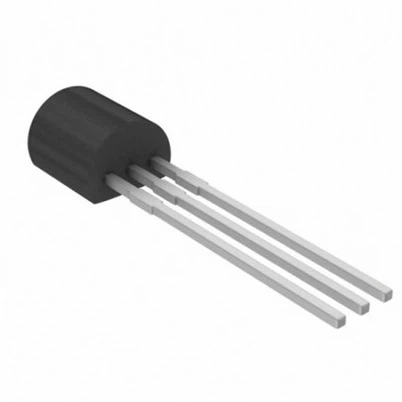
Transistor Design in AI Chips
Leave a message
The Development Background of AI Chips
The application scope of artificial intelligence technology is constantly expanding, from smartphones and smart homes to various fields such as autonomous driving and medical diagnosis, and its demand is showing explosive growth. AI chips provide efficient parallel computing capabilities by integrating a large number of computing units, thereby meeting the needs of deep learning and complex computing tasks.
The role of transistors in AI chips
As the basic unit of semiconductor components, transistors play a role in computing, storage, and logic control in AI chips. The design and performance of transistors directly determine the overall performance and energy efficiency of AI chips. Here are several key aspects of transistors in AI chip design:
High performance computing: AI chips need to handle a large number of computing tasks, and the switching speed and computing power of transistors are crucial to chip performance. In modern AI chips, high-performance CMOS (complementary metal oxide semiconductor) transistors are commonly used, which can provide fast computing power.
Low power design: While improving computing performance, reducing power consumption is also an important goal of AI chip design. Low power transistor design can extend the battery life of devices, reduce heat dissipation requirements, and thus improve the energy efficiency ratio of chips.
High integration: AI chips require the integration of a large number of computing and storage units. High integration transistor designs can achieve more functions within a limited chip area, improving the chip's computing density and performance.
Key Technologies in Transistor Design
In AI chips, transistor design involves multiple technological innovations, and the following are several key technologies:
FinFET (FinFET) technology: It is a new type of three-dimensional transistor structure that improves current driving capability and switching speed by increasing the surface area of the transistor. FinFET technology has been widely applied in advanced process AI chip design, significantly improving chip performance and energy efficiency.
Multi gate transistor (GAA): It is a new type of transistor structure that improves current control capability by setting gates on multiple faces of the transistor. GAA technology has significant advantages in reducing leakage current and improving performance, and is an important direction for future AI chip transistor design.
Low power design: By using low-power materials and optimizing circuit design, the static and dynamic power consumption of transistors can be effectively reduced. Low power design techniques include reducing leakage current, optimizing gate materials and structures, etc., which can reduce overall power consumption while maintaining high performance.
Advanced manufacturing technology: The transistor design of AI chips cannot be separated from advanced semiconductor manufacturing technology. The application of 7nm, 5nm, and even 3nm processes has further reduced the size of transistors, significantly improved their integration and performance. The continuous evolution of advanced manufacturing processes provides greater space and possibilities for transistor design.
Future Trends in Transistor Design
With the continuous development of AI technology, the transistor design in AI chips is also constantly evolving. In the future, transistor design will develop in the following directions:
Heterogeneous computing: This technology improves the computational efficiency and flexibility of chips by integrating different types of computing units. In AI chips, transistor design will be further optimized to meet the requirements of heterogeneous computing architectures.
Neuromorphic computing: Simulating the working principle of biological neural networks, efficient neural network computation is achieved through specially designed transistors. Neuromorphic computing chips will become an important development direction for future AI chips.
3D integration: By stacking transistors and circuits together, the integration and performance of chips are improved. The application of 3D integration technology will further promote the improvement of AI chip performance.
The application of new materials will bring more possibilities to transistor design. New materials such as carbon nanotubes and graphene have excellent electrical properties and are expected to be widely used in future AI chips.
https://www.trrsemicon.com/transistor/bridge-rectifiers-mb05m.html