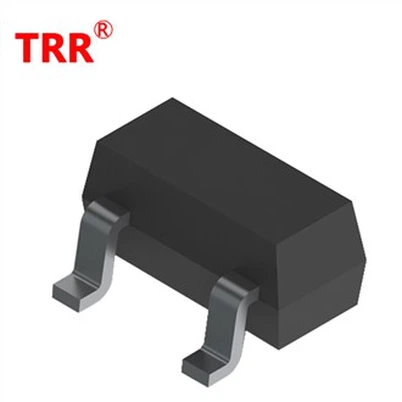
The role and application of diodes in multimedia devices
Leave a message
1, Basic principles and characteristics of diodes
A diode is a semiconductor device with unidirectional conductivity that allows current to flow freely in one direction while almost completely blocking current in another direction. This characteristic enables diodes to serve as key components such as rectifiers, switches, and regulators in electronic circuits. In multimedia devices, the application of diodes is even more extensive and in-depth, reflecting their importance from signal processing to display technology.
2, The role of diodes in multimedia devices
Signal Processing and Conversion
In multimedia devices, diodes are commonly used for signal processing and conversion. For example, in audio amplification circuits, diodes can act as detectors to extract audio signals from RF signals and provide driving signals for speakers. In addition, in video signal processing, diodes can also be used for signal rectification, amplification, and modulation to ensure the clarity and fidelity of images and sounds.
display technique
The application of diodes in display technology is particularly prominent. In liquid crystal displays (LCDs) and organic light-emitting diode displays (OLEDs), diodes serve as the switching elements for pixels, controlling the on/off state of each pixel. When current passes through a diode, it excites the corresponding luminescent material, thereby producing color. In OLED displays, each pixel is a self luminous diode that can directly convert electrical energy into light energy, achieving higher color saturation and contrast.
Power management
Multimedia devices typically require a stable power supply to ensure their proper functioning. Diodes play an important role in power management circuits, such as rectifying diodes that convert AC power to DC power, and stabilizing diodes that maintain stable output voltage. These functions are crucial for protecting the circuits of multimedia devices from voltage fluctuations.
data communication
Within multimedia devices, a large amount of data needs to be transmitted quickly and accurately between different components. As a switching element, diodes can quickly turn on or off current, thereby achieving rapid data transmission. This fast switching characteristic is crucial for ensuring high performance of multimedia devices.
3, The specific application of diodes in multimedia devices
High definition TV and projector
In high-definition televisions and projectors, diodes are widely used in display circuits and power management circuits. For example, in the backlight module of LCD TVs, light-emitting diodes (LEDs) serve as light sources, providing higher brightness and more uniform lighting effects. Meanwhile, in the light source system of projectors, LED diodes are also highly favored due to their long lifespan, low power consumption, and high color saturation.
Smartphones and tablets
Smartphones and tablets, as representatives of modern multimedia devices, integrate a large number of diodes inside. From OLED diodes in display screens to rectifying and stabilizing diodes in power management circuits, and then to sensing diodes in touch screens, diodes play an indispensable role in smartphones and tablets. The high performance, low power consumption, and long battery life of these devices are largely attributed to the excellent performance of diodes.
Sound and audio equipment
In audio and video equipment, diodes are used in audio amplification circuits, signal processing circuits, and power management circuits. For example, in an audio amplifier, diodes can act as detectors to extract audio signals and provide input signals to the power amplifier. Meanwhile, in signal processing circuits, diodes can also be used to achieve functions such as filtering, equalization, and compression of audio signals, improving audio quality.
Virtual reality and augmented reality devices
Virtual reality (VR) and augmented reality (AR) devices, as emerging multimedia fields, also integrate a large number of diodes internally. The high-resolution display screens, precise positioning systems, and complex interactive interfaces of these devices all rely on the support of diodes. For example, in the display screen of a VR headset, OLED diodes can provide an immersive visual experience; In positioning systems, diodes are used to achieve precise sensor signal transmission and processing.
https://www.trrsemicon.com/diode/dip-diode/fast-switching-diode.html