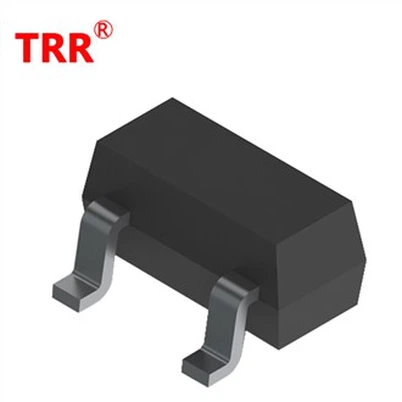
The main differences and applications between LED diodes and ordinary diodes
Leave a message
1, The main difference between LED diodes and ordinary diodes
Working principle and structural differences
LED diode: The core of LED diode lies in its special PN structure. When a forward voltage is applied to the LED, electrons flow from the N-type semiconductor region to the P-type semiconductor region, recombine with holes, and release energy. This energy is emitted in the form of light, known as electroluminescence. LED has high luminous efficiency and low power consumption, and with the development of technology, its luminous color and brightness can be achieved by adjusting materials and doping elements.
Ordinary diode: Ordinary diodes also have a PN structure, but their main function is unidirectional conduction. When a forward voltage is applied, the diode conducts; When a reverse voltage is applied, the diode is turned off, and reverse breakdown only occurs when the reverse voltage exceeds a certain threshold. The structure of ordinary diodes is relatively simple, mainly used in circuits such as rectification, detection, and voltage stabilization.
Characteristic comparison
Luminous characteristics: The most prominent feature of LED diodes is their ability to emit light, with high luminous efficiency, long lifespan, and rich colors, ranging from infrared to ultraviolet, and even white light. This makes LED widely used in lighting, display, backlight and other fields.
Electrical characteristics: Ordinary diodes pay more attention to their unidirectional conductivity and reverse breakdown voltage. In rectifier circuits, ordinary diodes can convert alternating current into direct current; In a voltage regulator circuit, it can maintain the stability of the output voltage.
Materials and Application Fields
Materials: LED diodes typically use semiconductor materials that can emit light, such as gallium nitride (GaN), gallium arsenide (GaAs), etc. Ordinary diodes, on the other hand, use more semiconductor materials such as silicon (Si) or germanium (Ge).
Application areas: LED diodes are widely used in lighting, display, indication, communication and other fields due to their unique light-emitting characteristics. Ordinary diodes are more commonly used in rectification circuits, voltage stabilization circuits, detection circuits, and so on.
2, Application of LED diodes and ordinary diodes
Application of LED diodes
Lighting: LED diodes have gradually replaced traditional lighting sources due to their high efficiency, environmental friendliness, and long lifespan. Whether it is indoor lighting, outdoor streetlights, stage lighting, or urban lighting, LED has demonstrated excellent performance.
Display: LED is also widely used in the field of display, providing clear and bright display effects from simple status indicator lights to complex color display screens. In addition, LEDs can also serve as backlight sources for LCD displays, enhancing their brightness and color saturation.
Indication and Communication: In electronic instruments and devices, LEDs are often used as power indicator lights, battery indicators, or low light sources. Meanwhile, LEDs also have applications in the field of communication, such as infrared emitters for wireless data transmission.
Application of ordinary diodes
Rectification circuit: Ordinary diodes are widely used in rectification circuits, which can convert AC power into DC power and provide stable DC power for various electronic devices.
Voltage regulator circuit: In a voltage regulator circuit, ordinary diodes can maintain stable output voltage and prevent voltage fluctuations from causing damage to electronic devices.
Switching circuit: By utilizing the unidirectional conductivity of diodes, a switching circuit can be constructed to achieve on-off control of the circuit.
Protection circuit: In electronic circuits, ordinary diodes can also be used as protective components, such as reverse protection diodes, to prevent damage to the circuit caused by reverse power supply connection.
https://www.trrsemicon.com/diode/dip-diode/dip-schottky-diode.html