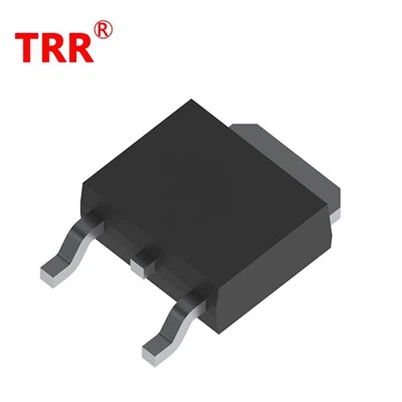
Protective diode: a barrier that prevents reverse current
Leave a message
1, Working principle of protective diode
The core of protecting diodes lies in the unidirectional conductivity of their PN junction. When forward biased, the PN junction exhibits a low resistance state, allowing current to pass smoothly; When reverse biased, the PN junction exhibits a high resistance state, almost blocking current. This feature enables the protective diode to form a "valve" in the circuit. When reverse voltage or current occurs in the circuit, the protective diode quickly conducts, bypassing the reverse current to ground or power supply, thereby protecting other circuit components from damage.
2, Types of protective diodes
Protective diodes can be classified into various types based on their application characteristics and packaging forms to meet the needs of different circuits.
Zener diode: Zener diode is a special type of diode with stable reverse breakdown voltage. When the reverse voltage exceeds its breakdown voltage, the Zener diode will begin to conduct, thereby limiting the rise of the reverse voltage and protecting the circuit from damage caused by excessive voltage. Zener diodes are commonly used in voltage regulation circuits and overvoltage protection circuits.
Transient Voltage Suppressor (TVS): TVS diode is a high-speed response protective device that can respond to transient changes in reverse voltage in a very short time (nanosecond level), clamping the reverse voltage at a safe level. TVS diodes are widely used in applications such as lightning protection, electrostatic discharge (ESD) protection, and transient overvoltage protection.
Schottky diode: Although Schottky diodes are mainly used in high-frequency rectification and switching circuits, their fast reverse recovery characteristics also make them an ideal choice for certain protection circuits. Schottky diodes can provide effective protection in situations where rapid response to reverse voltage changes is required.
Glass encapsulated diodes: Glass encapsulated diodes typically have a smaller volume and higher reliability, making them suitable for protective circuits with limited space or high reliability requirements.
3, Application of protective diodes
Protective diodes have a wide range of applications in electronic circuits, and the following are their main application areas:
Overvoltage protection: Using protective diodes at critical locations such as power input terminals and signal lines can effectively prevent damage to circuits caused by overvoltage caused by lightning strikes, electrostatic discharge, and other reasons.
Reverse voltage protection: In battery powered electronic devices, when the battery is reversed or the power polarity is incorrect, the protective diode can quickly conduct, bypass the reverse voltage to ground or power, and protect other components in the circuit from damage.
Protection in rectifier circuits: In rectifier circuits, protective diodes can prevent damage to rectifier diodes caused by reverse electromotive force generated by sudden load disconnection or sudden drop in input voltage.
4, Key technologies for protecting diodes
The performance and reliability of protective diodes depend on multiple key technical factors, and the following are some key technologies for achieving efficient protection:
Selection of breakdown voltage: The breakdown voltage of the protective diode should be selected according to the actual needs of the circuit. A low breakdown voltage may cause the protective diode to malfunction during normal operation, while a high breakdown voltage may not provide sufficient protection.
Control of reverse leakage current: Reverse leakage current is one of the important indicators to measure the performance of protective diodes. Excessive reverse leakage current can lead to increased power consumption, temperature rise, and even damage to protective diodes. Therefore, protective diodes with low reverse leakage current characteristics should be selected.
Improvement in response speed: In high-speed circuits, the response speed of protective diodes is crucial. A fast response protective diode can respond to changes in reverse voltage in a very short time, thereby more effectively protecting the circuit.
Thermal management: Protect diodes from generating heat during operation. Effective thermal management is the key to ensuring the long-term stable operation of protective diodes. The use of heat dissipation measures such as heat sinks and fans can reduce the temperature of protective diodes and improve their working life.
Improvement of packaging technology: Packaging technology has a significant impact on the performance and reliability of protective diodes. The use of miniaturized and highly reliable packaging technology can improve the integration and stability of protective diodes.
5, The development trend of protective diodes
With the continuous development of electronic technology, protective diodes are also constantly advancing. Here are some development trends for protective diodes:
Application of high-performance materials: The use of high-performance semiconductor materials such as silicon carbon (SiC) and gallium nitride (GaN) can significantly improve the breakdown voltage, response speed, and thermal conductivity of protective diodes, thereby meeting the requirements of higher power density and higher efficiency.
Integrated design: Integrating protective diodes with other circuit components can reduce the size and weight of the circuit, and improve the reliability and stability of the system. For example, integrating protective diodes with rectifier diodes, filters, etc. can form a compact and efficient power protection module.
Intelligent management: By introducing intelligent components such as sensors and microcontrollers, the working status of protective diodes can be monitored in real time and adjusted and optimized as needed. This intelligent management can further improve the efficiency and reliability of protecting diodes.
https://www.trrsemicon.com/diode/smd-diode/high-voltage-switching-diode.html