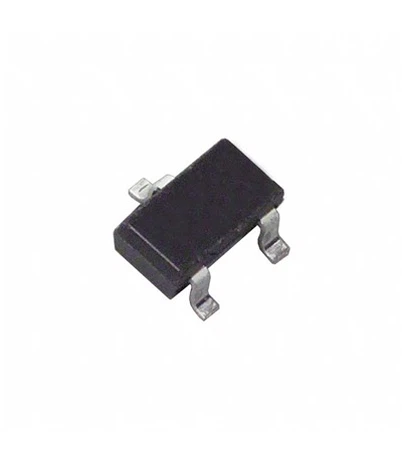
Is a capacitor a diode?
Leave a message
1, Basic concepts of capacitors and diodes
Capacitor: A capacitor is an electronic component capable of storing charge, consisting of two conductors (called plates) that are close to each other but not in contact, and an insulating medium (such as air, paper, plastic film, etc.) between them. When a voltage is applied across the capacitor, the positive charge on the positive plate attracts the negative charge on the negative plate, forming an electric field between the two plates and storing electrical energy.
Diode: A diode is an electronic device with unidirectional conductivity, and its core is the PN junction, which is the interface region formed by the contact between a P-type semiconductor (rich in holes) and an N-type semiconductor (rich in electrons). When the diode is forward biased (with the anode connected to a positive potential and the cathode connected to a negative potential), the PN junction conducts, allowing current to pass through; When reverse biased, the PN junction is cut off and almost non-conductive.
2, The working principle of capacitors and diodes
The working principle of capacitors: The working principle of capacitors is based on the storage and release of charges. When a voltage is applied across the two ends of a capacitor, charge accumulates between the two plates, forming an electric field and storing electrical energy. When the voltage is withdrawn, the capacitor releases the stored electrical energy through the discharge process. The performance of a capacitor is mainly determined by its capacitance value (C). The larger the capacitance value, the more charge is stored and the longer the discharge time.
The working principle of a diode: The working principle of a diode is based on the unidirectional conductivity of a PN junction. When the diode is forward biased, the depletion layer in the PN junction becomes thinner, allowing current to pass through; When reverse biased, the depletion layer thickens, preventing current from passing through. This unidirectional conductivity enables diodes to play an important role in circuits such as rectification, voltage regulation, amplification, and switching.
3, Functional characteristics of capacitors and diodes
Functional characteristics of capacitors: Capacitors are mainly used for storing electrical energy, filtering, DC isolation, coupling, etc. In AC circuits, capacitors can prevent DC components from passing through and allow AC components to pass through, so they are commonly used in filtering circuits to remove DC components or high-frequency noise from signals. In addition, capacitors are also used in energy storage circuits, such as flashlights, camera shutters, etc., to achieve rapid action by instantly releasing stored electrical energy.
The functional characteristics of diodes: Diodes, with their unidirectional conductivity as their core feature, play an important role in circuits such as rectification, voltage regulation, amplification, and switching. In rectifier circuits, diodes convert alternating current into direct current; In a voltage regulator circuit, the diode stabilizes the output voltage by adjusting its operating point; In amplification circuits, diodes amplify weak input signals into stronger output signals; In switch circuits, diodes act as switching elements to quickly switch their conduction and cutoff states, achieving control over the circuit.
4, Application fields of capacitors and diodes
Application areas of capacitors: Capacitors are widely used in various electronic devices, such as communication equipment, computers, household appliances, etc. In communication equipment, capacitors are used for filtering, coupling, tuning, etc., to ensure clear transmission of signals; In computers, capacitors are used to store data, stabilize power supply voltage, and ensure the stable operation of the computer; In household appliances, capacitors are used for motor starting, energy-saving lighting, etc., to improve the performance and efficiency of the appliances.
The application fields of diodes: Diodes are also widely used in various electronic devices, but they mostly appear in the form of rectifiers, regulators, amplifiers, switches, and so on. In rectifier circuits, diodes convert alternating current into direct current, providing stable direct current power for electronic devices; In a voltage regulator circuit, diodes regulate their operating point to stabilize the output voltage and protect other components in the circuit; In amplification circuits, diodes amplify weak input signals into stronger output signals, achieving signal amplification and processing; In switch circuits, diodes act as switching elements to quickly switch their conduction and cutoff states, achieving control over the circuit.
https://www.trrsemicon.com/diode/smd-diode/transient-voltage-suppressors-smbj5-0ca.html