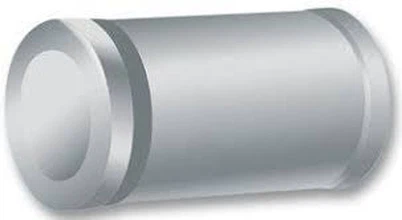
How to optimize the heat dissipation of diodes in laser medical instruments?
Leave a message
1, Material Innovation: Building a Low Thermal Resistance Conduction Path
1. Optimization of chip substrate interface
The starting point of heat dissipation for laser diodes is the contact interface between the chip and the substrate. Traditional alumina ceramics (Al ₂ O ∝) have a thermal conductivity of only 20-30W/m · K, while aluminum nitride ceramics (AlN) have a thermal conductivity of over 200W/m · K, making them the preferred choice for high-power medical lasers. For example, a certain industrial grade blue violet laser module adopts a three-layer structure of "chip aluminum nitride substrate graphene copper based", which reduces the thermal resistance from the traditional design of 5 ℃/W to 1.2 ℃/W, and lowers the chip junction temperature by 30 ℃ at the same power.
2. Upgrading of welding layer materials
The solder layer is a critical channel for heat transfer from the chip to the substrate. Gold tin solder (AuSn) has become the standard welding material for medical lasers due to its high thermal conductivity (58W/m · K), high melting point (280 ℃), and fatigue resistance. Experimental data shows that modules using AuSn pre formed solder pads can complete soldering within 30 seconds at a heating temperature of 310 ℃, and the uniformity of solder layer thickness is better than traditional solder paste, with a 40% reduction in thermal resistance.
3. Selection of heat sink materials
Copper (thermal conductivity 401W/m · K) and aluminum (thermal conductivity 237W/m · K) are commonly used heat sink materials, but the density of copper (8.9g/cm ³) limits its application in portable devices. To balance performance and weight, medical lasers often use copper molybdenum alloy (CuW) or silicon carbide aluminum (SiC/Al) composite materials. For example, a certain 808nm near-infrared therapeutic device uses a CuW heat sink, which has a better coefficient of thermal expansion (CTE) matching with the laser chip than pure copper, and the junction temperature fluctuation is controlled within ± 1.5 ℃ at 10W power.
2, Structural design: Enhance thermal convection and radiation
1. Microchannel cooling technology
For continuous wave (CW) high-power lasers (such as 1470nm prostate vaporization surgery equipment), microchannel coolers (MCC) are the most efficient heat dissipation solution. MCC etches microchannels with a width of 0.1-0.5mm inside the copper substrate, allowing direct contact between the cooling liquid (such as deionized water) and the heat source, with a thermal resistance as low as 0.01 ℃/W. The cosine shaped microchannel structure designed by a research team has a heat sink temperature uniformity of better than 95% and a water pump pressure requirement reduced by 30% at a cooling liquid flow rate of 1m/s under 20W power.
2. Inverted chip packaging
In traditional formal chip packaging, heat needs to be conducted to the heat sink through the chip substrate (with a thickness of about 100 μ m), resulting in an increase in thermal resistance. Inverted chip technology eliminates substrate thermal resistance by directly soldering the active area to the heat sink. Experiments have shown that the 980nm laser diode with inverted packaging has a junction temperature 25 ℃ lower than that of the conventional packaging at 5W power, and the stability of optical output power is improved by 15%.
3. Fin array optimization
For low to medium power medical lasers, such as laser hair removal devices, fin arrays are the most cost-effective heat dissipation solution. Through ANSYS finite element analysis, it was found that for every 1mm increase in fin height, the heat dissipation area increases by 12%. However, when the height exceeds 15mm, the air flow resistance significantly increases. A certain model of laser hair removal device adopts a "gradient fin" design, with a bottom fin height of 10mm and a top fin height of 5mm. At a power of 20W, the natural convection heat dissipation efficiency is 18% higher than that of uniform fins.
3, System integration: Multi level collaborative control
1. Closed loop control of semiconductor cooler (TEC)
Medical lasers require extremely high wavelength stability (such as a wavelength drift of<1nm for 650nm epidermal repair lasers), and the wavelength change rate with temperature can reach 0.3nm/℃. Therefore, TEC has become the core component for precise temperature control. A multifunctional beauty device adopts a closed-loop system of "TEC+NTC thermistor". When the chip temperature exceeds the set value (such as 25 ℃), TEC cools at a rate of 0.1 ℃/s, and dynamically adjusts the driving current through PID algorithm to make the power fluctuation less than ± 1%.
2. Phase change material (PCM) assisted heat dissipation
For pulsed medical lasers (such as laser lithotripsy), phase change materials can absorb heat in the pulse gap and smooth out temperature fluctuations. A research team integrated paraffin/expanded graphite composite PCM (melting point 45 ℃) into laser diode packaging. At a pulse frequency of 100Hz, PCM can absorb 40% of instantaneous heat, reducing the peak junction temperature by 12 ℃.
3. Redundant design of liquid cooling system
High power medical lasers (such as tumor photodynamic therapy equipment) require a liquid cooling system, but the risk of coolant leakage may endanger patient safety. Therefore, redundant design is crucial. A certain model of equipment adopts a dual circulation liquid cooling system: the main circulation cools the laser diode, the secondary circulation cools the main circulation pump, and leaks are monitored in real time through pressure sensors. When the main circulation pressure drops by 10%, the system automatically switches to the backup pump to ensure treatment continuity.