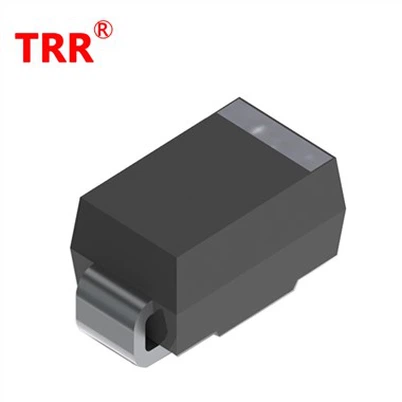
How to improve the reliability of medical circuits through diodes?
Leave a message
1. Why diodes are important for the reliability of medical circuits
In medical electronic systems, reliability is not only about how well a device works, but it also has a direct impact on how safe it is to use. When making a system more reliable, a lot of engineers focus on the primary control chip or power architecture and forget about the basic parts like diodes. In fact, though, diodes are utilised a lot for protection, power management, and signal regulation. If they are chosen or designed wrong, they could be the first part of the system to break.one of the best ways to make things more reliable is to use diodes wisely from the beginning.
2. Choosing wisely is the first step to making things more reliable.
The first step to making circuits more reliable is to choose the right ones. Different types of diodes work very differently. For example, Schottky diodes have a reduced forward voltage drop and a faster response time, while regular rectifier diodes work better in low-frequency, high-current situations. When it comes to medical equipment, you should choose the right type based on how it will be used, not just use one item for everything. It is also important to provide some room for voltage and current to deal with unexpected events. This will keep the device from working under severe settings.
3. Using diodes to protect power
Power stability is very important in medical equipment, and diodes can preserve it at several points. For instance, reverse polarity protection diodes can stop damage from reverse polarity in the power supply. Adding a TVS diode to the power input can soak up transient surge voltage. In a multi-channel power system, diodes can also be used to isolate power to avoid interference between channels. These designs can look simple, but they can really stop strange things from happening to the system when it is running.
4. Make it so that noise doesn't affect signal circuits as much
A lot of medical equipment has a lot of precise signal processing circuits, like sensor acquisition and analogue signal amplification. Diodes can be employed in these circuits to guard against overvoltage damage to sensitive parts, as well as to limit the voltage range. At the same time, choosing the right type of diode helps lower the noise that happens during the switching process, which makes the signal more stable. The properties of diodes have a direct impact on how well a system works, especially in circuits that run at high frequencies or speeds.
5. Pay attention to how heat is dissipated and the temperature.
Reliability is not just based on electrical factors, but it is also intimately linked to how well heat is managed. A diode makes heat when it is conducting. If the heat dissipation conditions are bad, the temperature rise will make losses worse, creating a cycle that keeps getting worse. This is especially crucial to prevent with medical equipment. So, when designing, you should think about a suitable arrangement, including not putting a lot of high-power devices in one location and adding heat dissipation measures as needed to make sure the devices work in a stable temperature range.
6. Improve redundancy design capability
One way to make important medical equipment more reliable is to use redundancy design. Using diodes in a smart way might create a simple and effective backup system. For instance, the power path can automatically transition to the backup power source when the main power source fails if you use the "or - ing" structure. This approach doesn't need complicated control logic, but it can make the system far more fault-tolerant, which makes it perfect for medical situations that need to run all the time.
7. Improving the use of diodes from a system point of view
We can't only look at individual parts to make things more reliable; we need to think about the whole system when we design. The way diodes are chosen, arranged, and used needs to fit the whole circuit low-capacitance devices are better for high-frequency circuits, while reaction speed is important for protection circuits. To get the most out of the diodes in the system, you need to optimise the whole thing, not just make small changes.