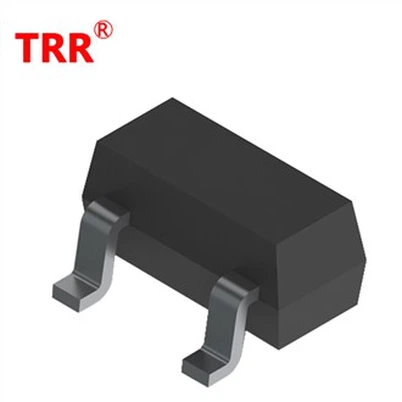
How to improve the power stability of LCD TVs through diodes?
Leave a message
1, Stability issues and impacts of LCD TV power supply
(1) Performance of power stability issues
The stability issues of LCD TV power supply mainly manifest as voltage fluctuations, excessive ripple, harmonic interference, etc. Voltage fluctuations can cause unstable operating voltage of the internal circuit of the TV, affecting the normal operation of components; Excessive ripple may cause interference fringes or flickering on the display screen; Harmonic interference may interfere with the signal reception and processing of television, leading to a decrease in picture and sound quality.
(2) The impact on TV performance
Power stability issues can have multiple impacts on the performance of LCD TVs. In terms of display, it may cause issues such as color spots, decreased contrast, and uneven brightness on the screen; In terms of audio, there may be noise, distortion, and other phenomena; From a hardware perspective, long-term unstable power supply can accelerate component aging, reduce the lifespan of the TV, and even cause component damage, resulting in the TV not functioning properly.
2, The role of diodes in power circuits
(1) Rectification effect
Rectifiers are one of the most commonly used types of diodes in power circuits. Its main function is to convert alternating current into direct current. In LCD TV power supply, rectifier diodes can rectify the AC power input from the power grid to obtain pulsating DC power, which provides input for subsequent filtering and voltage stabilization circuits. For example, a common bridge rectifier circuit consists of four diodes, which can rectify the full wave of alternating current into direct current, improving rectification efficiency.
(2) Voltage stabilizing effect
Zener diode is a special type of diode that can stabilize the voltage at a fixed value when operating in reverse breakdown state. In LCD TV power supply, voltage regulator diodes can be used to stabilize the voltage of critical circuits and prevent voltage fluctuations from affecting the normal operation of the TV. For example, in the standby power circuit of a TV, a voltage regulator diode can ensure the stability of the standby voltage and ensure the normal operation of the TV in standby mode.
(3) Overvoltage protection function
When the power supply voltage exceeds the stabilizing value of the diode, the stabilizing diode will conduct, triggering the protection circuit to disconnect the load from the power supply and achieve the purpose of protecting the internal components of the TV. For example, a voltage regulator diode is connected in parallel to the power input of a television. When the input voltage is too high, the voltage regulator diode conducts, bypassing the excessive voltage and protecting subsequent circuit components from damage.
(4) Continuation effect
In inductive loads such as switching power supplies and relays, diodes can play a role in freewheeling. When the current in the inductor suddenly interrupts, a reverse electromotive force is generated, and the diode can provide a path for the reverse electromotive force to prevent it from damaging other components. For example, in the secondary circuit of a transformer in a switching power supply, a freewheeling diode can ensure continuous changes in the current in the inductor, improving the efficiency and stability of the power supply.
3, Method of improving power stability through diodes
(1) Reasonable selection
Select diode type according to circuit requirements: Different circuits have different requirements for diodes. For rectifier circuits, rectifier diodes with low forward voltage drop and low reverse leakage current should be selected to improve rectification efficiency and reduce energy loss; For voltage regulation circuits, it is necessary to choose voltage regulator diodes with accurate voltage regulation values and small temperature coefficients to ensure stable voltage regulation effects; For overvoltage protection circuits, a suitable voltage regulator diode with reverse breakdown voltage should be selected to meet the protection requirements.
Consider the parameters of the diode: In addition to selecting the type, it is also necessary to consider the forward current, reverse withstand voltage, surge current capability, and other parameters of the diode. The forward current should be greater than the maximum operating current in the circuit, the reverse withstand voltage should be higher than the maximum reverse voltage that may occur in the circuit, and the surge current capability should meet the surge current requirements that may occur in the circuit.
(2) Optimize circuit design
Rectification circuit design: Using a bridge rectifier circuit can improve rectification efficiency and reduce losses in rectifier diodes. At the same time, adding filtering capacitors to the rectification circuit can further reduce the ripple of the output voltage and improve the stability of the power supply.
Voltage regulator circuit design: Series voltage regulator circuit or integrated voltage regulator circuit can be used. In a series regulator circuit, stable output voltage can be achieved by adjusting the parameters of the current limiting resistor and regulator diode. Integrated voltage regulator circuits have advantages such as small size and stable performance, which can simplify circuit design and improve power supply reliability.
Overvoltage protection circuit design: Adding a voltage regulator diode as an overvoltage protection component in the power input terminal and critical circuit. Reasonably set the voltage regulation value and connection method of the voltage regulator diode to ensure timely triggering of the protection circuit when the voltage is too high.
(3) Heat dissipation treatment
During operation, diodes generate heat. If the heat is not dissipated in a timely manner, it can cause the temperature of the diode to rise, affecting its performance and stability. Therefore, effective heat dissipation measures need to be taken. For example, for high-power diodes, heat sinks can be used for heat dissipation; For surface mount diodes, it is possible to layout them reasonably on the circuit board, increase the heat dissipation channels, and improve the heat dissipation effect.
4, Practical application case analysis
(1) Case background
A certain brand of LCD TV experienced issues with flickering images and sound noise during use, which were found to be caused by power stability issues after testing. The performance of rectifier diodes in the power supply decreases, resulting in a decrease in rectification efficiency and an increase in output voltage ripple; At the same time, the voltage regulation value of the voltage regulator diode has drifted, making it impossible to stabilize the output voltage.
(2) Solution
Replacing rectifier diodes: Choose rectifier diodes with low forward voltage drop and low reverse leakage current for replacement, which improves rectification efficiency and reduces output voltage ripple.
Adjusting the voltage regulator circuit: The voltage regulator diode in the voltage regulator circuit was replaced, and a voltage regulator diode with accurate voltage regulation value and low temperature coefficient was selected. The parameters of the current limiting resistor were also adjusted to ensure the stability of the voltage regulation effect.
Add heat dissipation measures: Heat sinks have been added to the power circuit to effectively dissipate heat from high-power diodes, reducing their operating temperature and improving their performance and stability.
(3) Effect evaluation
After the above improvements, the power stability of LCD TVs has been significantly improved. The problems of screen flickering and sound noise have been solved, and the display effect and audio quality of the TV have been significantly improved. At the same time, the service life of the television has also been extended, and users are satisfied with the improvement effect.
5, Testing validation and daily maintenance
(1) Test validation
After applying diodes to improve power stability, comprehensive testing and verification are required. Including voltage stability testing, ripple testing, load capacity testing, etc. By using professional testing instruments, various performance indicators of the power supply are tested to ensure its stability meets the design requirements.
(2) Daily maintenance
In order to maintain the long-term stability of the LCD TV power supply, daily maintenance is required. Regularly check the working status of diodes and other components in the power circuit, and promptly detect and handle faults. At the same time, attention should be paid to maintaining a well ventilated environment for the use of the television, avoiding the impact of dust and moisture on the power circuit.
https://www.trrsemicon.com/diode/smd-diode/ss12-ss120.html