How to identify terminal transistors?
Leave a message
1, Basic knowledge review
Transistors are mainly divided into two categories: bipolar transistors (BJTs) and field-effect transistors (FETs). In the context of terminal devices, we often encounter bipolar transistors, especially NPN and PNP BJTs. The main difference between these two transistors lies in their carrier type and current flow direction.
Most transistors follow certain pin identification rules, which help us quickly identify the type and function of the transistor. For transistors with common packaging forms such as TO-92, the pin arrangement is usually (from left to right or top to bottom): emitter (E), base (B), collector (C). However, there may be differences between different manufacturers and packaging forms, so specific data manuals need to be consulted in practical applications.
2, Method for identifying terminal transistors
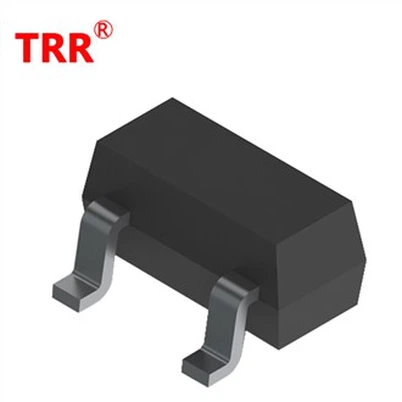
Firstly, we can preliminarily determine the type and packaging form of the transistor through visual inspection. Observing the appearance characteristics of transistors, such as package size, pin arrangement, labeling symbols, etc., can provide us with basic information about transistor types.
The most direct and accurate method for unknown transistor models is to consult their data manual. The data manual contains key information such as detailed specifications, pin definitions, electrical characteristics, and operating conditions of transistors. By comparing the descriptions in the data manual with the physical features, we can quickly and accurately identify the type of transistor.
In the absence of a data manual or unclear appearance features, we can use a multimeter to test the pin voltage and current characteristics of transistors, in order to determine their type and function. Here are some basic testing steps:
Set the multimeter to resistance mode or diode test mode.
Test base and emitter: Connect one probe of the multimeter to the base, and the other probe to the emitter and collector in sequence. Observe the resistance value or diode voltage drop displayed on the multimeter to determine the forward and reverse bias between the base and emitter.
Test collector and emitter: Similarly, place one probe of a multimeter in contact with the collector and the other probe in contact with the emitter, and observe changes in resistance or diode voltage drop.
It should be noted that due to the different characteristics of PNP transistors and NPN transistors, their resistance values and diode voltage drops during testing may also vary. Therefore, it is necessary to carefully observe and analyze the test results during the testing process.
In some cases, if we have known types and specifications of transistors on hand, we can try using replacement methods to identify unknown transistors. Remove the unknown transistor from the circuit and replace it with a known transistor. If the replaced circuit can work normally and have consistent performance, it can be determined that the unknown transistor is of the same type as the known transistor.
3, Precautions
Anti static: When handling electronic components such as transistors, it is important to pay attention to anti-static measures. Electrostatic discharge (ESD) may damage sensitive parts of components.
Avoid mechanical damage: When disassembling and installing transistors, handle them gently to avoid mechanical damage such as bent or broken pins.
Correct connection: After identifying the type and pins of the transistor, ensure that they are connected correctly in the circuit. Incorrect connection methods may cause circuit failures or transistor damage.
Reference data manual: When uncertain about the specific parameters and characteristics of a transistor, it is important to consult the relevant data manual for accurate information.
https://www.trrsemicon.com/transistor/pnp-silicon-epitaxial-planar-transistor.html