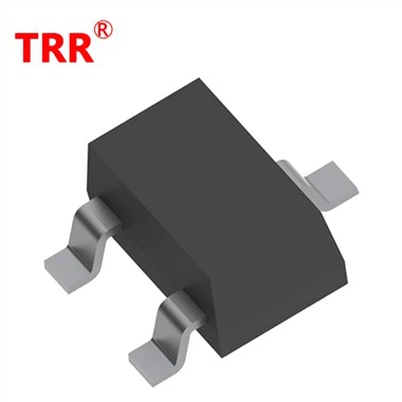
How to ensure the stable operation of electronic devices with diodes?
Leave a message
1, Basic principles and characteristics of diodes
A diode, also known as a semiconductor diode, is a semiconductor device with two electrodes (anode and cathode). Its core characteristic is unidirectional conductivity, which allows current to pass only in one direction. This feature enables diodes to perform various functions in electronic devices, such as rectification, voltage regulation, switching, and protection.
2, Application of diodes in rectification
Rectification is the process of converting alternating current into direct current. In electronic devices, AC power usually needs to be converted to DC power for subsequent circuit use. The diode rectifier is a key component for completing this conversion. For example, in a bridge rectifier circuit, four diodes form a bridge structure, which can convert the negative and positive half cycles of AC power into positive and negative voltages of DC power, respectively, thus obtaining pulsating DC power. Through subsequent filtering circuits, the DC power can be further smoothed to obtain stable DC output. This process ensures that electronic devices can receive stable DC power and operate stably.
3, The application of diodes in voltage regulation
Voltage stabilization refers to the conversion of input voltage fluctuations into stable output voltage. A stable power supply voltage is crucial for the normal operation of circuits in electronic devices. A diode regulator can provide a stable reference voltage by utilizing the breakdown characteristics or Zener effect of diodes. When the input voltage increases, the voltage regulator diode absorbs excess current to maintain the stability of the output voltage. This process ensures that electronic devices can still operate stably even when the power supply voltage fluctuates.
4, Application of diodes in protection
Electronic devices may encounter various abnormal situations during operation, such as overvoltage, overcurrent, overheating, etc. If these abnormal situations are not dealt with in a timely manner, they may cause damage to electronic devices. Diodes play a crucial role in protecting circuits. For example, reverse parallel diodes (such as transient voltage suppressors TVS) can absorb reverse voltage spikes and prevent components in the circuit from being damaged due to overvoltage. In addition, when the current is too high, the current limiting diode will limit the magnitude of the current, thereby preventing damage to the circuit caused by excessive current. These protection mechanisms ensure that electronic devices can still operate safely in abnormal situations.
5, The application of diodes in signal processing
In addition to rectification, voltage regulation, and protection, diodes also play an important role in signal processing. For example, in the detection circuit, diodes can detect low-frequency signals modulated on high-frequency carriers, thereby achieving signal demodulation. In switch circuits, diodes can be used as high-speed switching elements to control the on/off of the circuit. In addition, diodes can also be used to form various amplification circuits, oscillation circuits, and filtering circuits to meet the signal processing needs of electronic devices.
6, Selection and reliability of diodes
The selection of diodes is crucial for the stable operation of electronic devices. When selecting, factors such as the performance parameters, packaging form, thermal performance, and reliability of the diode need to be considered. Performance parameters include forward voltage drop, reverse breakdown voltage, reverse recovery time, etc., which directly determine the performance of diodes in circuits. The packaging form should be suitable for the layout and heat dissipation requirements of the circuit board. The thermal performance should ensure that the diode does not overheat during long-term operation. Reliability is related to the lifespan and stability of the entire electronic device.
In addition, the reliability of diodes is also a key factor in ensuring the stable operation of electronic devices. Reliability testing includes high temperature testing, low temperature testing, humidity testing, vibration testing, etc., to ensure that diodes can still operate normally in various harsh environments. At the same time, the quality of raw materials and production processes should be strictly controlled during the production process to improve the reliability and stability of diodes.
https://www.trrsemicon.com/diode/smd-diode/diode-es2j.html