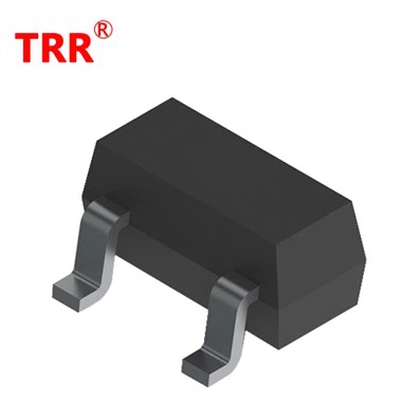
How to confirm if a transistor has a defect?
Leave a message
1, Preliminary observation and confirmation
Firstly, it is necessary to conduct preliminary observation and confirmation of the transistor. This includes checking the appearance of the transistor for any obvious physical damage, such as cracks, deformations, broken pins, or corrosion. At the same time, confirm whether the transistor model is consistent with the circuit design requirements to avoid performance issues caused by model mismatch. In addition, the installation of transistors on the circuit board should be observed to ensure that there are no poor soldering or poor contact phenomena.
2, Static resistance test
Static resistance testing is a common method for confirming transistor defects. By measuring the resistance between the pins of a transistor with a multimeter, the integrity of its internal structure can be preliminarily determined. The specific steps are as follows:
Measure base emitter resistance: Set the multimeter to the resistance range and measure the resistance between the base and emitter of the transistor separately. For NPN transistors, the normal resistance should be several hundred to several thousand ohms; For PNP type, it may be smaller. If the resistance value is close to zero or infinite, it may indicate that there is a short circuit or open circuit problem inside the transistor.
Measure base collector resistance: Similarly, measure the resistance value between the base and collector. This value is usually larger than the base emitter resistance, but it can also vary depending on the transistor type and specific model. Abnormal resistance values may indicate defects in the transistor.
Pay attention to the reverse resistance: During the measurement process, it is also necessary to pay attention to the changes in the reverse resistance value. Under normal circumstances, the resistance value of a transistor should vary in different directions. If the reverse resistance values are abnormally close or equal, it may indicate a defect in the transistor.
3, Dynamic voltage and current testing
Although static resistance testing can preliminarily determine whether a transistor has defects, it cannot fully reflect its performance under working conditions. Therefore, dynamic voltage and current testing is also required. This usually needs to be done with the circuit powered on and with the help of professional equipment such as oscilloscopes and current sources.
Voltage test: Measure the voltage values on each pin of the transistor using a multimeter or oscilloscope while the circuit is in operation. By comparing the measurement results with the voltage values during normal operation, it can be determined whether the transistor is in the correct working state. If the voltage value is abnormal, it may indicate that the transistor is not functioning properly or has been damaged.
Current testing (indirect): Due to the difficulty and insecurity of directly measuring transistor current, the current is usually calculated indirectly by measuring the voltage drop across other components in the circuit, such as resistors. This method requires a certain level of circuit knowledge and computational ability. If abnormal current values are found, it may indicate a defect in the transistor.
4, Functional testing and substitution method
In addition to the above testing methods, defects in transistors can also be confirmed through functional testing and substitution methods.
Functional testing: Place the transistor in an actual circuit for testing, observe the working status and output results of the circuit. If the circuit cannot work properly or the output result is abnormal, and after investigation and confirmation that other components are normal, it can be highly suspected that there is a defect in the transistor.
Substitution method: Remove the suspected defective transistor from the circuit and replace it with a known good transistor. If the circuit returns to normal operation after replacement, it can be confirmed that there is a defect in the original transistor.
https://www.trrsemicon.com/transistor/voltage-regulators/bridge-rectifiers-db201.html