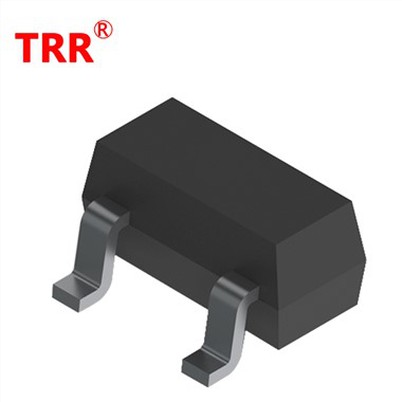
How important are diodes for the safety of energy storage systems?
Leave a message
1, Anti reverse charging protection: a physical barrier that blocks energy backflow
In photovoltaic energy storage systems, anti reverse charging diodes (blocking diodes) are connected in series between the photovoltaic array and the battery. Their core function is to prevent the battery from discharging back through the photovoltaic array at night or on rainy days. When the output voltage of the photovoltaic module is lower than the DC bus voltage, without anti reverse charging diodes, the energy of the battery will form a circuit through the PN junction of the photovoltaic array, causing the module to heat up or even burn out.
Typical case: A desert photovoltaic power station failed to install anti reverse charging diodes. After a three-day sandstorm, the temperature of the photovoltaic array abnormally rose to 85 ℃, ultimately leading to a junction box melting accident. After testing, the reverse current reached 2.3 times the normal operating current, causing the internal solder tape of the component to melt.
Technical optimization: Modern energy storage systems use Schottky diodes with low forward voltage drop (Vf<0.3V), which can reduce energy loss by 1.2% compared to traditional silicon diodes (Vf ≈ 0.7V). For example, Infineon's CoolSiC ™ Schottky diodes can still maintain reverse leakage current<1 μ A at high temperatures of 150 ℃, which is three orders of magnitude lower than silicon-based devices.
2, Bypass protection: intelligent switch to resolve hot spot effect
In the series circuit of photovoltaic modules, bypass diodes are connected in parallel at both ends of a single module. When the module is blocked or faulty, the diodes conduct to form a current bypass, avoiding other normal components from being subjected to reverse bias. If there is a lack of bypass protection, the obstructed component will consume the power generated by other components as a load, resulting in local high temperatures (up to 200 ℃ or above) and causing the "hot spot effect".
Failure analysis: A module fire accident occurred at a certain offshore photovoltaic power station. Investigation found that due to improper selection of bypass diodes (reverse recovery time Trr>200ns), the diodes failed to conduct in a timely manner under rapidly changing cloud cover, resulting in the burning of internal battery cells in the module.
Technological evolution: The application of third-generation semiconductor materials has significantly improved the performance of bypass diodes. Cree's GaN HEMT bypass module has shortened the reverse recovery time to within 10ns and can withstand a reverse voltage of 1000V, making it suitable for intelligent string optimization in large ground power stations.
3, Overvoltage protection: a fast responder to transient shocks
Energy storage systems are prone to transient overvoltage during grid/off grid switching, lightning strikes, and other scenarios. TVS (Transient Voltage Suppression) diodes clamp the voltage to a safe range with millisecond response speed. The key parameters include:
Reverse breakdown voltage (Vbr): should be 10% -20% higher than the maximum operating voltage of the system
Peak pulse power (Pppm): determines surge resistance capability
Clamp voltage (Vc): reflects the actual protection effect
Application example: Tesla Powerwall energy storage system adopts SMBJ15CA TVS diode from Dongwo Electronics, with Pppm=600W and Vc=18V, which can effectively suppress 24V surge voltage in 12V system. In the UL9540A thermal runaway test, this solution reduced the surface temperature rise of the battery module by 42%.
4, Thermal runaway suppression: the last line of defense for system safety
In lithium-ion battery energy storage systems, diodes and BMS (Battery Management System) work together to form a three-level protection against thermal runaway:
First level protection: When the temperature sensor detects an abnormality, the BMS cuts off the charging circuit through MOSFET
Secondary protection: If MOSFET fails, TVS diode triggers fuse mechanism
Third level protection: linkage between explosion relief valve and aerosol fire extinguishing system
Data support: Ningde Times' energy storage battery module testing shows that the composite protection scheme of SiC MOSFET+TVS diode can reduce the propagation speed of thermal runaway from 0.5m/s to 0.02m/s, and strive for more than 10 times the response time of the fire protection system.
5, System level optimization: innovation from components to architecture
Integrated design: The SmartLi 3.0 energy storage system launched by Huawei Digital Energy integrates anti reverse charging diodes, fuses, and contactors into the BMS control unit, reducing volume by 35% and fault rate by 60%.
Intelligent diagnostic technology: Sunac Power's PowerStack energy storage system uses AI algorithms to analyze changes in diode leakage current, which can predict the risk of thermal runaway 48 hours in advance with a false alarm rate of less than 0.1%.
Liquid cooling temperature control coordination: BYD Cube energy storage system adopts liquid cooling technology, which stabilizes the working temperature of the diode below 45 ℃ and reduces the reverse leakage current by 78% compared to the air cooling scheme.
6, Standards and Certification: Quantitative Assurance of Security
The international mainstream safety standards have clear requirements for diodes:
UL 9540: Requires energy storage systems to maintain insulation at 1.5 times the rated reverse voltage
IEC 62619: TVS diodes are required to pass the 8/20 μ s waveform and 5kA surge test
GB/T 36547: Requirements for anti reverse charging diode forward voltage drop deviation ≤ 5%
Certification Practice: LG New Energy's ESS energy storage system has passed UL9540A certification. It uses Infineon 1200V IGBT modules with built-in TVS diodes to clamp overvoltage from 1200V to 800V within 10 seconds.