How Do You Choose a Cost-Effective Diode for Medical Devices?
Leave a message
Cost-EffectiveIsn't the Same as Cheapest Unit Price
These two ideas get treated as interchangeable, and they're not. Unit price is one line item in a much larger cost picture that includes failure rates, documentation quality, supply stability, and the very real cost of requalifying a replacement part if something goes wrong down the line. A BAV70 Diode priced 15% below the alternative looks like an obvious win on a spreadsheet comparing single numbers, but that comparison only tells the truth if everything else about the two options is actually equal, and it often isn't.
What Actually Makes Up the Real Cost of a Diode Purchase
Unit Price at Volume
This is the number everyone compares first, and it matters, but pricing tiers vary significantly by order volume, and a price that looks competitive at low quantities doesn't always hold that advantage once you're comparing real production volumes against a supplier's actual volume pricing structure.
Failure Rate and Warranty/Replacement Cost
A component with a slightly higher failure rate, even a difference of a fraction of a percent, translates directly into replacement costs, warranty claims, and potential field service visits once multiplied across a full production run. A cheaper part with a worse failure rate can easily cost more in total than a pricier part with a track record of reliability.
Documentation and Compliance Support Cost
As covered in earlier discussions of CE technical file requirements and RoHS documentation, a supplier who can't readily provide traceability records, compliance declarations, and archived datasheets creates real internal cost, engineering and quality team time spent chasing down documentation that should have been available upfront.
Supply Continuity and Requalification Risk
Every time a component gets substituted, whether due to a supplier issue, a discontinued part, or a new cost-cutting decision, someone has to requalify that replacement. This process costs real engineering time and, in a regulated device context, may trigger additional documentation and risk assessment work under your quality system.
BAV70 Diode, Comparing Price Across Equivalent Parts
When comparing quotes for a BAV70 Diode across different manufacturers, it's worth confirming the parts are actually equivalent before comparing price at all. Two components sharing the same generic part number designation can still differ in forward voltage tolerance, reverse leakage specification, package dimensions, or moisture sensitivity level, depending on the specific manufacturer's process and binning practices. A lower price attached to a part with looser tolerances or a less complete test record isn't necessarily a worse choice, but it's not a fair apples-to-apples comparison either unless those differences get accounted for explicitly.
BAW56 Diode, Why Package Consistency Affects Total Cost
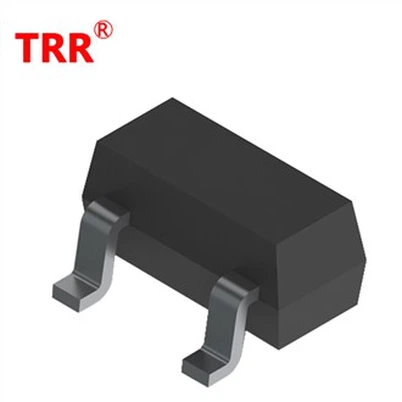
For a BAW56 Diode, a dual-diode package, batch-to-batch consistency in physical dimensions and lead coplanarity has a direct, if often invisible, effect on total cost. Inconsistent package dimensions across production batches can reduce pick-and-place placement accuracy and reflow soldering yield on an SMT production line, and a lower component unit price that comes with a noticeably higher line-level defect rate can erase that price advantage quickly once rework and yield loss get factored into the real cost per finished, working unit.
This is exactly the kind of hidden cost that doesn't show up on a component quote but shows up clearly in a production yield report a few months later.
BAV99 Diode Datasheet, Reading Between the Lines on Price-Driven Substitutions
When a supplier proposes a lower-cost "equivalent" substitute, the right response is to pull up the actual BAV99 Diode Datasheet for the proposed replacement and compare it point by point against the original part's datasheet, not just the part number similarity. Key things worth checking include the reverse leakage specification and the exact test conditions it was measured under, the package outline and dimensions, the moisture sensitivity level rating, and any differences in maximum ratings that might reduce your design margin even if the part "works" in a basic functional sense.
A substitute that's cheaper because it was tested to looser tolerances, or because the manufacturer's binning process is less selective, might be perfectly adequate for some applications and genuinely risky for others, and the only way to know is by comparing the actual documented specifications rather than assuming equivalence from a similar-sounding name.
Comparison Table, Total Cost Factors Beyond Unit Price
|
Cost Factor |
What to Check |
Why It Matters |
|
Unit price at your actual volume |
Pricing tiers at real production quantities, not just sample pricing |
Headline unit price can be misleading outside your actual order volume |
|
Failure rate / reliability data |
Field return rates, qualification test results |
A small failure rate difference compounds significantly at scale |
|
Documentation completeness |
Traceability, RoHS/REACH declarations, archived datasheets |
Missing documentation creates real internal labor cost to chase down |
|
Package/batch consistency |
Dimensional consistency across production lots |
Inconsistency can reduce SMT yield, adding hidden production cost |
|
Supply continuity |
Lead time stability, discontinuation risk, second-source availability |
Requalification after a forced substitution costs real engineering time |
A Worked Example, What "Cheaper" Can Actually Cost Over a Production Run
Putting rough numbers to this makes the point concrete. Suppose two diode options are being compared for a device expected to ship 500,000 units over its production life.
Option A is priced at $0.08 per unit, with a documented field failure rate around 0.15%, and comes with complete traceability and compliance documentation. Total component cost: $40,000. Expected failures across the run: roughly 750 units, each carrying an estimated $15 replacement and handling cost, adding another $11,250.
Option B is priced at $0.06 per unit, a 25% discount, but has a less established failure rate, showing closer to 0.35% in early field data, and requires additional internal effort to compile missing documentation, estimated at a one-time $8,000 in engineering and quality team time. Total component cost: $30,000. Expected failures: roughly 1,750 units, at the same $15 handling estimate, adding $26,250, plus the $8,000 documentation gap cost.
Option A's total: roughly $51,250. Option B's total: roughly $64,250. The 25% unit price discount on Option B turns into a real-world cost disadvantage once failure rate and documentation gaps are factored in across the full production volume. This kind of side-by-side estimate, using your own actual volume and realistic failure/documentation cost assumptions, is exactly the calculation worth running before assuming the lower quote is the better deal.
Factory-Direct vs Distributor Pricing, Where the Real Savings Come From
Buying directly from a diode manufacturer or factory, rather than through a distributor layer, commonly offers meaningfully better pricing at real production volumes, since there's no distributor margin built into the price. This isn't universally the better choice, though. Distributors often provide smaller minimum order quantities, faster availability for prototyping and low-volume needs, and consolidated purchasing across multiple part numbers from different manufacturers, conveniences that have their own real value for smaller orders or early-stage development.
For established, high-volume production of a device already in the market, it's generally worth having a direct conversation with the manufacturer about factory-direct pricing once your volume clears their minimum order threshold, since the savings at that scale are usually substantial enough to justify managing the relationship directly rather than through an intermediary.
Common Mistakes When Trying to Save on Diode Sourcing
Comparing only unit price without accounting for total cost of ownership. As shown throughout this article, failure rate, documentation, and yield impact all factor into what a component actually costs.
Accepting a proposed "equivalent" substitute without checking the actual datasheet specifications. A similar part number doesn't guarantee identical performance, tolerances, or test conditions.
Choosing a supplier with weaker documentation support purely to save on unit price. The internal cost of chasing missing compliance paperwork often outweighs modest per-unit savings.
Ignoring batch consistency in favor of a lower quoted price. Production yield impact from inconsistent components is a real cost that doesn't appear on the component invoice itself.
Treating every cost-saving substitution as a one-time decision with no downstream effects. As the worked example above shows, a component swap that looks like a clean win on the BOM can carry ongoing failure and documentation costs that only become visible months into production, well after the original purchasing decision has been signed off and largely forgotten.
Industry Trends: Why Buyers Are Prioritizing Total Value Over Lowest Price
Component sourcing priorities have shifted noticeably across the electronics industry in recent years, particularly for buyers serving regulated markets like medical devices.
Supply chain disruptions over the past several years have pushed more buyers to weight supplier reliability and documentation quality alongside price, rather than defaulting to the lowest quoted number
Increasing regulatory documentation expectations, covered in earlier discussions of CE technical files and traceability requirements, have made supplier documentation quality a real cost factor rather than a secondary consideration
More buyers are formally tracking total cost of ownership metrics for critical components, including failure rate and requalification cost, rather than relying purely on procurement's initial unit price comparison
How to Evaluate Cost-Effectiveness Before Committing to a Diode Supplier
Before finalizing a sourcing decision, it's worth requesting the following:
An itemized quote reflecting your actual production volume, not just sample or low-quantity pricing
The specific datasheet for the exact part being quoted, compared point by point against your original specification if a substitute is being proposed
Available failure rate or field reliability data, rather than relying solely on a general reputation
Confirmation of batch-to-batch consistency practices and any available quality control documentation
A clear picture of documentation support, traceability records, compliance declarations, before assuming a lower price includes the same support level
If you're evaluating a significant volume commitment, it's worth reaching out directly to a diode manufacturer or factory for a detailed cost comparison, since a direct conversation often surfaces both better volume pricing and more complete technical documentation than a quick distributor quote comparison alone.
F AQ
Q: What Does "Cost-Effective" Actually Mean When Sourcing Diodes?
A: It means evaluating total cost, including unit price, failure rate, documentation quality, and supply stability, rather than judging a component purely on its quoted unit price in isolation.
Q: Is A Cheaper Diode Always A Worse Choice?
A: Not necessarily. A lower-priced diode can be a genuinely good choice if its specifications, documentation, and reliability data are actually comparable to the alternative. The risk comes from assuming equivalence without verifying it, since the worked example above shows how a modest unit price discount can turn into a net loss once failure rate and documentation gaps are factored in.
Q: How Do I Know If A Substitute Diode Is Truly Equivalent?
A: Compare the actual datasheets point by point, reverse leakage specs and test conditions, package dimensions, moisture sensitivity level, rather than relying on a similar part number or general description alone. Ask the supplier directly for a side-by-side comparison document if they're proposing the substitution themselves.
Q: Does Buying Direct From A Manufacturer Save Money?
A: Often, yes, particularly at higher production volumes, since it removes distributor markup from the pricing. For smaller orders or prototyping needs, a distributor's lower minimum order quantities and faster availability can still be the more practical choice.
Q: What Hidden Costs Should I Consider Beyond Unit Price?
A: Failure rate and replacement cost, documentation and compliance support labor, production yield impact from batch inconsistency, and the engineering cost of requalifying a component if a supply issue forces a future substitution.
Q: Does Documentation Quality Affect Total Sourcing Cost?
A: Yes. A supplier with incomplete or hard-to-obtain compliance documentation creates real internal labor cost for your engineering and quality teams, which factors into the true total cost even though it doesn't appear on the component invoice.
Q: How Much Does Diode Batch Inconsistency Actually Cost In Production?
A: It varies by production line and volume, but inconsistent component dimensions can reduce SMT placement and reflow yield, and the resulting rework or scrap cost can meaningfully offset any per-unit price savings from the lower-cost component.
Q: What Should I Ask Before Switching To A Lower-Cost Diode Supplier?
A: Request the specific datasheet for direct comparison, ask about batch consistency practices, confirm documentation and traceability support, and get pricing at your actual production volume rather than comparing sample-quantity quotes.