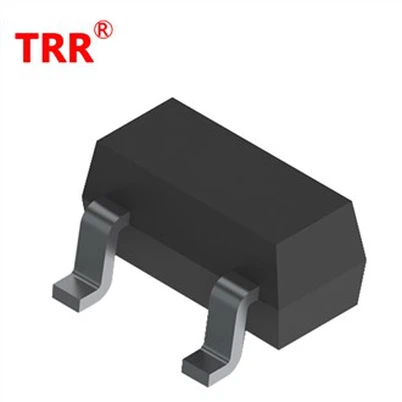
How do I know what model my transistor is?
Leave a message
1, Observe the appearance identification
Most transistors have information such as model, manufacturer, and batch number printed on their casing. These pieces of information are the most direct way to identify transistor models.
Model identification
The model of a transistor is usually composed of a string of letters and numbers, which represent the type, performance parameters, manufacturer, and other information of the transistor. For example, common PNP transistor models may include the word "PNP" to indicate their type, followed by a series of numbers or letters to distinguish between different specifications and manufacturers. When observing the model identification, attention should be paid to maintaining a clean line of sight to avoid misreading or missing characters.
Manufacturer Information
In addition to the model identification, the transistor casing may also have the manufacturer's logo or name printed on it. Understanding manufacturer information can help further validate transistor models and performance parameters, as transistors from different manufacturers may have differences in design and production.
2, Refer to the data manual
The data manual is an authoritative resource for understanding detailed information about transistors. It contains detailed information about the electrical characteristics, pin configuration, packaging form, application circuit, and testing conditions of transistors.
Manufacturer's official website
Most well-known transistor manufacturers provide download services for data manuals on their official websites. By visiting the manufacturer's official website and entering the transistor model or related keywords for search, you can find and download the required data manual.
third-party database
In addition to the manufacturer's official website, there are also some third-party databases or platforms that provide query and download services for transistor data manuals. These platforms may gather data manuals from multiple manufacturers, making it convenient for users to conduct centralized queries and comparisons.
3, Use testing instruments
Although appearance labeling and data manuals are the main methods for identifying transistor models, in some cases, we may need to use testing instruments to further verify the performance parameters and models of transistors.
A multimeter is one of the most commonly used testing instruments by electronic engineers and enthusiasts. By measuring parameters such as pin voltage, current, and resistance of the transistor, we can make a preliminary judgment on the type and state of the transistor. However, it should be noted that a multimeter cannot directly read the model of the transistor, but needs to indirectly determine it by comparing the measurement results with the parameters in the data manual.
Oscilloscope is another important testing instrument that can display waveforms and signal changes in circuits. When identifying the transistor model, we can use an oscilloscope to observe the waveform characteristics of the transistor under different working states, in order to further verify its model and performance parameters.
4, Utilize online resources
With the development of the Internet, more and more online resources have become a powerful tool for us to identify transistor models.
Electronic engineering forums and communities are platforms for electronics enthusiasts and professionals to exchange experiences and share knowledge. On these forums, we can post photos of transistors in our hands or describe their appearance features, and request other members to help identify the model. At the same time, we can also browse historical posts on the forum to find similar cases and solutions to the transistors in our hands.
Search engines are one of the important tools for us to obtain information. By entering keywords such as the appearance characteristics, pin configuration, and manufacturer information of transistors for search, we can find relevant web pages, images, and discussion posts to obtain more information about transistor models.
https://www.trrsemicon.com/transistor/silicon-npn-power-transistors-bu406.html