How Diode Technology Innovation Is Driving the Next Generation of Medical Devices?
Leave a message
Why Medical Devices Keep Demanding More
Before we get to the technology, it's worth being clear about the pressure designers are under. Modern medical equipment has to deliver on several fronts at once:
Smaller and lighter - for wearables, portable monitors, and home devices.
More efficient - longer battery life and less heat against the body or in the hand.
More reliable - life-support and monitoring gear can't afford to fail.
More capable - new sensing and therapy features keep raising the bar.
The catch is that these goals often pull against each other. More power in a smaller box usually means more heat. Longer battery life usually means tighter efficiency targets. Meeting all of them at once is where component innovation earns its keep - and why advanced rectifier diodes for medical equipment matter more than their tiny size suggests.
The Quiet Revolution in Diode Technology
The humble diode has come a long way. While it still does the same basic job - letting current flow one way - the parts available today are dramatically better than those of a generation ago. The key improvements:
Faster recovery. Modern fast and ultrafast recovery diodes switch off cleanly, which is essential for the high-frequency power supplies inside compact devices.
Lower forward voltage. Less voltage dropped across the diode means less wasted energy and less heat.
Lower leakage. Refined, glass-passivated junctions leak far less current, protecting both battery life and measurement accuracy.
Smaller packages. Surface-mount parts keep shrinking, freeing precious board space.
Wide-bandgap materials. This is the headline act - silicon carbide (SiC) and gallium nitride (GaN), with bandgaps of roughly 3.26 eV and 3.4 eV versus silicon's ~1.1 eV, can handle higher voltages, temperatures, and frequencies with far lower losses.
Notably, SiC Schottky diodes offer very low forward voltage and almost no reverse-recovery loss, and they can even reduce electrical noise enough to simplify or remove snubber circuits. That's a real example of fast recovery diode efficiency translating into smaller, cleaner power designs.
How Each Innovation Becomes a Better Device
Innovation only matters if it shows up in the product. Here's how each advance translates into something a patient or clinician actually notices:
Higher efficiency → longer battery life and less heat. Lower forward voltage and faster switching mean less energy wasted, so portable and home devices run longer and stay cooler.
Faster switching → smaller power supplies. Higher operating frequencies shrink the transformers, inductors, and capacitors, which shrinks the whole device.
Lower leakage → more accurate readings. Less stray current in sensor rails means cleaner signals and less drift over time - a direct win for monitoring accuracy.
Higher temperature tolerance → more reliability. Parts that handle heat gracefully last longer in tightly packed, always-on equipment.
This is exactly why low-leakage diode medical applications keep expanding: the better the part, the better the device built around it.
Meet the Parts: Transistor, S1A, RS2M
Cutting-edge materials grab the headlines, but most of the world's medical electronics still run on refined, proven silicon parts - the dependable workhorses that quietly embody decades of improvement. Here's how three of them fit, and where they shine.
Transistor - The Efficient Switching Core
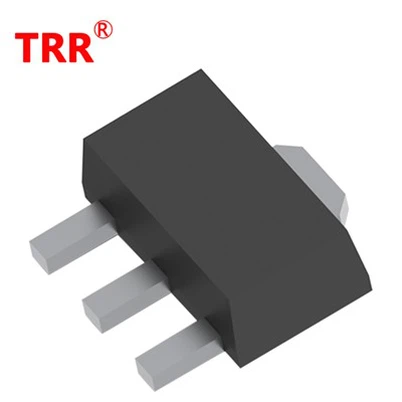
The Transistor is the muscle behind power switching and drive circuits. Efficient switching keeps power supplies and motor drives cool and compact, which supports the smaller, longer-running devices the market demands. You want one with low losses, predictable behaviour, and consistent quality - the hallmarks of a serious advanced diode supplier and transistor partner.
Diode S1A - Low Leakage for Accuracy and Battery Life
The S1A is a 1.0 A, 50 V glass-passivated general-purpose rectifier in the compact SMA (DO-214AC) package, prized for its low leakage and low capacitance, with a low forward voltage around 1.1 V across a −55 °C to +150 °C range. That refined, low-leakage design is exactly what sensitive signal and battery circuits need - which is why a careful S1A rectifier diode supplier is worth seeking out.
Diode RS2M - Fast Recovery for Efficient Power Stages
The RS2M is a fast recovery rectifier in SMA, rated 1000 V and 2.0 A with a reverse recovery time around 500 ns and a glass-passivated, UL 94V-0 build. Fast, clean turn-off reduces wasted heat in switching stages - a small but real efficiency gain that adds up in compact designs. Buying RS2M fast recovery diode wholesale from one trusted line keeps your builds consistent at scale.
Where the Innovation Is Headed
The next wave is already arriving. Wide-bandgap technology is moving from premium applications into the mainstream - GaN-based power supplies are now used in portable vital-signs monitors, oximeters, blood-pressure devices, and home ventilators precisely because they deliver high power in a small, cool-running package with long battery life. SiC, meanwhile, dominates higher-voltage, higher-reliability stages. Cost has historically held wide-bandgap back, but that gap is narrowing year by year.
Alongside materials, expect continued integration (more functions in one package), even smaller footprints, and higher temperature tolerance. For OEMs, the practical message is to design with a supplier who can offer both the proven silicon parts you ship today and a path to newer technology as your products evolve.
How to Pick Parts That Future-Proof Your Design
When you're choosing components with the next generation in mind, weigh these:
Efficiency - low forward voltage and fast recovery to cut heat and extend battery life.
Low leakage - to protect accuracy and runtime.
Package size - the smallest footprint that meets your needs.
Reliability - glass-passivated, well-screened, thermally robust parts.
Traceability - full lot documentation for your risk file.
Supply stability - a partner who can scale and who offers a technology roadmap.
Get these right and you've answered the real question behind "how does diode technology improve medical devices?" - by making every device smaller, cooler, more accurate, and more dependable.
What the Data and Standards Say
The direction of travel is well documented. Wide-bandgap devices are widely reported to cut switching losses, reduce heat, and shrink magnetics, which is why power-supply makers increasingly target high efficiency tiers such as DoE Level VI (≥94%) using GaN. At the same time, the safety framework hasn't changed: IEC 60601-1 still demands basic safety and maintained essential performance under single faults, so any new technology has to prove the same reliability as the parts it replaces. The winning approach pairs efficiency innovation with rock-solid reliability - high efficiency that never compromises patient safety.
Case Study: How Sunhing Helped Modernize a Device Platform
A medical OEM came to Sunhing while redesigning an aging product line to be smaller, cooler, and longer-running. Their old bill of materials used dated parts that ran hot and varied from batch to batch, holding back the upgrade.
Sunhing's engineers refreshed the power and signal sections around three proven parts: the Transistor for efficient switching, S1A for low-leakage rectification, and RS2M for the fast, efficient power stage - each with full lot traceability from a single audited line, plus guidance on where newer technology would pay off later.
The customer reported:
Lower operating temperature, allowing a more compact design.
Longer battery runtime on the portable version.
More consistent performance across production batches.
Why Source From a Reliable Manufacturer or Factory
After years on the sales floor, here's the honest truth: innovation only helps you if the parts are consistent in the real world. Two diodes with the same number are not always the same diode, and at scale the differences in efficiency, leakage, and uniformity decide your heat, your battery life, and your yield. That's why buying from a serious manufacturer and factory, rather than the cheapest broker of the month, is what turns a clever design into a reliable product.
A trustworthy partner gives you refined, glass-passivated, RoHS-compliant parts; honest datasheets and test data; full lot traceability; and the ability to scale from samples to high-volume wholesale orders - while pointing you toward newer technology when it genuinely helps. The recognition that quality-focused names like ESTA have earned for consistent screening and dependable supply is exactly the standard you want behind a modern medical device. Sunhing - a medical grade diode manufacturer at heart - builds its Transistor, S1A, and RS2M parts to that standard.
FAQ
Q: How does diode technology improve medical devices?
A: By cutting energy losses and heat, switching faster to shrink power supplies, leaking less current to protect accuracy and battery life, and tolerating higher temperatures for better reliability.
Q: What are the latest diode innovations?
A: Wide-bandgap materials like silicon carbide (SiC) and gallium nitride (GaN), along with faster recovery, lower forward voltage, lower leakage, and smaller packages in refined silicon parts.
Q: Why are fast recovery diodes important in medical equipment?
A: They switch off cleanly at high frequency, which keeps power supplies efficient and cool - enabling the smaller, longer-running designs modern devices demand.
Q: What makes a diode "medical grade"?
A: It's less about the part number and more about how the part is rated, screened, tested, and documented for reliability and traceability in an IEC 60601-1 design.
Q: Should I switch to SiC or GaN parts now?
A: It depends on the stage and your cost targets. Proven silicon parts still serve most designs well; wide-bandgap pays off where efficiency, size, or high voltage are critical. A good supplier helps you choose per stage.