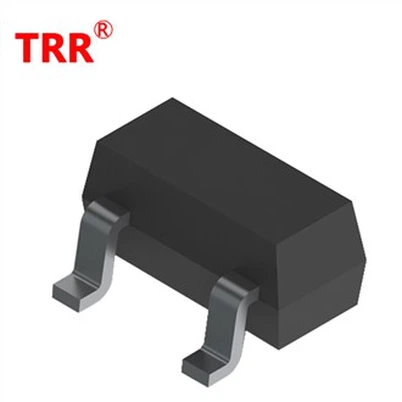
High speed transistors assist the next generation of computing chips
Leave a message
The Basic Principles and Functions of Transistors
Transistors are semiconductor devices that control the flow of current, mainly used in amplification and switching circuits. In traditional integrated circuit design, there are mainly two forms of transistors: bipolar junction transistors (BJTs) and metal oxide semiconductor field-effect transistors (MOSFETs). With the advancement of technology, MOSFETs have become mainstream due to their advantages such as low power consumption and high switching speed.
The design goal of high-speed transistors is to improve current response speed and switching efficiency to cope with more complex and high-speed computing tasks. The role of high-speed transistors in computing chips is similar to that of "neurons", controlling the transmission speed and efficiency of data streams. Therefore, the performance of transistors directly affects the overall computing power and energy efficiency of the chip.
Application of high-speed transistors in next-generation computing chips
Artificial Intelligence Accelerator
The field of artificial intelligence (AI) is currently one of the most popular technologies, and the application of high-speed transistors in AI accelerator chips is crucial. The core task of an AI accelerator is to handle parallel computing of neural networks, which requires a large amount of data flow and efficient logical processing capabilities. High speed transistors can quickly complete switching actions, thereby improving the response speed and computational efficiency of chips. Through faster current switching, high-speed transistors can significantly reduce the latency of AI accelerators, enhance their processing capabilities, and enable them to handle high computational tasks such as autonomous driving and image recognition.
Big Data and Cloud Computing
The rise of big data processing and cloud computing requires chips to process massive amounts of data in a short period of time. This type of task has extremely high requirements for the bandwidth and speed of the chip. High speed transistors can support faster data transmission speeds through higher switching frequencies, which helps improve the processing capabilities of servers and data centers. In large-scale data processing scenarios, the switching speed of transistors directly determines the performance limit of the processing system. Therefore, the application of high-speed transistors makes chips perform better in the fields of big data processing and cloud computing.
Quantum computing
Quantum computing is considered a breakthrough point in future computing technology, with great potential in solving problems that traditional computers find difficult to handle. Although the foundation of quantum computing is different from traditional computers, high-speed transistors also have critical applications in it. The efficient execution of quantum computing relies on the support of traditional chips. In this process, high-speed transistors help quantum chips exchange and process data with traditional chips through their ultra-high switching speed.
In the future, with the gradual maturity of quantum computing technology, high-speed transistors are expected to play a more important role in the development of quantum computing chips, driving computing performance to new heights.
The technological development trend of high-speed transistors
Application of new materials
In order to further improve the performance of high-speed transistors, material innovation is crucial. At present, in addition to traditional silicon materials, the application of wide bandgap semiconductor materials such as gallium nitride (GaN) and silicon carbide (SiC) is gradually emerging. These materials have higher electron mobility and greater power tolerance, which can significantly improve the switching speed and heat resistance of transistors.
Especially in high-frequency and high current scenarios, high-speed transistors made of wide bandgap materials have significant advantages over silicon-based transistors. With the maturity and mass production of these new materials, they are expected to further promote the development of high-speed transistors and enhance the performance of next-generation computing chips.
Nano scale process
As Moore's Law gradually approaches the physical limit, chip manufacturing processes are also developing towards finer directions. Nanoscale technology is one of the main research and development directions in the current semiconductor industry. By reducing the size of transistors, more transistors can be integrated into a limited chip space, thereby improving the computing power of the chip.
The emergence of 7nm, 5nm, and even 3nm process technologies has further optimized the switching speed and power consumption of transistors. Under this advanced process, transistors can not only complete switching in a shorter time, but also maintain efficient operation at lower power consumption. This is crucial for improving the performance of next-generation computing chips.
Heterogeneous Integration Technology
Heterogeneous integration refers to the integration of different types of processors or chips into the same package to achieve higher performance and efficiency. High speed transistors also play an important role in heterogeneous integrated architectures. For example, the heterogeneous integration of GPU and CPU can achieve fast switching and distribution of data streams through high-speed transistors, thereby enhancing the processing power of the entire system.
With the increasing complexity of chip architecture, heterogeneous integration technology will become an important direction for future chip design. As a key node for data transmission and processing, the performance of high-speed transistors will directly affect the overall performance of heterogeneous integrated chips.
Market opportunities brought by high-speed transistors
Smartphones and Consumer Electronics
With the popularization of 5G technology and the widespread application of artificial intelligence, the demand for high-performance chips in the smartphone and consumer electronics markets is constantly increasing. The application of high-speed transistors can improve the computing speed and response capability of these devices, enhancing the user experience. Especially in high-end smartphones, the performance of the processor directly affects the market competitiveness of the device.
The widespread application of high-speed transistors will help chip manufacturers stand out in fierce market competition and bring them greater market share.
Autonomous driving and the Internet of Things
Autonomous vehicle and IoT devices also need high-speed and efficient chip support. Autonomous vehicle need to process a large amount of data from cameras, radars, sensors and other devices in real time, and these computing tasks cannot be completed without the support of high-speed transistors. Similarly, in the field of the Internet of Things, billions of devices rely on efficient chips for data exchange and processing.
The application of high-speed transistors can help these intelligent devices achieve faster data processing and transmission, thereby promoting further development of autonomous driving and IoT technology.
Future prospects
With the accelerated development of informatization and intelligence, the global demand for high-performance computing chips will continue to grow. As one of the core components of chips, high-speed transistors will continue to play an important role in promoting the continuous progress of computing technology.
In the future, with the further development of material innovation, process advancement, and architecture optimization, high-speed transistors will bring more technological breakthroughs in multiple fields, helping the next generation of computing chips achieve higher performance and efficiency. Technology companies should seize the opportunity in this process, actively layout the research and application of high-speed transistors, and provide strong support for the future development of global computing technology.